
 Algeria
 Egypt
 Libya
 Morocco
 Sudan
 Tunisia
 Benin
 Cabo Verde
 Côte d'Ivoire
 Ghana
 Guinea
 Guinea-Bissau
 Liberia
 Mali
 Mauritania
 Niger
 Nigeria
 Senegal
 Sierra Leone
 The Gambia
 Togo
 Cameroon
 Central African Republic
 Chad
 DR Congo
 Equatorial Guinea
 Gabon
 Republic of the Congo
 São Tomé and Príncipe
 Burundi
 Comoros
 Djibouti
 Eritrea
 Ethiopia
 Kenya
 Madagascar
 Malawi
 Mauritius
 Mozambique
 Rwanda
 Seychelles
 Somalia
 South Sudan
 Tanzania
 Uganda
 Angola
 Botswana
 Eswatini
 Lesotho
 Namibia
 South Africa
 Zambia
 Zimbabwe
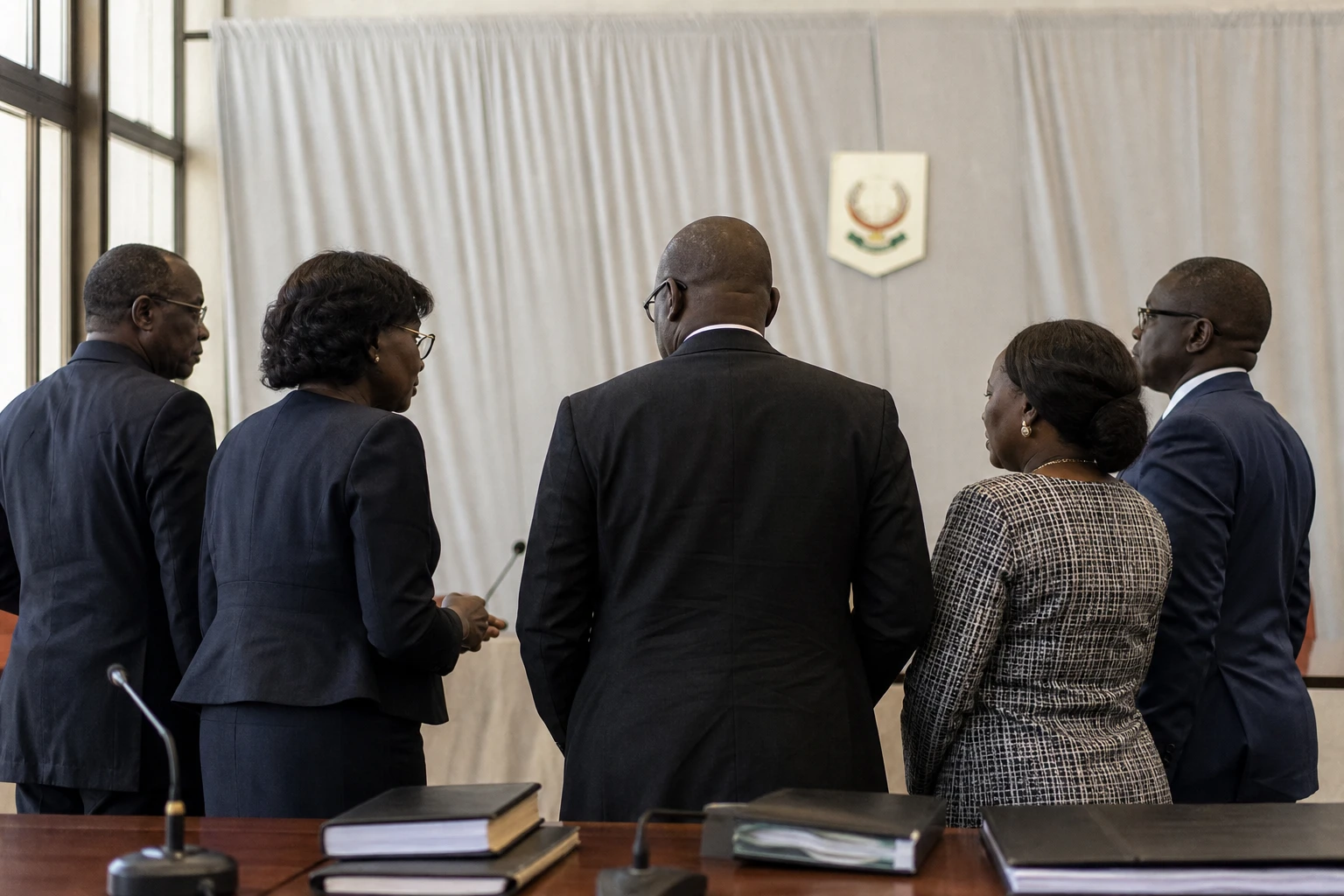
Burkinabè justice takes a tougher line on sexual violence against children
In Ouagadougou, the political line is now clear: sexual violence committed against minors must no longer be treated as an ordinary matter. In a circular dated 17 July 2026, Burkina Faso’s Justice Minister, Edasso Rodrigue Bayala, instructed prosecutors to strengthen their submissions and rule out responses deemed too lenient, including community service, in cases of rape of a minor.
The tougher stance comes in a country where the justice system is also under pressure to demonstrate its ability to protect the most vulnerable amid a strained security and institutional climate. Burkina Faso, governed from Ouagadougou, has made a series of announcements in recent months about reforming and restoring order to its judicial system, while the Confederation of Sahel States (AES, the regional alliance created by Burkina Faso, Mali and Niger) has become a new political framework for part of Burkina Faso’s diplomacy.
Two rulings in Tenkodogo accelerated the ministry’s response
The starting point is clear. In Tenkodogo, in central-eastern Burkina Faso, two cases of rape of minors caused widespread outrage. According to the Burkina Information Agency, a primary school teacher was found guilty of repeatedly raping a 15-year-old pupil, and a Quranic teacher was convicted of raping an eight-year-old girl. The teacher’s case resulted in a 17-month prison sentence, of which two months were to be served; the Quranic teacher was sentenced to 18 months in prison, of which three months were to be served.
In its circular, the Justice Ministry says that overly lenient penalties weaken the deterrent effect of the criminal justice response. The circular also instructs prosecutors to rule out community service, on the grounds that this form of punishment is not commensurate with the seriousness of offences committed against children. In substance, the ministry says it is implementing a priority already set out in Burkina Faso’s criminal justice policy: protecting children from sexual violence.
Burkina Faso’s Criminal Code already provides for penalties for sexual offences and sexual violence, with harsher sentences when the victim is a minor or the perpetrator holds a position of authority. The official reference text, published by the Justice Ministry, also states that sexual violence involves acts committed with violence.
What this tougher stance means for families, schools and religious learning centres
This position is more than symbolic. It sends a signal to prosecutors and therefore to the entire criminal justice chain, from the opening of an investigation to submissions at trial. In practice, it aims to narrow differences in approach between courts and prevent some cases from ending in sentences seen as disproportionate to the trauma suffered by victims.
For families, the issue is straightforward: making clear that schools, religious courtyards, homes and neighbourhoods are not beyond the reach of the law. For teachers, religious instructors and community leaders, this tougher line is a reminder that a relationship of authority brings greater responsibility. The message also has a social dimension. In a country where education and religious instruction still shape much of local life, the justice system wants to break with the idea that a perpetrator can expect a token penalty when the victim is a minor.
The issue extends beyond the courthouse. Sexual violence cases also affect the reputation of educational institutions, families and communities. In recent months, the Justice Ministry has stepped up public information campaigns and outreach to bring justice closer to citizens and explain the reforms under way. This strategy comes at a time when trust in the judicial system remains a central concern.
An issue that reaches beyond Burkina Faso and matters across West Africa
Regionally, Burkina Faso reflects a pattern familiar in several West African countries: sexual violence against minors is often brought to light through high-profile cases, followed by strong public demands for a tough judicial response. The Burkinabè decision can therefore be seen as a test of the credibility of national criminal justice policy, as well as a signal to other judicial systems facing the same tensions between social proximity, procedural delays and child protection.
It also comes at a time when Burkina Faso is redefining its alliances and framework for co-operation. Recent exchanges in Ouagadougou with AES partners show that security, the movement of people and the protection of populations remain at the heart of the public agenda. In this context, child protection is becoming a political marker in its own right: not merely a legal matter, but a test of public authority in neighbourhoods, villages and schools.
One decisive question remains: will the circular lead to consistent outcomes in courts across the country? The credibility of this shift will depend on that. If prosecutors’ submissions genuinely change, if rulings reflect this requirement and if proceedings avoid compromises that downplay the offences, then the message sent from Ouagadougou could carry weight far beyond Burkina Faso’s borders.



