Algeria
 Egypt
 Libya
 Morocco
 Sudan
 Tunisia
 Benin
 Burkina Faso
 Cabo Verde
 Côte d'Ivoire
 Ghana
 Guinea
 Guinea-Bissau
 Liberia
 Mali
 Niger
 Nigeria
 Senegal
 Sierra Leone
 The Gambia
 Togo
 Cameroon
 Central African Republic
 Chad
 DR Congo
 Equatorial Guinea
 Gabon
 Republic of the Congo
 São Tomé and Príncipe
 Burundi
 Comoros
 Djibouti
 Eritrea
 Ethiopia
 Kenya
 Madagascar
 Malawi
 Mauritius
 Mozambique
 Rwanda
 Seychelles
 Somalia
 South Sudan
 Tanzania
 Uganda
 Angola
 Botswana
 Eswatini
 Lesotho
 Namibia
 South Africa
 Zambia
 Zimbabwe
A sea route turned into a trap
Off Nouadhibou, the sea tells stories not only of crossings. It also speaks of the fragility of a migration corridor where every breakdown, every drift and every delay in rescue can end in disappearance. In recent days, 144 people were reported dead or missing off the coast of Mauritania following a series of separate maritime incidents.
The tragedy once again highlights the Atlantic route between West Africa and the Canary Islands. For many people hoping to leave, the crossing is still seen as a way out. In reality, it exposes them to long distances, overcrowded boats and rescue delays that are often too long.
Mauritania, a crossroads for departures and rescue
Mauritania occupies a particular place in this geography of movement. A country of welcome, transit and departure, it sits at the intersection of several regional dynamics: Sahelian mobility, economic pressure on coastal areas and Europe’s enduring appeal. Nouakchott, the capital, and Nouadhibou, the main port in the north, account for a large share of disembarkations and interceptions.
This is not a new reality, but it has intensified. The UNHCR had already reported in 2024 that around 3,500 people had been disembarked or intercepted in Nouakchott and Nouadhibou between January and August, a 78% increase on the same period in 2023. At the same time, this pressure was being added to the demands on a country that also hosts a large refugee population, particularly Malians, in its south-east.
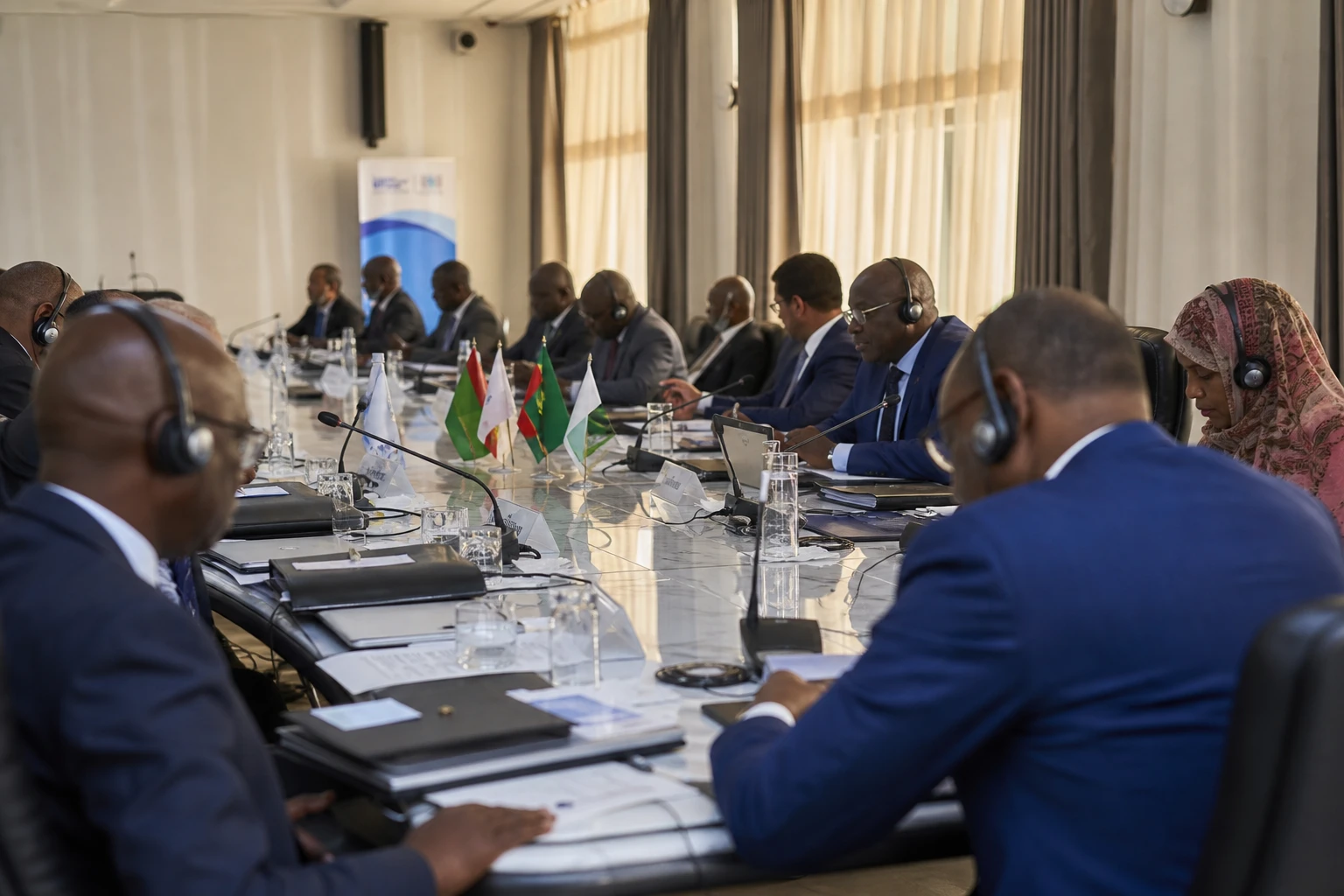
In other words, Mauritania is not merely a transit point. It is also a space for humanitarian management, maritime surveillance and political decision-making. National authorities, UN agencies and humanitarian partners work side by side there, often under urgent conditions.
What happened between 14 and 18 July
According to the UNHCR, three rescue and disembarkation operations were carried out in Nouadhibou between 14 and 18 July. They brought 387 people to safety. The agency said that 144 people were considered dead or missing following maritime incidents off the Mauritanian coast.
The most serious case involved a boat that left Bufaloto, in Gambia, bound for the Canary Islands. It is said to have drifted in the Atlantic for nearly 25 days after running out of fuel. Of those on board, 143 were reported dead or missing and 38 survived. Among the survivors, two children lost their entire family during the journey, according to the UNHCR. Another person died on a second boat that was disembarked on 14 July.
The spokesperson for the UN Secretary-General expressed the organisation’s profound sadness. But beyond the emotion, the conclusion is clear: the sea has claimed lives because legal routes remain limited and irregular crossings continue to thrive in the gaps left by poverty, unemployment and people-smuggling networks.
Why this tragedy keeps happening
The Atlantic route to the Canary Islands is now one of the world’s most dangerous for refugees and migrants, according to the UNHCR. The agency points to several factors: distance, currents, unsuitable boats, overcrowding and limited access to rapid rescue. Together, these turn a crossing into a risk of a slow death.
The phenomenon is also part of a regional economy of departure. When jobs are scarce, regular migration routes remain narrow and families go into debt to finance the journey, the sea becomes a social gamble as much as a geographical route. The UNHCR says this must be addressed through practical alternatives: faster legal routes, employment opportunities, access to education and better protection.
The response cannot be maritime alone. In Mauritania, as elsewhere along the West African coast, surveillance at sea does not solve everything. It can save lives. But it does not remove the pressure to leave, or stop people from leaving. The route extends far beyond the Mauritanian coast, from Gambia, Senegal, Guinea and Sierra Leone to the Canary Islands.
A warning for all of West Africa
This shipwreck reminds West Africa that migration is not merely a matter of border control or European debate. It affects countries of departure, transit and destination. It also concerns ECOWAS, which has long upheld the principle of free movement in the sub-region, but in a context where economic mobility now coexists with closures, tighter controls and more dangerous detours.
Mauritania faces a twofold challenge. On the one hand, it must continue to rescue survivors, identify them and receive them with dignity. On the other, it must manage migration pressure affecting its ports, security forces, health facilities and coastal neighbourhoods. Nouadhibou, a fishing and transit city, bears a visible share of this strain. Nouakchott remains the other major point of disembarkation and administrative coordination.
The continental implications are clear: as long as safe routes remain insufficient, the Atlantic route will continue to claim men, women and children seeking the prospect of a better life. The next challenge lies in coordination between West African states, European partners, rescue services and humanitarian agencies. But above all, it depends on the region’s countries being able to offer credible alternatives to forced departure.