Algeria
 Egypt
 Libya
 Morocco
 Sudan
 Tunisia
 Benin
 Burkina Faso
 Cabo Verde
 Côte d'Ivoire
 Ghana
 Guinea
 Guinea-Bissau
 Liberia
 Mali
 Mauritania
 Niger
 Nigeria
 Sierra Leone
 The Gambia
 Togo
 Cameroon
 Central African Republic
 Chad
 DR Congo
 Equatorial Guinea
 Gabon
 Republic of the Congo
 São Tomé and Príncipe
 Burundi
 Comoros
 Djibouti
 Eritrea
 Ethiopia
 Kenya
 Madagascar
 Malawi
 Mauritius
 Mozambique
 Rwanda
 Seychelles
 Somalia
 South Sudan
 Tanzania
 Uganda
 Angola
 Botswana
 Eswatini
 Lesotho
 Namibia
 South Africa
 Zambia
 Zimbabwe
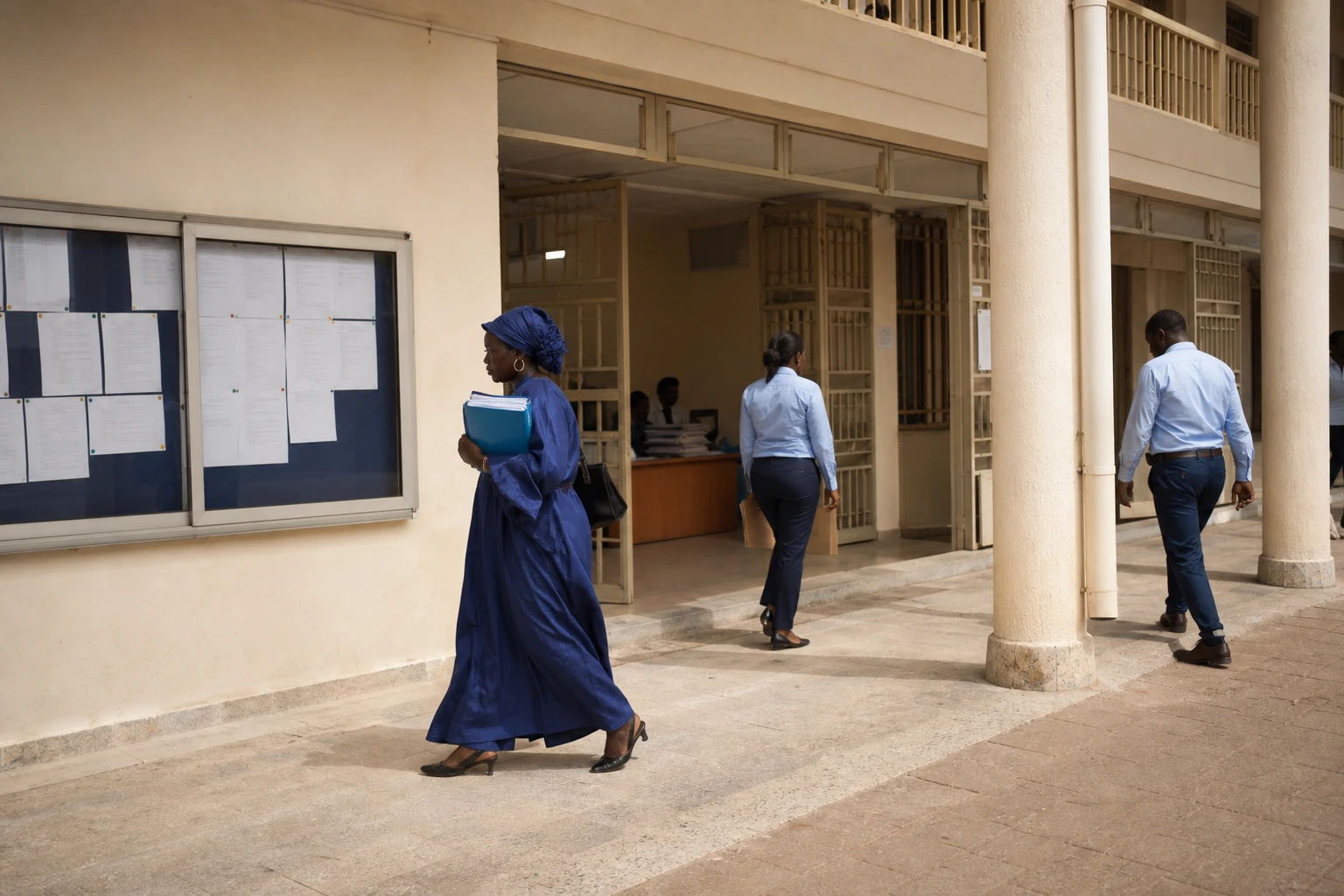
In Dakar, a strong signal in support of multilateralism
In Senegal, diplomatic gestures matter as much as communiqués. When a head of state receives his predecessor at the presidential palace and then gives him official backing, the message goes beyond the protocol. It says something about how Dakar intends to make its voice heard, within its means, in international decision-making.
In a West African context still marked by political tensions, military transitions and competition for influence, Senegal is seeking to preserve its image of institutional stability. The country remains a key member of ECOWAS, the Economic Community of West African States, and is trying to combine domestic political renewal with diplomatic continuity.
The facts: Dakar makes its support for Macky Sall official
On 20 July 2026, Senegal officially decided to support Macky Sall’s candidacy for the post of United Nations secretary-general, according to several cross-checked Senegalese and international sources. The presidency first received the former head of state on 17 July at the Presidential Palace in Dakar. Senegal’s ministry responsible for African integration and foreign affairs then confirmed the country’s support and the mobilisation of Senegal’s diplomatic network among UN member states.
The statement emphasises the “cordial” nature of the meeting and “continuity of the state”. It also calls on the diplomatic administration and the country’s key figures to promote this candidacy, now presented as Senegal’s “in the service of Africa”. RTS reported the same sequence on 17 July, describing a meeting of considerable institutional significance and an exchange marked by warm greetings between the two men.
This development is part of a broader sequence. The UN formally registered Macky Sall’s candidacy on 2 March 2026, submitted by Burundi, and the process of selecting the next secretary-general is already under way at UN headquarters. António Guterres’s term ends on 31 December 2026, opening the way for several months of diplomatic competition.
What this support changes, in Dakar and New York
Politically, the Senegalese state’s endorsement of a former president is significant. It presents a form of republican unity above political divisions, even as the country experienced a clear change of government in 2024 and political life remains marked by visible fault lines. For the current government, the gesture also enables it to affirm that Senegalese diplomacy does not retreat when the team in power changes.
The stakes are broader than an individual candidacy. The post of UN secretary-general remains one of the few levers through which an African country can make its voice heard at the highest level on peace, development, climate and reform of multilateralism. For Dakar, backing a former president who has become a candidate is also a way to show that national political capital can be converted into global influence, provided there is a clear domestic front and strong regional alliances.
But this episode does not erase the debates in Senegal. Macky Sall remains a central political figure, associated with twelve years in power, controversies over the end of his term and persistent questions about the institutional and economic record of the 2012-2024 period. Under the new authorities, the country has also begun efforts to clarify the record of past political violence, a reminder that its foreign policy is unfolding in a still-sensitive domestic climate.
Senegalese people may interpret the decision in two ways. On the one hand, it honours a compatriot in a leading symbolic role and raises Dakar’s profile in diplomatic circles. On the other, it requires the government to explain why the national interest lies in supporting a figure from the former system, at a time when social expectations also concern jobs, the cost of living and the quality of public services. The issue therefore matters as much to embassies as to the streets, and to families as much as to the political elite.
African implications to watch as the first votes approach
Across the continent, Senegal’s support carries particular weight. African capitals want a greater say in the choice of the next secretary-general, while regional organisations and the African Union have for several years advocated reform of the multilateral system that is more favourable to the positions of the Global South. The fact that Macky Sall’s candidacy is now officially backed by his country makes it more visible, but guarantees neither an African consensus nor a decisive lead in the UN contest.
The next steps will follow the selection process timetable, with discussions already under way in New York and the first indications of the balance of forces expected in the coming weeks. Senegal faces a twofold challenge: to defend a national candidacy without appearing to have a foreign policy captive to domestic rivalries, and to show that a West African country can still bring together republican stability, continental ambition and global influence. That is where the real weight of an African state in 21st-century diplomacy will be measured, far beyond the case of Macky Sall.