Algeria
 Egypt
 Libya
 Morocco
 Sudan
 Tunisia
 Benin
 Burkina Faso
 Cabo Verde
 Côte d'Ivoire
 Guinea
 Guinea-Bissau
 Liberia
 Mali
 Mauritania
 Niger
 Nigeria
 Senegal
 Sierra Leone
 The Gambia
 Togo
 Cameroon
 Central African Republic
 Chad
 DR Congo
 Equatorial Guinea
 Gabon
 Republic of the Congo
 São Tomé and Príncipe
 Burundi
 Comoros
 Djibouti
 Eritrea
 Ethiopia
 Kenya
 Madagascar
 Malawi
 Mauritius
 Mozambique
 Rwanda
 Seychelles
 Somalia
 South Sudan
 Tanzania
 Uganda
 Angola
 Botswana
 Eswatini
 Lesotho
 Namibia
 South Africa
 Zambia
 Zimbabwe
In Accra, a conviction that goes beyond one man
In Ghana, galamsey cases—the illegal mining of gold—are no longer seen simply as police matters. They also say something about the place of power, money and land. When a leading political figure is convicted, the whole balance between local influence, the mining economy and public trust is laid bare.
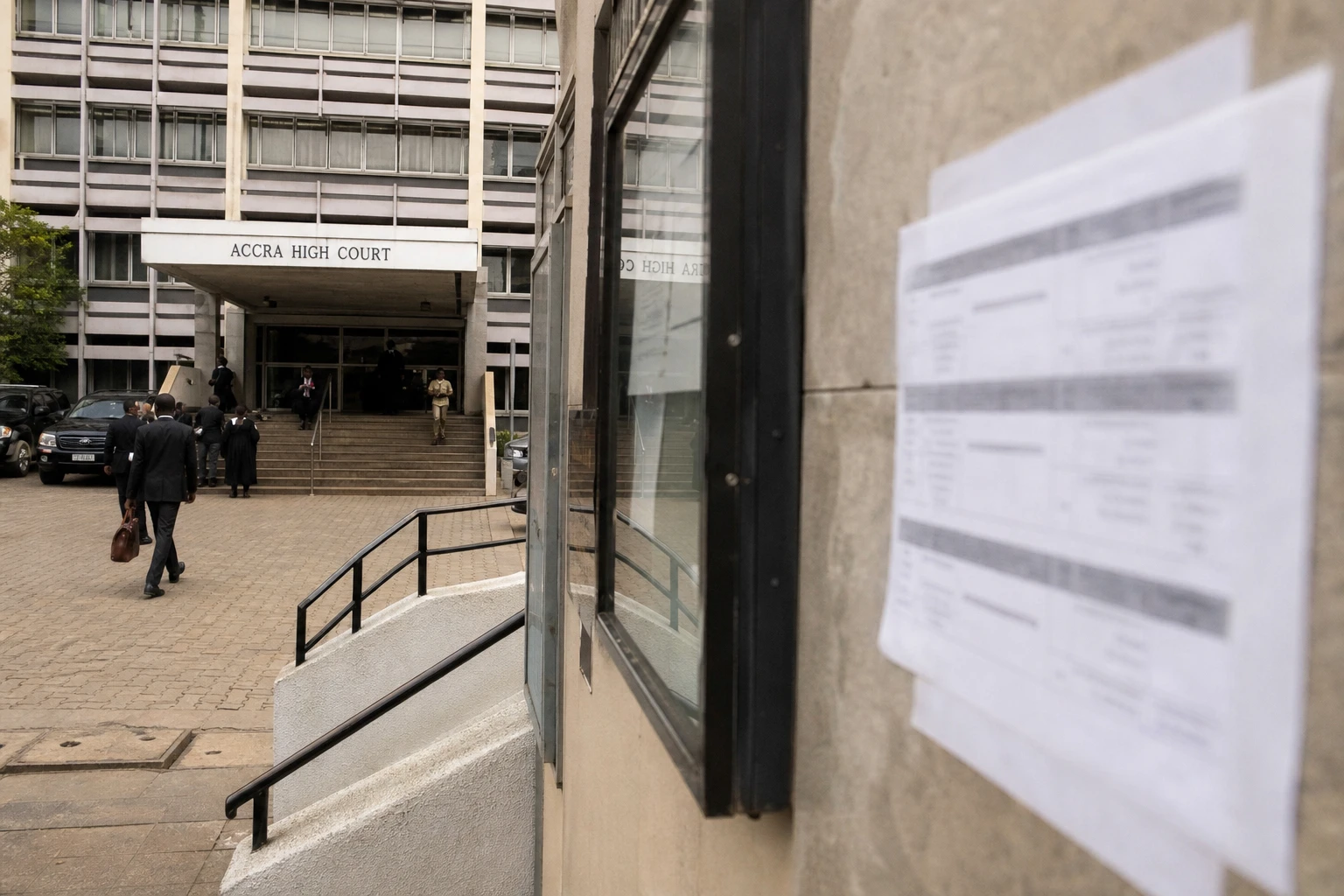
On 20 July 2026, the High Court in Accra sentenced Bernard Antwi-Boasiako, better known as Chairman Wontumi, to 20 years in prison for offences related to illegal mining. The court also handed down two 20-year sentences, to be served concurrently, as well as fines against him and Akonta Mining Limited, the company linked to the case. The main opposition party, the New Patriotic Party (NPP), has announced that it intends to appeal.
A case rooted in the galamsey crisis
The case comes against the backdrop of Ghana’s considerable dependence on gold. In 2025, gold production reached 5.94 million ounces, up 23.41% year on year, according to figures presented by the Ghana Chamber of Mines. This growth relies largely on small-scale mining, the segment most exposed to galamsey abuses. At the same time, the government has tightened its regulatory framework, including by calling for the revocation of an implementing instrument to better regulate the sector.
Ghana is no marginal case in the region. It is one of West Africa’s major mining centres, in a region where ECOWAS, the Economic Community of West African States, closely monitors gold flows, trafficking and pressure on resources. The issue also affects neighbouring countries, because gold moves quickly, often faster than checks can keep up, and environmental damage crosses administrative borders long before customs borders.
What the court accused Chairman Wontumi of
In this case, the court found that Bernard Antwi-Boasiako had not merely turned a blind eye. It accused him of facilitating mining without a licence and of, in the court’s assessment, illegally granting mining rights over a concession at Samreboi, in western Ghana. In April 2025, a police operation at the site had already led to the arrest of an operator and 28 other people, showing that the case had long gone beyond mere suspicion.
Chairman Wontumi’s name also carries political weight. He leads the NPP in the Ashanti Region, one of the party’s major electoral strongholds. It is precisely this intersection of party influence, territorial control and mining interests that gives the conviction its symbolic significance. The court chose a heavy sentence, one of the harshest handed down in this type of case in Ghana, as the authorities have for several months presented the fight against galamsey as a test of the state’s credibility.
A ruling with political and economic consequences
For the judiciary, the message is clear: networks operating around mining sites do not enjoy automatic immunity. For the opposition, by contrast, the conviction opens a political and legal battle, with its defence focused on what its leaders say is the absence of direct evidence of an illegal transfer of mining rights. The NPP has called the decision “fundamentally flawed” and says it will challenge it on appeal.
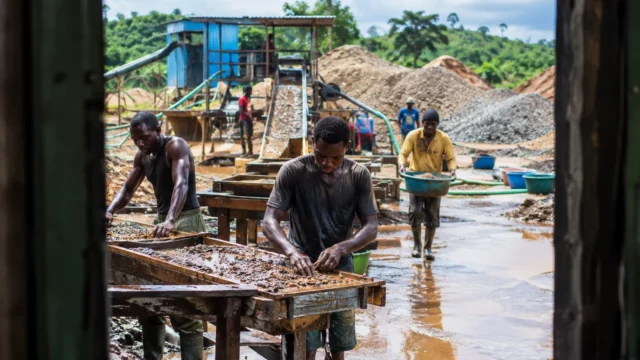
For communities, the stakes are more tangible. In Samreboi and elsewhere, clandestine mining degrades soil, pollutes waterways and heightens tensions between farming and gold prospecting. The ministry responsible for the environment and mines has also stressed the pollution of rivers and the degradation of forest reserves. This pressure directly affects cocoa producers, freshwater fishers and families reliant on a mix of formal and informal activities.
Ghana’s economy, meanwhile, is walking a narrow line. Gold remains a pillar of exports, but the growth of illegal artisanal mining blurs the line between productive dynamism and predatory extraction. That is the paradox: the country is producing more gold while paying a higher price in ecological and institutional costs. This is also why the authorities now speak of “green mining”, meaning mining that is better regulated and less destructive.
A case resonating beyond Ghana
This conviction goes beyond Chairman Wontumi as an individual. It points to a continent-wide debate about resource governance, the accountability of elites and the ability of African states to enforce the law in the face of entrenched interests. In several producer countries, the same question keeps arising: how can mining revenues be protected without allowing informal extraction to be captured by political networks, whether local or national?
Ghana is attracting particular attention because it combines several uncommon features: high gold production, competitive politics and a civil society highly alert to environmental harm. The launch of GoldBod, the public agency tasked with buying and regulating artisanal gold, shows that the state is seeking to regain control of a sector that has become strategic. The 20 July conviction is therefore part of a broader period of institutional recentring.
The next stage in the legal process now remains. The appeal announced by the NPP will show whether the ruling is upheld, amended or overturned. But whatever the outcome, the case has already drawn a clear line: in Accra, galamsey is no longer just a public-order problem. It has become an issue of national governance, political credibility and sovereignty over resources.