Algeria
 Egypt
 Libya
 Morocco
 Sudan
 Tunisia
 Benin
 Burkina Faso
 Cabo Verde
 Côte d'Ivoire
 Ghana
 Guinea
 Guinea-Bissau
 Liberia
 Mali
 Mauritania
 Niger
 Nigeria
 Senegal
 Sierra Leone
 The Gambia
 Togo
 Cameroon
 Central African Republic
 Chad
 DR Congo
 Equatorial Guinea
 Gabon
 Republic of the Congo
 São Tomé and Príncipe
 Burundi
 Comoros
 Djibouti
 Eritrea
 Ethiopia
 Madagascar
 Malawi
 Mauritius
 Mozambique
 Rwanda
 Seychelles
 Somalia
 South Sudan
 Tanzania
 Uganda
 Angola
 Botswana
 Eswatini
 Lesotho
 Namibia
 South Africa
 Zambia
 Zimbabwe
As fish-farm growth meets the feed bottleneck
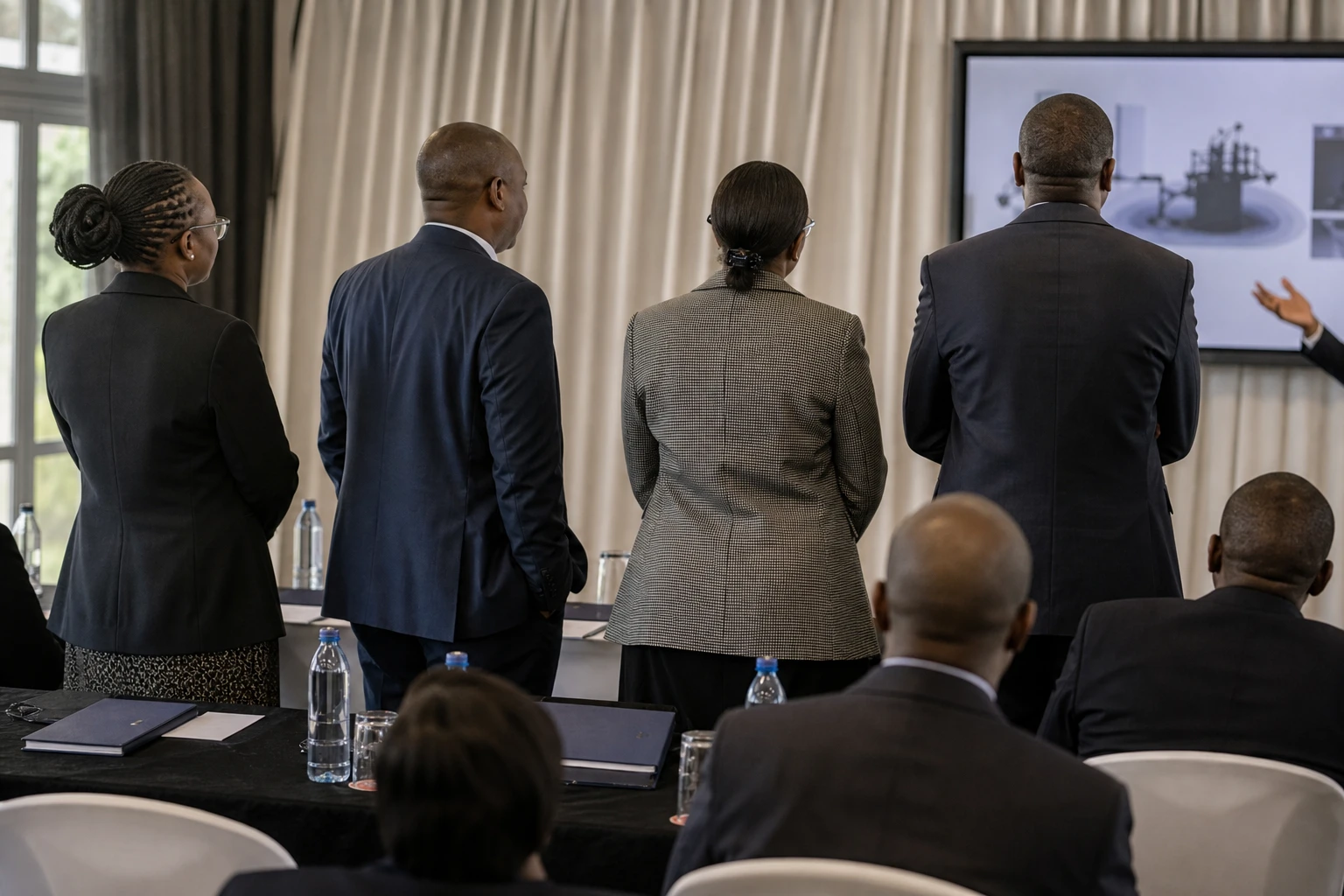
Fish farming is advancing in Kenya, but it still runs up against a simple question: who produces the feed, at what price, and how reliably? In a sector where every cost increase is quickly passed on to small-scale farmers, the battle is now being fought as much in feed mills as on farms. The country is therefore seeking to strengthen a discreet but crucial link in its food sovereignty.
The signal comes from Naivasha, in Nakuru County, at the heart of an industrial zone powered by Olkaria’s geothermal energy. KenGen is developing its Green Energy Park there, a special economic zone designed to host industries with high energy, water and land requirements. The project also forms part of a broader regional framework: the park has customs controlled area status, a regime governed by the East African Community (EAC) customs law that facilitates industrial investment.
At Naivasha, a $3.95 million project targets the supply chain
On 17 July 2026, KenGen announced that Maxim Agri & Samakgro had become the fifth investor in the Olkaria geothermal park. The group plans to build a fish-feed production plant there with a capacity of 8 tonnes per hour, for an announced investment of about $3.95 million, or 510.7 million Kenyan shillings. The facility will use 3 MW of green electricity and geothermal steam solutions, according to information published on that date.
This industrial choice is no minor matter. Project leaders present the combination of energy and steam as a way to reduce operating costs and offer fish farmers more affordable feed. In a country where demand for inputs is growing faster than local capacity, the challenge is not simply to produce more. Feed must also be produced closer to fish farms, more reliably and at a price that family-run operations and commercial farms can afford.
Olkaria Park is not attracting its first investor. In March 2026, KenGen had already announced a fourth operator at the site, evidence that the area is drawing industrial players attracted by stable, relatively competitive geothermal electricity. The aquafeed project is therefore arriving in an already established environment, where the state, the public electricity utility and private investors are testing the same idea: making Naivasha a hub for Kenya’s green industrialisation.
A denser Kenyan sector, but one still vulnerable on inputs
Figures published by the Kenya Fisheries Service show a clear rise in aquaculture production. Between 2017 and 2024, total production from aquaculture, mariculture and cage culture rose from 12,635 tonnes to 33,423 tonnes. Over the same period, freshwater aquaculture alone increased from 7,356 tonnes to 7,742 tonnes, while cage farming expanded sharply. In other words, the country is no longer starting from scratch. It is now seeking to secure a growing sector.
This expansion is creating an immediate need for suitable, certified feed that is available locally. WorldFish says the growth of Kenyan aquaculture is being held back by feed costs, which account for more than half of production costs and more than 60% of the total in some models. The organisation also notes that a kilogram of commercial feed costs around $1.24, a heavy burden for small producers and young entrepreneurs.
The issue is well known across Africa. The FAO has long pointed out that feed can account for 70 to 80% of production costs in intensive systems. For its part, the World Economic Forum, in a document published in January 2026 on blue foods, stresses the need to better structure value chains, particularly the supply of seed, feed and infrastructure. Kenya therefore finds itself at the intersection of two trends: rising demand and an input industry that is still taking shape.
What geothermal energy means for fish farmers
The appeal of the Olkaria site lies in its energy infrastructure. KenGen sells geothermal power there for continuous industrial use, with a more predictable supply than some conventional thermal options. For a feed mill, that stability can reduce disruptions, smooth out costs and improve margins. For fish farmers, it could mean more affordable prices, provided competition works effectively and distribution reaches inland counties.
The impact will vary between different players. For large operators, a local plant strengthens vertical integration and secures supply. For small producers, it could reduce dependence on imports and price fluctuations. For households buying fish in markets in Nairobi, Kisumu or Mombasa, the expected effect remains indirect but potentially real: cheaper inputs could improve farm profitability and support local supply.
The challenge, however, is concrete. Producing feed is not enough if raw materials remain expensive, quality standards are not met, or distribution channels absorb the expected savings. Kenya has seen several aquaculture announcements in recent years, a sign of a dynamic sector that is still consolidating. The real question now is whether it can scale up, in an environment where private industry, green electricity and public policy need to move at the same pace.
A signal for East Africa beyond the Kenyan market
The project’s significance extends beyond the country. In the East African Community, markets for feed, fish and agricultural inputs are already becoming increasingly interconnected. A site such as Olkaria could therefore serve as a model for other countries in the region seeking to industrialise their aquaculture sectors without increasing their energy bills. Kenya is testing a formula that combines a special economic zone, geothermal energy and agro-industrial processing.
What happens next will depend on the construction timetable, which has not yet been made public, and on the project’s ability to deliver competitively priced feed. It will also depend on other investments under way in the country, including plants announced in Athi River and fish-farming projects on Lake Victoria. If these initiatives come together, Kenya could build a complete ecosystem, from fingerling production to feed and then marketing. That is where the credibility of Kenyan aquaculture will be tested: its ability to supply more of the domestic market and, in time, make an impact on regional trade.
In the short term, the Olkaria project makes one point above all: the competitiveness of aquaculture is no longer determined only in the water, but also by access to energy, the production of inputs and the organisation of the market. This is an industrial challenge, but also an agricultural, social and regional one.