Algeria
 Egypt
 Libya
 Morocco
 Sudan
 Tunisia
 Benin
 Burkina Faso
 Cabo Verde
 Côte d'Ivoire
 Ghana
 Guinea
 Guinea-Bissau
 Liberia
 Mali
 Mauritania
 Niger
 Nigeria
 Senegal
 Sierra Leone
 The Gambia
 Togo
 Cameroon
 Central African Republic
 Chad
 Equatorial Guinea
 Gabon
 Republic of the Congo
 São Tomé and Príncipe
 Burundi
 Comoros
 Djibouti
 Eritrea
 Ethiopia
 Kenya
 Madagascar
 Malawi
 Mauritius
 Mozambique
 Rwanda
 Seychelles
 Somalia
 South Sudan
 Tanzania
 Uganda
 Angola
 Botswana
 Eswatini
 Lesotho
 Namibia
 South Africa
 Zambia
 Zimbabwe
March suspended, but political tensions remain
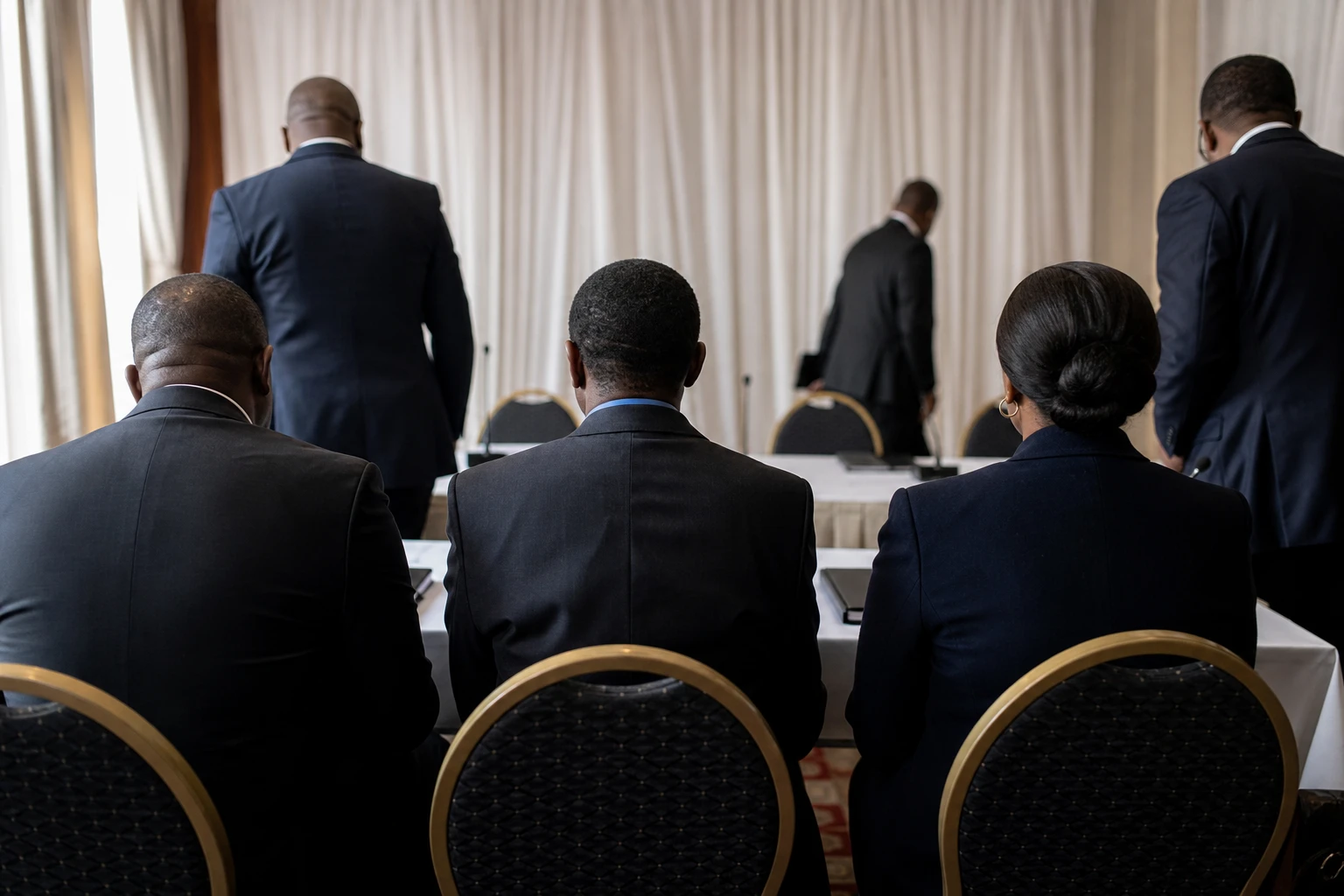
In Kinshasa, protests are not played out only in the streets. They also serve as a test of strength between the authorities, the opposition and religious mediators. In the Democratic Republic of the Congo, the opposition coalition C64 has opted to postpone its march planned for 22 July, while maintaining pressure on Félix Tshisekedi.
The move does not signal a lasting return to calm. Rather, it reflects a tightly packed political sequence in which each side is seeking to appear responsible without yielding on what matters. The C64 says it has taken note of the announcement of an inclusive national dialogue, but has already set a deadline for the head of state.
Dialogue announced under the watchful eye of the churches
On 17 July 2026, Félix Tshisekedi received representatives of religious denominations at the Cité de l’Union africaine in Kinshasa. At the end of the meeting, Cardinal Fridolin Ambongo said the president had opted to organise an inclusive national dialogue. The delegation included the CENCO, the Church of Christ in Congo, the Church of the Awakening and the Muslim community.
During the day, the government clarified that this opening did not close the security dossier in the east or the Doha process, launched under Qatari mediation to address the crisis linked to the AFC/M23. In other words, Kinshasa is now pursuing two tracks: the external diplomatic channel and internal political discussions.
This framework is not new in the DRC. For months, part of the opposition, backed by religious leaders, has called for a broader dialogue format. The authorities, meanwhile, say they want to prevent such a meeting from being used as an instrument of pressure or to bypass institutions.
How the C64 changed its timetable
The C64 had initially announced a march in Kinshasa for 22 July to denounce the constitutional change project backed by the presidential camp. As early as 9 July, the coalition had linked its mobilisation to the defence of the constitutional order and opposition to a reform it sees as dangerous in the context of war in the east.
On 20 July, it ultimately decided to postpone the street action. According to its statement, the postponement responds to the efforts of religious denominations and the announcement of a national dialogue, but does not amount to political disarmament. The coalition is now calling for the dialogue to be officially convened before 15 August 2026. After that deadline, it says it reserves the right to resume peaceful civic actions.
The decision looks like a tactical compromise. It avoids an immediate confrontation on the streets of Kinshasa. But it maintains the threat of renewed mobilisation if the authorities are slow to turn the announcement into action. In a country where the street remains a central political tool, the postponement is therefore a pause, not a retreat.
A stand-off over the constitution and legitimacy
The core of the dispute remains unchanged: the opposition suspects the presidential camp of seeking to pave the way for a constitutional amendment to extend the current government’s time in power, while the majority presents reform as a substantive debate about institutions. This disagreement goes beyond legal technicalities. It touches on confidence in the rules of the political game.
For the majority, a dialogue led by the institutions should make it possible to regain control of a political crisis compounded by a security crisis. For the opposition, a credible dialogue must include guarantees, a clear process and interlocutors deemed legitimate, particularly the churches. Between the two, mistrust remains strong.
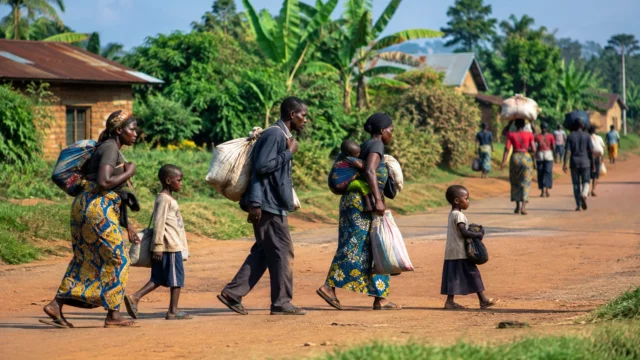
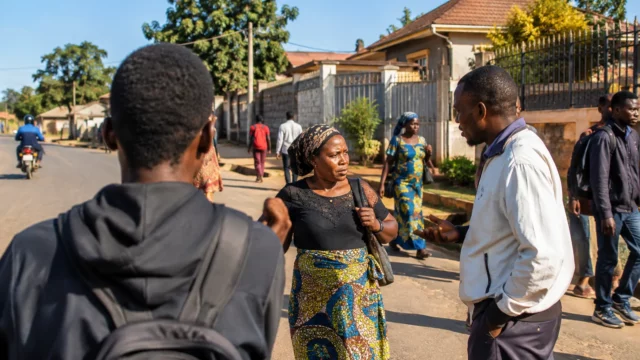
This balance of power affects different actors in different ways. In Kinshasa, the battle is reflected in statements and demonstrations. In the east, it is measured above all by the persistence of fighting, displacement and insecurity. For households, the institutional crisis is first and foremost reflected in economic uncertainty and the fragility of everyday life.
A Congolese political sequence that extends beyond national borders
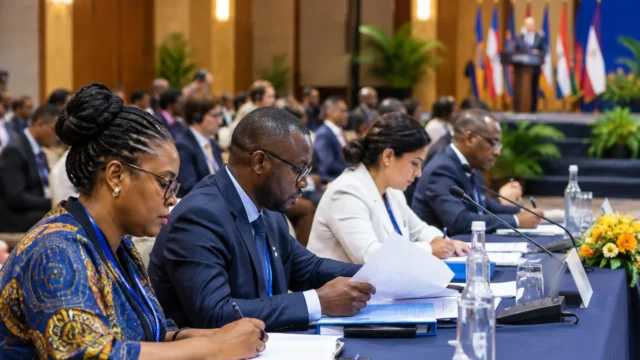
The DRC is not going through this period of tension alone. Discussions about its security still involve the UN, the African Union, regional mediation and several negotiation formats. The Security Council recently renewed measures related to the Congolese dossier, while regional mechanisms continue to monitor the situation in the Great Lakes region.
The country also remains at the heart of a broader regional landscape involving the EAC, SADC and other African consultation frameworks. In this context, a credible internal dialogue is not merely a domestic political issue. It also shapes Kinshasa’s ability to speak with one voice in negotiations on security in the east.
The next steps will come soon. The timetable set by the C64 puts 15 August at the centre of the process. By then, the authorities will have to turn the 17 July announcement into a concrete mechanism. Otherwise, the streets will probably once again become a place for expressing political disagreement in the DRC.