Algeria
 Egypt
 Libya
 Morocco
 Sudan
 Tunisia
 Benin
 Burkina Faso
 Cabo Verde
 Côte d'Ivoire
 Ghana
 Guinea
 Guinea-Bissau
 Liberia
 Mali
 Mauritania
 Niger
 Nigeria
 Senegal
 Sierra Leone
 The Gambia
 Togo
 Cameroon
 Central African Republic
 Chad
 DR Congo
 Equatorial Guinea
 Gabon
 Republic of the Congo
 São Tomé and Príncipe
 Burundi
 Comoros
 Djibouti
 Eritrea
 Ethiopia
 Madagascar
 Malawi
 Mauritius
 Mozambique
 Rwanda
 Seychelles
 Somalia
 South Sudan
 Tanzania
 Uganda
 Angola
 Botswana
 Eswatini
 Lesotho
 Namibia
 South Africa
 Zambia
 Zimbabwe
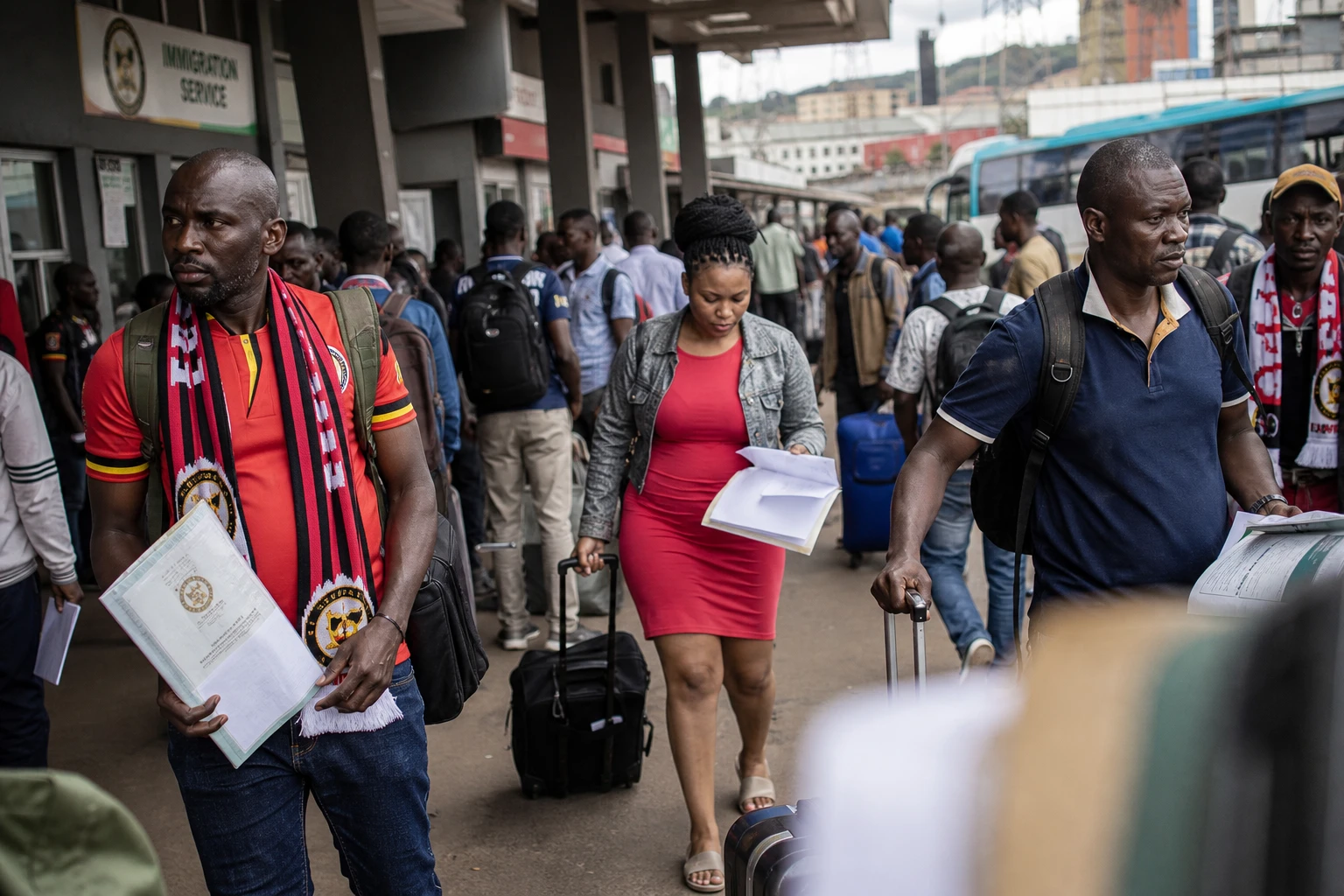
A football tournament, but also a test of mobility
As AFCON 2027 approaches, the stakes extend beyond the stadiums. For Kenya, Uganda and Tanzania, jointly hosting Africa’s great football celebration also means making their borders clearer, faster and more welcoming for fans, teams and officials. That is where the common visa project takes on its full significance: without administrative ease, the promise of a regional tournament could quickly run up against the reality of checks, queues and separate procedures.
The context is regional before it is sporting. The three countries belong to the East African Community, an integration bloc whose common market provides for the free movement of people, goods, services and capital. In practice, this ambition is advancing in stages, with migration rules still differing among partner states. It is precisely this gap between declared integration and actual mobility that AFCON 2027 is bringing into focus.
The Confederation of African Football has confirmed that Kenya, Tanzania and Uganda will jointly host the competition, which is scheduled to kick off on 19 June 2027, with the final on 17 July 2027. CAF has also said that the three countries have already qualified automatically as hosts, while qualifying rounds continue to complete the line-up. For several weeks, the African football body and the national organising committees have therefore been working on infrastructure, transport, security and entry arrangements.
The visa issue is now at the centre of discussions. At a ministerial launch meeting in Kampala, CAF said that the sports ministers of Kenya, Tanzania and Uganda had agreed to hold periodic consultations to finalise and operationalise a framework known as the PAMOJA Visa Framework, intended to facilitate travel for fans, teams, media, officials and investors during the tournament. Ugandan President Yoweri Museveni, for his part, expressed support for the idea of a single East African visa for the competition.
The idea is not starting from scratch. The region has already tried a similar tool with the East African Tourist Visa, which allows visitors to travel in Kenya, Uganda and Rwanda on a single document for up to 90 days. Kenya’s official website says it is a common tourist visa for those three countries, while Uganda’s immigration authorities describe the same arrangement as a multiple-entry visa for travel between Kenya, Uganda and Rwanda. Tanzania is not covered by this scheme.
This is precisely the point that lends weight to the current project. For an AFCON jointly hosted by three states, a separate visa for each would make travel more cumbersome, increase costs and complicate visits by travelling fans, media and business delegations. A common application process, by contrast, would make multi-city stays easier and reduce friction at borders, airports and along road corridors. With CAF expecting the competition to attract more than 1.5 million fans, the logistical challenge becomes a direct economic issue for hotels, transport operators, informal traders and urban services.
For governments, the issue goes beyond football. A common visa would be a political signal of cooperation between Kampala, Nairobi and Dodoma, at a time when East Africa is seeking to turn institutional integration into tangible benefits for citizens. The region has already seen trade and border tensions, as some past disputes between East African Community partners have shown. In this context, a successful AFCON could serve as a practical demonstration: coordination is not just rhetoric; it can also become administrative infrastructure.
The effects will not be the same for everyone. Capitals and major host cities will be the first to benefit from the influx of visitors, with knock-on effects for transport, accommodation and food services. Outlying areas, meanwhile, will depend more on road conditions, air links and the ability to connect venues. Local people, for their part, are chiefly looking for straightforward services: smoother travel, visible security, clear information and controlled prices. Without these, a major tournament can become a series of extra costs for households and small businesses.
The timetable remains a question. CAF and the local committees still have decisions to make on the opening-match cities, the final and the practical details of the mobility arrangements. The next meetings between ministries, the football body and organising committees will therefore be crucial in determining whether the common visa remains an intention or becomes a practical tool before 19 June 2027. For East Africa, the stakes are clear: to make AFCON a continental event, but also proof of the region’s institutional capacity.