Algeria
 Egypt
 Libya
 Morocco
 Sudan
 Tunisia
 Benin
 Burkina Faso
 Cabo Verde
 Côte d'Ivoire
 Ghana
 Guinea
 Guinea-Bissau
 Liberia
 Mali
 Mauritania
 Niger
 Nigeria
 Senegal
 Sierra Leone
 The Gambia
 Togo
 Cameroon
 Central African Republic
 Chad
 Equatorial Guinea
 Gabon
 Republic of the Congo
 São Tomé and Príncipe
 Burundi
 Comoros
 Djibouti
 Eritrea
 Ethiopia
 Kenya
 Madagascar
 Malawi
 Mauritius
 Mozambique
 Rwanda
 Seychelles
 Somalia
 South Sudan
 Tanzania
 Uganda
 Angola
 Botswana
 Eswatini
 Lesotho
 Namibia
 South Africa
 Zambia
 Zimbabwe
A signal of easing, but not a loosening
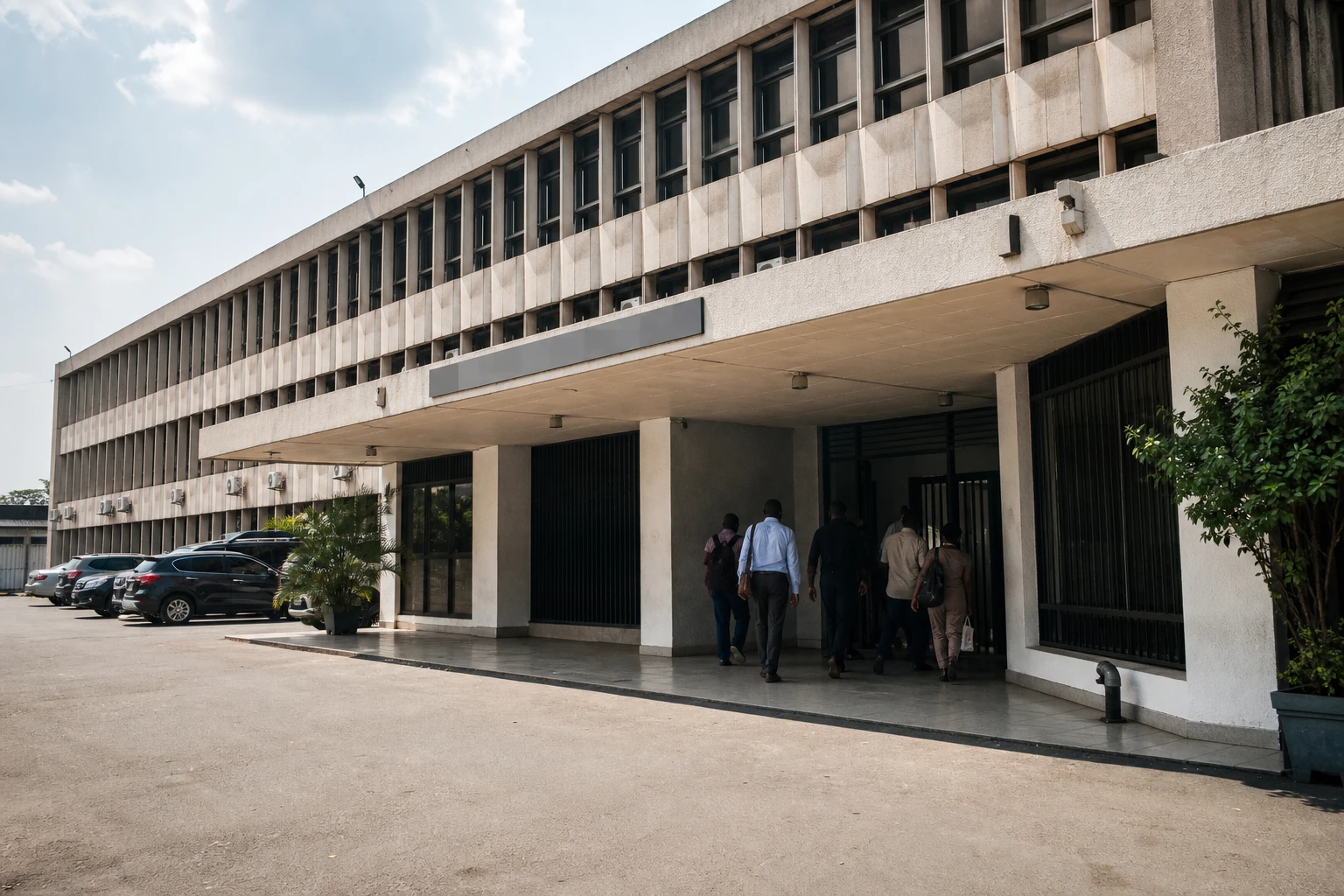
In Kinshasa, monetary policy is walking a narrow line. On the one hand, the Central Bank of Congo is seeking to make credit slightly cheaper to support economic activity. On the other, it knows that the stability of the Congolese franc remains fragile whenever public spending, imports or security tensions rise again. The latest cut in the policy rate reflects this delicate balance.
The decision was taken at a meeting of the Monetary Policy Committee on 17 July 2026 and subsequently announced by the Central Bank of Congo. The policy rate has fallen from 13.5% to 12.5%, a cut of 100 basis points. The marginal lending facility has also been lowered. At the same time, the institution has introduced a 252-day BCC bond, an instrument designed to absorb some of the excess liquidity in the banking system.
A decision taken in a still-constrained context
This monetary policy stance comes as the DRC remains engaged in a programme with the International Monetary Fund. In June 2026, the IMF said the Congolese economy remained resilient, with growth driven by mining, services and agriculture, but also stressed the need for monetary prudence and to preserve foreign exchange reserves. The security situation in the east of the country continues to weigh on public finances and market participants’ expectations.
In its recent discussions with the Congolese authorities, the IMF also noted that inflation had remained contained in early 2026, at around 2.5% at the end of April, while warning that inflationary pressures could return. This warning echoes the caution shown by the BCC. Governor André Wameso has not ruled out further easing, but he is avoiding giving the market the impression of an abrupt change in direction.
The central bank is also maintaining a vigilant tone. In the information released around its meeting, it highlighted several short-term risks: public spending, the start of the school year, rising prices for imported goods and inflation expectations. In other words, the policy-rate cut does not mark an unguarded shift towards expansion. Rather, it aims to loosen the grip slightly while keeping real interest rates positive.
What the measure means for banks, businesses and the state
The new 252-day BCC bond is the most significant technical innovation. It gives the central bank an additional tool for sterilising liquidity when the banking system holds too much of it. In other words, the BCC is trying to prevent a lower cost of money from quickly translating into pressure on prices or the foreign exchange market. It is a way to manage banking liquidity without immediately returning to tighter policy.
For commercial banks, a lower policy rate can reduce refinancing costs and encourage more lending to the real economy. For businesses, particularly those reliant on working capital or investment credit, the signal is positive. But the effect will remain limited if interest rates stay high in practice, exchange-rate risk remains significant or banks continue to favour cautious investments. The DRC remains a highly dollarised economy, where monetary policy does not pass through immediately.
For the state, room for manoeuvre remains linked to fiscal discipline. The IMF has recalled that security spending, regional tensions and certain changes in the conduct of foreign exchange operations had already weighed on economic balances in 2025 and 2026. Monetary policy alone cannot stabilise the economy durably if public finances create new pressures. This is one of the issues Kinshasa must weigh carefully.
The available macroeconomic figures nevertheless support a degree of confidence. The IMF points to real growth of more than 5.5% in 2025 and 2026, slowing inflation at the start of the year and foreign exchange reserves of around $8.8bn at the end of March 2026. These figures do not remove the risks, but they explain why the BCC can make another measured adjustment without abandoning caution.
A Congolese decision with implications beyond the country
The DRC does not operate in isolation. Across Central Africa and beyond, central banks are weighing inflation, exchange rates and growth amid repeated external shocks. In Kinshasa, the stakes are even higher because the country combines an export-oriented mining economy exposed to global markets, heavy reliance on imports and considerable domestic financing needs. Even the slightest change in the policy rate can therefore affect far more than the banking sector.
The decision will also serve as a test. If the additional liquidity boosts productive lending without reigniting pressure on prices or the Congolese franc, the BCC will be able to make the case for a gradual normalisation of its policy. If, on the other hand, public spending or pressure from imports takes precedence again, it will probably have to adopt a tighter tone once more. The central bank’s next economic updates, along with assessments by technical partners, will quickly show whether the cautious easing bet holds.
At the regional level, the Congolese case is a reminder that in Central Africa, as elsewhere, monetary stability depends on more than the policy rate. It also rests on confidence, the quality of public spending, the level of reserves and the ability to cushion shocks without stifling activity. For the DRC, the day’s message is clear: Kinshasa wants to support the economy, but not at the cost of unanchored prices or exchange rates.