Algeria
 Egypt
 Libya
 Morocco
 Sudan
 Tunisia
 Benin
 Burkina Faso
 Cabo Verde
 Côte d'Ivoire
 Ghana
 Guinea
 Guinea-Bissau
 Liberia
 Mali
 Mauritania
 Nigeria
 Senegal
 Sierra Leone
 The Gambia
 Togo
 Cameroon
 Central African Republic
 Chad
 DR Congo
 Equatorial Guinea
 Gabon
 Republic of the Congo
 São Tomé and Príncipe
 Burundi
 Comoros
 Djibouti
 Eritrea
 Ethiopia
 Kenya
 Madagascar
 Malawi
 Mauritius
 Mozambique
 Rwanda
 Seychelles
 Somalia
 South Sudan
 Tanzania
 Uganda
 Angola
 Botswana
 Eswatini
 Lesotho
 Namibia
 South Africa
 Zambia
 Zimbabwe
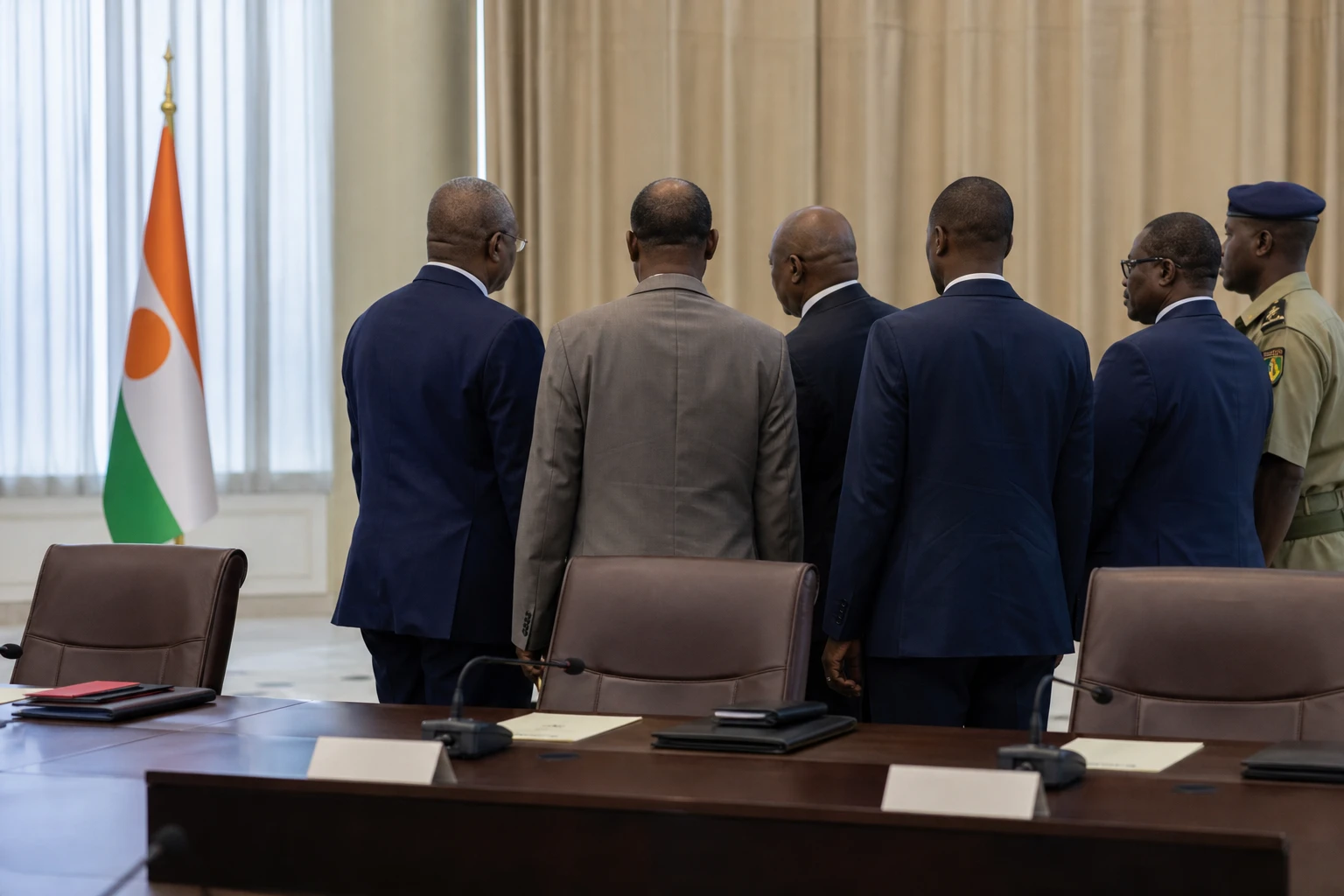
In north-western Niger, the road remains a frontline
In the department of Téra, security is measured not only by military casualty figures. It is also reflected in the roads under surveillance, routes cut off and villages living by the rhythm of alerts. Niger, already exposed on several fronts, is once again seeing the Tillabéri region underscore that the border there is never just a line on a map.
This latest attack took place in an area that has become strategically important over several years: western Niger, bordering Mali and Burkina Faso, where armed groups, trafficking networks and military convoys move. It is also part of the so-called “three borders” area, at the heart of security realignments in the Sahel since Niger’s withdrawal from ECOWAS, the Economic Community of West African States, and the strengthening of the AES framework, the Alliance of Sahel States.
The 17 July attack on the Bankilaré-Téra road
The main facts are now established. On Friday 17 July 2026, at around 4pm, a detachment of the defence and security forces on an administrative liaison mission was targeted on the Bankilaré-Téra road, near the village of Doungouro in western Niger. The Nigerien Ministry of National Defence described it as a “complex attack” carried out by terrorist armed groups. The announced toll was 16 soldiers killed. Several attackers were also killed in the fighting, though no confirmed figure was available at this stage.
The choice of location is no coincidence. Téra is in a region where the Nigerien army has long been fighting groups linked to Islamic State in the Sahel and, further east, violence from the orbit of JNIM, the Group for the Support of Islam and Muslims, affiliated with al-Qaeda. In July 2025, the army had already announced that it had killed at least 11 fighters in the west of the country after two coordinated attacks in the Tillabéri and Dosso regions. A few months earlier, in March 2026, Tahoua air base had been targeted. The pattern remains the same: strike isolated positions, test the forces’ response, then withdraw.
The Téra area is no stranger to such violence. In 2019, Nigerien soldiers were killed there in an attack on a military camp in the west of the country. In 2024, an ambush in the Tillabéri region again killed at least 14 military personnel, according to the army, as reported by the Associated Press. The problem is therefore structural: the attackers’ mobility, a vast border area, weak civilian networks and the difficulty of holding territory over the long term.
What the attack says about Niger’s security strategy
For Niamey, the stakes go beyond the immediate response. Niger has been under military rule since July 2023, with a pledge to reassert sovereignty and restore security. In practice, the army remains under heavy pressure on several fronts: the west, the south-east facing threats from the Lake Chad Basin, and the northern approaches, where cross-border networks also operate. The Defence Ministry has also pointed out that the country is affected along all its borders, making it difficult to concentrate resources.
The human toll is borne first by military families and local garrisons. It also weighs on civilians, who see roads become more militarised, travel grow riskier and the informal economy slow down. In the Tillabéri region, trade, livestock farming and seasonal travel depend heavily on the security of tracks. When a convoy is targeted, an entire local ecosystem is put on edge: markets receive fewer supplies, transport is delayed and villages become more isolated.
Politically, the attack comes as the transitional authorities seek to establish new institutions, including the Consultative Council for the Refoundation, convened in Niamey for its first ordinary session of 2026. The official message is clear: the state wants to show that it is taking the initiative. But every deadly assault is a reminder that security legitimacy is built less through speeches than through the ability to protect people and soldiers over the long term.
A Sahelian perspective, beyond Niger alone
The impact of the attack extends beyond Niger’s borders. Téra lies in an area where armed groups exploit the porous borders between Mali, Burkina Faso and Niger. This is precisely what the new regional frameworks are seeking to counter: on one side, ECOWAS, weakened by the announced departure of Niger, Mali and Burkina Faso; on the other, the AES, which is seeking to harmonise its diplomatic and security tools. In recent months, the Sahel bloc has even accelerated the establishment of joint mechanisms, such as the unified force discussed in Ouagadougou.
The issue is therefore continental as well as national. The African Union has already condemned several recent attacks in Niger, including the one in Niamey in June 2026, a sign that insecurity in Niger remains under scrutiny in Addis Ababa and in Sahelian capitals. For African partners, the question is no longer just how many soldiers are deployed. It also concerns intelligence, border coordination, control of movement corridors and the ability to bring together local authorities, the army and communities living along the borders.
What is at stake in Doungouro is therefore far more than a single clash. In the central and western Sahel, every successful attack on a regular unit revives the same debate: how can a vast territory be protected by scattered forces in a context where armed groups move quickly and choose when to engage? For Niger, the answer will remain at the heart of its security agenda. For the region, it will serve as a test of the credibility of new Sahelian cooperation.