Algeria
 Egypt
 Libya
 Morocco
 Sudan
 Tunisia
 Benin
 Burkina Faso
 Cabo Verde
 Côte d'Ivoire
 Ghana
 Guinea
 Guinea-Bissau
 Liberia
 Mali
 Mauritania
 Niger
 Nigeria
 Sierra Leone
 The Gambia
 Togo
 Cameroon
 Central African Republic
 Chad
 DR Congo
 Equatorial Guinea
 Gabon
 Republic of the Congo
 São Tomé and Príncipe
 Burundi
 Comoros
 Djibouti
 Eritrea
 Ethiopia
 Kenya
 Madagascar
 Malawi
 Mauritius
 Mozambique
 Rwanda
 Seychelles
 Somalia
 South Sudan
 Tanzania
 Uganda
 Angola
 Botswana
 Eswatini
 Lesotho
 Namibia
 South Africa
 Zambia
 Zimbabwe

When digital technology becomes a matter of sovereignty
In Senegal, digital transformation is no longer just a modernisation project. It now affects continuity of government, the payment of salaries, civil registration and public trust. When an identity card service, a tax office or a Treasury service is disrupted, the entire administrative chain slows down.
This explains the shift under way. The Senegalese authorities want to organise the defence of critical digital infrastructure with the public and private operators who run it. The aim is straightforward: to prevent a cyberattack from blocking an essential service, compromising sensitive data or causing a nationwide outage in a country that is accelerating its digitalisation.
A national framework under construction in an exposed regional environment
Senegal is moving forward in a West African context where cybersecurity has become an issue of sovereignty, on a par with energy and transport. Across the sub-region, states are expanding online services, but defences remain uneven. ECOWAS has already made technical cooperation a priority, while public administrations, banks, telecoms operators and identity platforms are becoming increasingly interconnected.
In Dakar, the work forms part of the “New Deal technologique”, the country’s new digital strategy. The state’s reference document provides for data centres, a sovereign cloud, advanced computing capabilities and a network combining satellites, fibre-optic links, submarine cables and shared networks. This ambition requires a higher level of protection than that of a conventional administration.
Senegal already has a legal and institutional basis for public-private partnerships, including a framework dedicated to PPP contracts. This matters because the security of critical infrastructure cannot rest with a single ministry. It requires operators, regulators, technical service providers and incident response teams able to act quickly, together and in a coordinated way.
What was decided in Dakar on 13 July
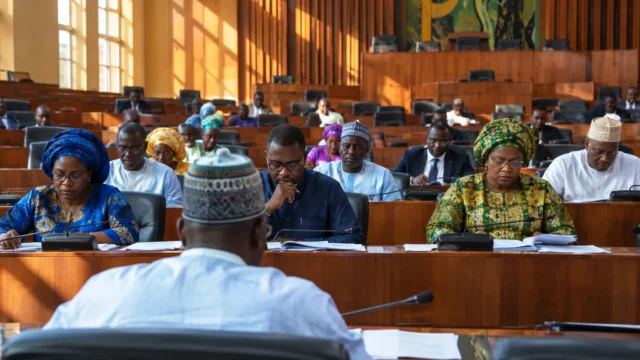
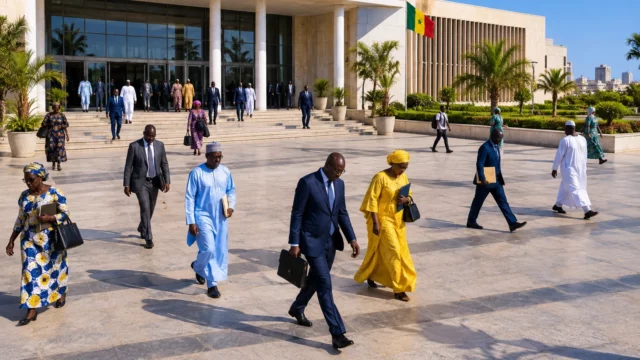
On Monday 13 July, the minister responsible for Telecommunications and Digital Affairs convened representatives of public and private organisations operating infrastructure deemed essential. The stated aim was to prepare for implementation of the forthcoming legal framework for the protection of critical infrastructure, while strengthening mechanisms to prevent, detect and respond to cyberattacks.
This consultation was no trivial matter. It comes after several incidents affecting the country’s strategic services. On 2 October 2025, the Directorate General of Taxes and Domains reported a temporary outage of its online services. On 5 February 2026, the Directorate of File Automation suspended production of national identity cards following an incident in its system. Then, on 11 May 2026, the Directorate of Public Accounting and the Treasury announced that some of its information systems had been affected over the weekend.
These episodes have highlighted the vulnerability of infrastructure that is invisible to the general public but underpins everyday life. An outage in civil registration complicates people’s administrative procedures. An attack on tax systems disrupts revenue collection. An incident at the Treasury can hinder budget execution and fuel concerns about the payment of civil servants or government suppliers.
The authorities also stressed the need to prepare for the future legal framework. In short, Senegal wants to move from a piecemeal response to an organised approach to protection. This means rules, but also common procedures, security audits, faster information-sharing between stakeholders and continuity plans capable of limiting the damage when an attack occurs.
What this means for the economy and citizens
The debate goes beyond technology. It concerns the entire economy. Digital technology is expected to drive a growing share of Senegal’s growth. A GSMA study estimates that digital reforms could generate an additional 1,100 billion CFA francs in added value by 2030, or about $1.9 billion, with a notable impact on employment and public services. This potential can only be realised if networks and systems are reliable.
Cybersecurity is therefore becoming a condition for investment. Companies want stable platforms. Banks want secure transactions. Telecoms operators want to avoid interruptions. Administrations want to protect their data. Citizens, meanwhile, want uninterrupted access to basic services, from identity documents to online payments.
Digital vulnerability also carries a political cost. When a public service goes down, doubts arise about the state’s ability to protect its own systems. In a country that has declared an ambition for digital sovereignty, the reputation of institutions now depends as much on the quality of roads and ports as on the resilience of servers, databases and networks.
The private sector is directly affected. Companies operating cables, data centres, financial services, payment platforms or distribution networks often control some of the country’s critical infrastructure. Their involvement is therefore not optional; it is structural. Without cooperation, defences remain fragmented. With shared governance, the country can monitor, raise alerts and respond more effectively.
A shift to watch across Africa
The Senegalese case illustrates a broader shift in Africa. States across the continent are investing in digital technology to speed up services, reduce delays and attract investment. But the more systems are connected, the greater the risks. Cyberattacks no longer target only isolated computers. They target infrastructure underpinning taxation, identity, health, energy and public finances.
Senegal ranks at the third level out of four in the ITU’s Global Cybersecurity Index 2024, with a score of 67.17 out of 100. The ranking shows real progress, but also considerable scope for further consolidation. It confirms that a country can advance its digitalisation while remaining exposed if protection does not keep pace.
The issue will be closely watched in the coming months, as it intersects with several milestones: the expansion of the New Deal technologique, the introduction of the forthcoming legal framework on critical infrastructure and the integration of private operators into the protection chain. For Senegal, the challenge is no longer simply to install digital tools. It must now prove that these tools can withstand cyber threats without interrupting public services or holding back the economy.