
 Algeria
 Egypt
 Libya
 Morocco
 Sudan
 Tunisia
 Benin
 Burkina Faso
 Cabo Verde
 Côte d'Ivoire
 Ghana
 Guinea
 Guinea-Bissau
 Liberia
 Mali
 Mauritania
 Niger
 Nigeria
 Senegal
 Sierra Leone
 The Gambia
 Togo
 Cameroon
 Central African Republic
 Chad
 Equatorial Guinea
 Gabon
 Republic of the Congo
 São Tomé and Príncipe
 Burundi
 Comoros
 Djibouti
 Eritrea
 Ethiopia
 Kenya
 Madagascar
 Malawi
 Mauritius
 Mozambique
 Rwanda
 Seychelles
 Somalia
 South Sudan
 Tanzania
 Uganda
 Angola
 Botswana
 Eswatini
 Lesotho
 Namibia
 South Africa
 Zambia
 Zimbabwe
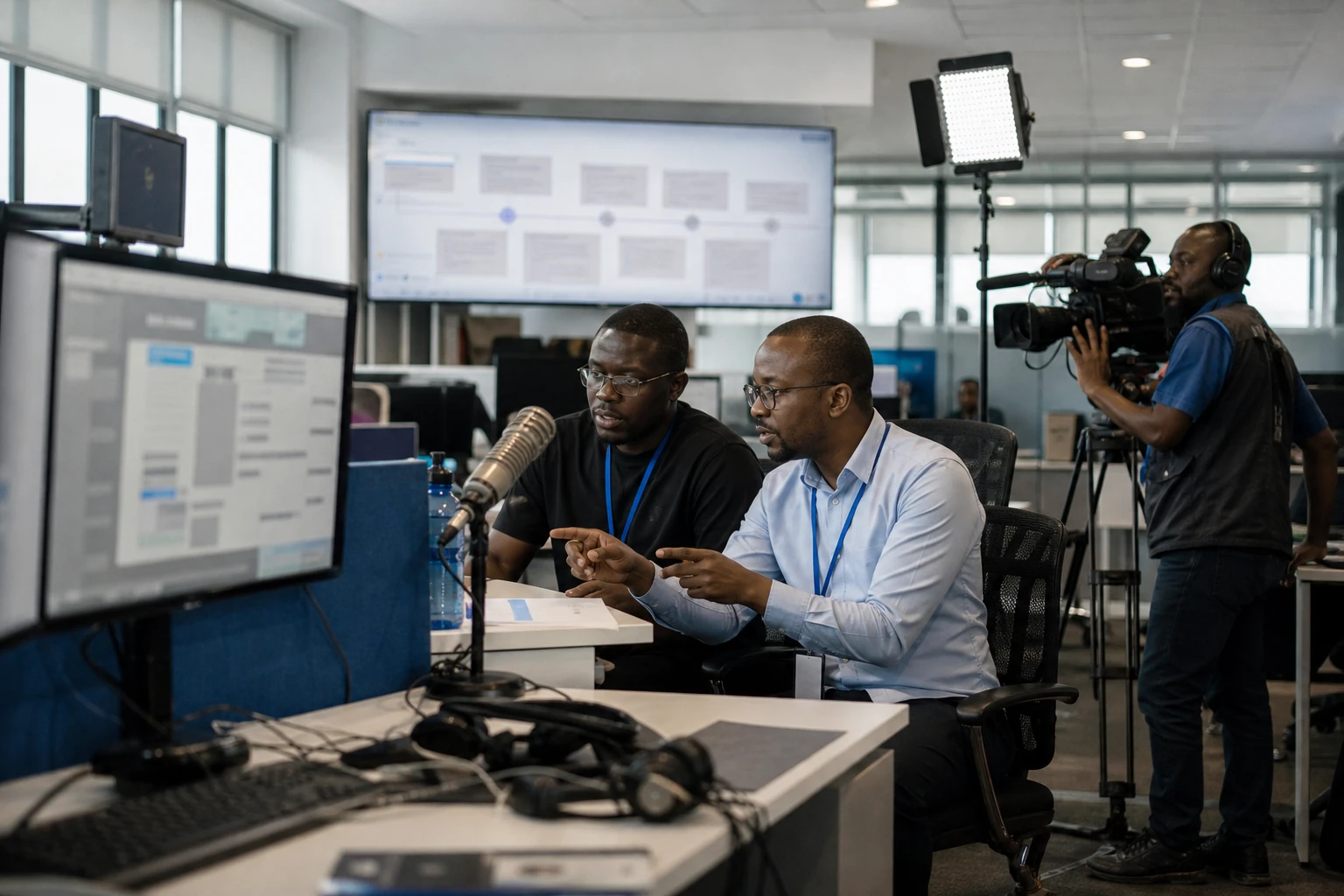
In eastern DR Congo, the war is also being told in Kigali
In the Kivus, the battle is not being fought solely on the military front. It is also waged through speeches, agreements signed far from the front lines and competing interpretations of the same crisis. Kinshasa speaks of aggression backed from abroad. Kigali, meanwhile, presents the FDLR threat as the key to understanding the entire issue. Caught between them, Congolese civilians are paying the price of a conflict that drags on and constantly shifts.
This debate is unfolding amid an already crowded diplomatic calendar. DR Congo and Rwanda signed a peace agreement in Washington on 27 June 2025, then reaffirmed new commitments in 2026 on neutralising the FDLR, disengaging forces and progressively lifting Rwanda’s “defensive measures”. At regional level, ECCAS also called in June 2025 for Rwandan troops to withdraw from Congolese soil.
What Kigali is putting on the table
On Friday 17 July in Kigali, Paul Kagame once again focused his remarks on the FDLR, the Democratic Forces for the Liberation of Rwanda. The armed movement, which emerged after the 1994 genocide, is regularly described by Kigali as a persistent threat based in eastern DR Congo. The Rwandan president claims that elements linked to these fighters have been incorporated into Congolese local forces and administrations, and that he raised the issue with Félix Tshisekedi at a meeting in Nairobi. This latter claim has not been confirmed by an independent source.
The Rwandan head of state also argues that several rounds of talks in Doha, Washington, Dar es Salaam and Nairobi have failed because, in his view, there has been no genuine break with FDLR networks. This, too, is his version of events. The Congolese view is different: Kinshasa denounces the presence of Rwandan forces alongside the M23 in the east of the country, an accusation Kigali rejects. The United Nations and several Western partners, however, say they have evidence of Rwandan support for the M23.
On Washington, Kagame believes the initial aim — to neutralise both the FDLR and the M23 — was diverted in favour of an approach he considers unbalanced. Yet US sanctions in March 2026 targeted Rwandan officials and the Rwanda Defence Force over violations related to the Congolese issue. In June, the US Treasury also sanctioned commanders linked to the FDLR and the M23, showing that Washington continues to treat the two armed groups as distinct but interconnected sources of destabilisation.
Why this standoff goes beyond rhetoric
The sensitive issue is not just political rhetoric. It is the security chain. If DR Congo and Rwanda cannot agree on the nature of the threat, they cannot agree on how to respond to it either. Kigali is making its withdrawal conditional on what it considers credible action against the FDLR. Kinshasa, for its part, first demands an end to Rwandan interventions on its territory and the restoration of its territorial integrity. This divergence is blocking de-escalation mechanisms, even when agreements are already in place.
For the Congolese population, the consequences are immediate. In conflict zones, roads remain unpredictable, markets are shrinking and the informal economy is left to absorb some of the shocks. In cities, the war is weighing on prices, movement and trust in the state. In rural areas, it is further weakening traditional authorities, public services and schools. Agreements can make progress on paper; their real impact depends on a monitoring mechanism and a credible timetable.
The case of Minembwe, which Kagame cited in connection with drone strikes against civilians, points to another aspect of the issue: serious claims are circulating, but are often difficult to establish precisely in areas with limited access. The UN secretary-general’s report does mention tensions and incidents along the Minembwe-Mikenge axis, but does not confirm the full political account put forward by Kigali. In this kind of context, the conditional is not a stylistic precaution; it is a methodological requirement.
A test for the Great Lakes, and beyond
The crisis between DR Congo and Rwanda has become a test for the entire Great Lakes peace architecture. It is putting the African Union and regional mechanisms to the test, as well as mediation efforts backed by Washington and Doha. African capitals are following the issue closely because it touches on a recurring question across the continent: how to reconcile sovereignty, border security and the handling of transnational armed groups without leaving civilians caught in the crossfire.
What happens next will depend less on statements than on verification. The next expected milestones concern the effective implementation of the Washington commitments, the arrangements for force disengagement and the mediators’ ability to set clear benchmarks. As long as these steps remain vague, every speech in Kigali or Kinshasa will continue to affect the situation on the ground more than it calms it.



