Egypt
 Libya
 Morocco
 Sudan
 Tunisia
 Benin
 Burkina Faso
 Cabo Verde
 Côte d'Ivoire
 Ghana
 Guinea
 Guinea-Bissau
 Liberia
 Mali
 Mauritania
 Niger
 Nigeria
 Senegal
 Sierra Leone
 The Gambia
 Togo
 Cameroon
 Central African Republic
 Chad
 DR Congo
 Equatorial Guinea
 Gabon
 Republic of the Congo
 São Tomé and Príncipe
 Burundi
 Comoros
 Djibouti
 Eritrea
 Ethiopia
 Kenya
 Madagascar
 Malawi
 Mauritius
 Mozambique
 Rwanda
 Seychelles
 Somalia
 South Sudan
 Tanzania
 Uganda
 Angola
 Botswana
 Eswatini
 Lesotho
 Namibia
 South Africa
 Zambia
 Zimbabwe
When the state wants data to flow instead of paper
In Algeria, a single administrative procedure can still require several return visits, multiple certificates and several counters. This is precisely the obstacle the authorities want to remove: getting data to flow between government agencies, rather than making citizens travel from one service to another. On 12 July 2026, President Abdelmadjid Tebboune set a maximum deadline of one month to achieve intersectoral interconnection through the use of the National Data Centre in Algiers.
This drive to speed things up comes as digitalisation has become a project of sovereignty as much as one of public-sector efficiency. Since February 2026, Algeria has launched its national data governance framework, presented as a means of organising, securing and standardising the use of public data. The authorities see it as a foundation for digital transformation, as well as for improving the quality of services provided to citizens.
A tight political timetable for a reform already under way
The decision taken by the Council of Ministers does not start from scratch. On 9 February 2026, Prime Minister Sifi Ghrieb oversaw the official launch of the national data governance framework in Algiers. On that occasion, the High Commissioner for Digitalisation, Meriem Benmouloud, presented the mechanism as a unified framework to put an end to scattered information, duplication and a lack of traceability.
A few months later, the authorities added a more tangible step: making automated data exchange between state sectors a reality. The presidential instruction of 12 July gives government agencies one month to connect their systems to the national Data Centre. The aim is clear: reduce delays, limit repeated data entry and enable users to benefit from smoother procedures.
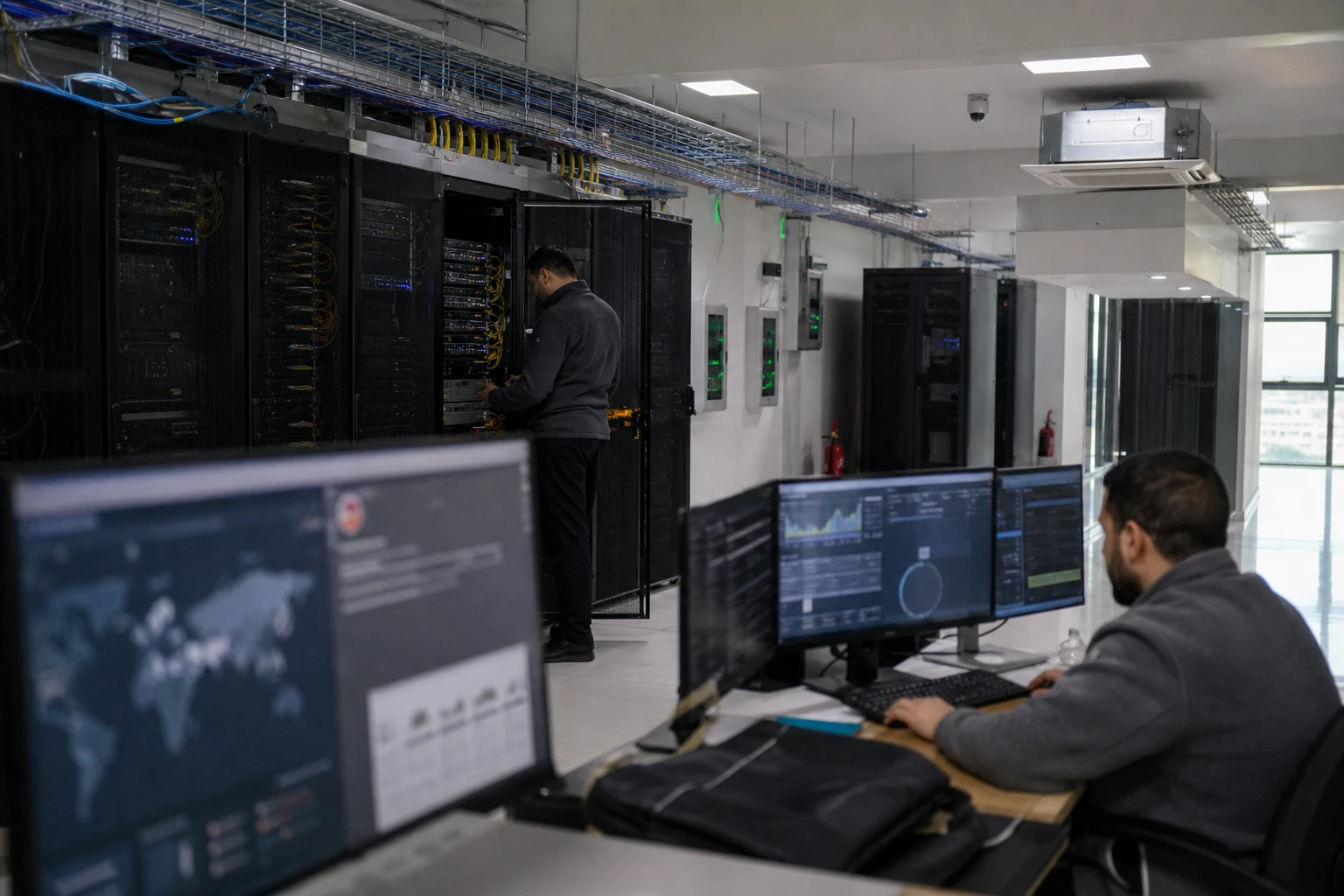
The Algerian National Centre for Digital Services, inaugurated in Algiers at the beginning of July, is intended to provide the backbone for this interconnection. The authorities describe it as the country’s first sovereign digital infrastructure. The complex comprises two data centres, in Algiers and Blida, and has a stated availability of 99.98%. The first National Data Centre also received the Uptime Institute’s Tier III Design certification in February, an international standard attesting to its technical design.
What interoperability means for citizens and government
Behind the technical term interoperability lies a very tangible change. An interoperable public service can retrieve information already held by another government agency, rather than asking users to submit the same document again. For citizens, that means fewer queues and fewer documents to provide. For the state, it also means more reliable databases, fewer errors and greater oversight.
The stakes go beyond simple IT modernisation. In a state where public policies still rely heavily on siloed administrative processes, data is becoming a tool for management. Algeria therefore wants to link the digitalisation of services to the development of broader tools, such as the national digital services platform, described as a future one-stop shop for citizens and businesses. Field trials of the platform have been declared successful, with its operational phase said to be imminent.
The project also concerns trust. The centralisation and secure sharing of information can improve traceability. They can also reduce opportunities for manipulating or duplicating files. But this ambition requires common standards, institutional discipline and a genuine ability to coordinate between ministries, local authorities and public institutions. Without these, the Data Centre would remain a high-performance infrastructure that is underused.
Digital reform linked to other decisions affecting everyday life
The Council of Ministers meeting on 12 July did not deal only with digitalisation. President Abdelmadjid Tebboune also decided that the tourist allowance would temporarily be paid by bank card rather than in cash. The authorities explain the choice as an effort to curb observed abuses and improve payment traceability. The Bank of Algeria subsequently set out the arrangements, which provide for €750 for adults and €300 for 12- to 19-year-olds, subject to certain family limits.
This link between digital reform and the management of financial flows is significant. It shows that Algeria’s digital transformation is not confined to government portals. It also affects the circulation of public money, efforts to combat embezzlement, the expansion of banking and the modernisation of procedures. In other words, digital technology is becoming a tool of governance, not just a technological veneer.
For households, the change could be immediate if services meet their deadlines. For government agencies, it imposes a more demanding pace. The one-month deadline set by the head of state now puts every sector under an obligation to deliver results. This kind of political timetable can speed up reform, but it can also expose delays in implementation if systems are not ready to communicate with one another.
A signal for Algeria and North Africa
Algeria’s course is part of a broader trend across the continent: several states are seeking to govern their data more effectively, link their public databases and build more integrated digital services. In North Africa, where administrative modernisation is becoming a marker of domestic credibility, the question is no longer simply whether platforms exist, but whether they can communicate with one another. Algeria is opting for a centralised approach, backed by sovereign infrastructure and direct political oversight.
The continental significance is twofold. On the one hand, the issue shows that digital sovereignty has become a matter of governance on a par with energy or transport. On the other, it is a reminder that successful reform depends as much on cables and servers as on common rules, staff training and institutions’ ability to share information. In the coming weeks, that is where the credibility of Algeria’s promise of a more connected, transparent and responsive state will be tested.