Algeria
 Egypt
 Libya
 Morocco
 Sudan
 Tunisia
 Benin
 Burkina Faso
 Cabo Verde
 Côte d'Ivoire
 Ghana
 Guinea
 Guinea-Bissau
 Liberia
 Mali
 Mauritania
 Niger
 Nigeria
 Senegal
 Sierra Leone
 The Gambia
 Togo
 Cameroon
 Central African Republic
 Chad
 DR Congo
 Equatorial Guinea
 Gabon
 Republic of the Congo
 São Tomé and Príncipe
 Burundi
 Comoros
 Djibouti
 Eritrea
 Ethiopia
 Kenya
 Madagascar
 Malawi
 Mauritius
 Rwanda
 Seychelles
 Somalia
 South Sudan
 Tanzania
 Uganda
 Angola
 Botswana
 Eswatini
 Lesotho
 Namibia
 South Africa
 Zambia
 Zimbabwe
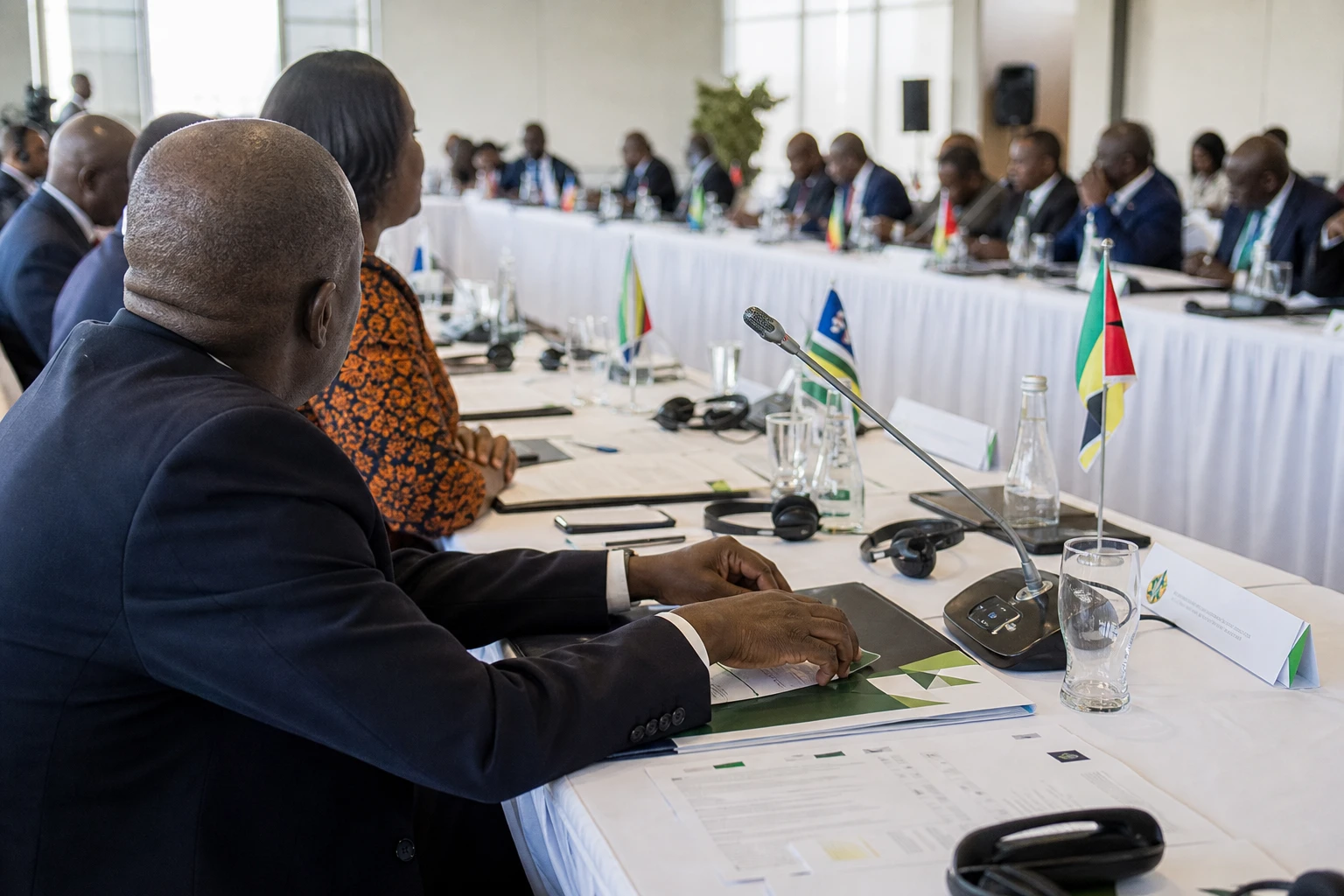
A logistics hub is not declared. It is built.
In Mozambique, the battle for regional trade is not fought only at sea. It is also fought inland, where goods are stored, consolidated, inspected and redistributed. This is where Dondo, in Sofala province, comes into play.
In a country where corridors shape a decisive share of trade with Zimbabwe, Zambia and Malawi, every improvement in the flow of goods matters. The Mozambican government is therefore pursuing a simple approach: ease congestion at the port of Beira, speed up operations and retain more traffic within the country. This fits into a broader strategy to modernise transport corridors, already backed by regional and international partners.
What the Dondo project entails
On 8 July 2026, Mozambique’s Ministry of Transport and Logistics announced the signing of a 25-year concession contract for the Dondo logistics terminal. The investment is estimated at about US$117 million. The project is to be led by Terminal Logístico de Dondo, S.A., a consortium bringing together Chinese investors and the public operator Caminhos de Ferro de Moçambique, better known as CFM, the state-owned company that manages the railways and is involved in several of the country’s port infrastructure projects.
The terminal is to operate as a dry port: an inland logistics platform linked to the seaport by road or rail. The aim is to move some storage, consolidation and distribution activities outside the port grounds in Beira. The authorities expect this to ease pressure on the port, as well as on the city, which is heavily exposed to transit truck traffic. Transport Minister João Jorge Matlombe said the project was intended to “ease the pressure” on the port of Beira.
The announcement did not come out of the blue. On 22 April 2026, the same ministry had already signed a memorandum with two Chinese companies covering the access road to the port of Beira and the Dondo logistics terminal. The state is therefore preparing the infrastructure upstream, with an end-to-end approach: a dedicated access road, a viaduct, an inland terminal and improved traffic flow along the N6.
The Beira corridor, the backbone of the country’s centre
The Beira corridor is not simply a national route. It is one of southern Africa’s strategic trade routes. It connects the Indian Ocean with the hinterland and serves landlocked economies that depend on Mozambique’s port performance for their imports and some of their exports. The African Development Bank says the corridor aims, among other things, to reduce transport costs for Mozambique, Zimbabwe and Zambia. The World Bank Group, meanwhile, links Mozambique’s regional competitiveness to the revival of its economic corridors, including Beira.
For the Mozambican government, the rationale is also political and territorial. Beira is not just a port. It is a pivotal city, a gateway for goods arriving from inland Africa, but also an urban area congested by convoys of trucks. By moving some logistics operations to Dondo, about 30 kilometres away, Maputo aims to make gains on two fronts: trade competitiveness and urban organisation.
The project joins a number of other initiatives. The government is also preparing a concession for the Moatize dry port in Tete province, as well as the modernisation of border posts such as Calómuè and Zóbwè, according to a procedural notice published in 2025. In other words, Dondo is just one link in a wider network connecting ports, borders, mines, railways and roads.
What it means for operators, neighbouring states and residents
For port operators, the promise is clear: less waiting, less congestion and more predictable flows. In logistics, reliability is often worth more than a simple geographical shortcut. A slow or congested corridor costs importers, exporters and carriers time and therefore money. Conversely, an efficient inland platform can attract regional traffic and build a lasting reputation.
For landlocked countries in the sub-region, particularly Zimbabwe, Zambia and Malawi, the stakes are tangible. Their supply chains depend on a smooth corridor to the ocean. Every delay at the port, every road bottleneck and every customs holdup feeds into the final cost of goods. This is precisely why the regional institutions of SADC, the Southern African Development Community, have long identified transport corridors as instruments of economic integration.
For residents of Beira and Dondo, the expected impact is more immediate. The port city bears some of the heavy traffic generated by transit operations. If the Dondo terminal genuinely shifts upstream operations, it could ease pressure on urban roads, waiting times and congestion around the port. But that requires close coordination between rail, road, customs, cargo handlers and concessionaires. Without that discipline, infrastructure alone will not deliver lasting gains.
A test for Mozambique’s logistics strategy
Mozambique is not simply seeking to modernise a terminal. It wants to prove that it can become a credible transit hub in a region where logistics competition is fierce. South Africa remains a major benchmark, but its own operational strains have created opportunities for neighbouring corridors. Mozambique hopes to fill that space with a more integrated, faster offer, better coordinated across ports, railways and border posts.
The announced timetable also sets a high bar. If the terminal becomes operational within the timeframe outlined by the government, the country will have an additional selling point to attract freight forwarders, shippers and regional investors. But the challenge will not be only financial. It will be operational. In logistics, promises matter less than service continuity, stable costs and coordination between public and private stakeholders. That is where Dondo will be judged, far beyond Sofala.