Algeria
 Egypt
 Libya
 Morocco
 Sudan
 Tunisia
 Benin
 Burkina Faso
 Cabo Verde
 Ghana
 Guinea
 Guinea-Bissau
 Liberia
 Mali
 Mauritania
 Niger
 Nigeria
 Senegal
 Sierra Leone
 The Gambia
 Togo
 Cameroon
 Central African Republic
 Chad
 DR Congo
 Equatorial Guinea
 Gabon
 Republic of the Congo
 São Tomé and Príncipe
 Burundi
 Comoros
 Djibouti
 Eritrea
 Ethiopia
 Kenya
 Madagascar
 Malawi
 Mauritius
 Mozambique
 Rwanda
 Seychelles
 Somalia
 South Sudan
 Tanzania
 Uganda
 Angola
 Botswana
 Eswatini
 Lesotho
 Namibia
 South Africa
 Zambia
 Zimbabwe
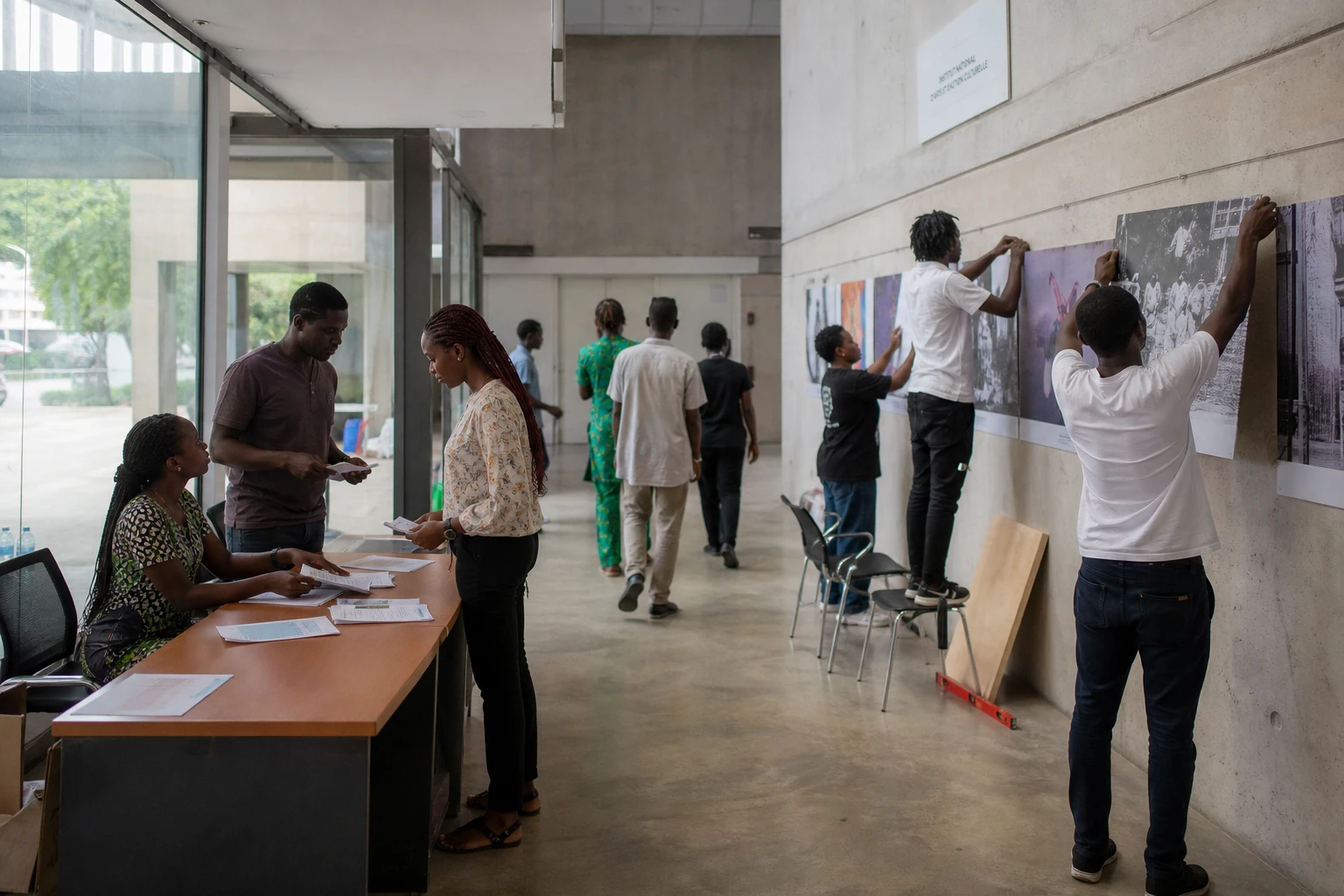
When Montreal’s stages become a meeting place for the Ivorian diaspora
In Montreal, a festival can become much more than a series of concerts. For many Africans in the diaspora, it serves as a point of reference, a repository of memory and a bridge. That is also the story told by the 40th edition of Nuits d’Afrique, held from 7 to 19 July 2026, with a programme linking Africa, the Caribbean and Latin America. Over four decades, the event has established itself as a major cultural space in Quebec’s metropolis.
For Côte d’Ivoire, its significance goes beyond music. The festival highlights a journey led by Lamine Touré, its founder and president, and a team that has sustained the project over time. The story resonates on the continent, too, because it shows how an initiative born abroad can showcase African cultures without freezing them in time. The message also speaks to Yamoussoukro, Côte d’Ivoire’s political and administrative capital, and to the entire Ivorian community living outside the country.
A festival born in a club, now a cultural institution
The story began in Montreal in the mid-1980s. Club Balattou, opened by Lamine Touré in 1985, provided the foundation for the festival. The venue’s name itself refers to a simple idea: a dance for everyone, open to every rhythm. Two years later, in July 1987, the first edition of Nuits d’Afrique was launched in Montreal. Since then, the festival has grown in scale while retaining its original focus on the circulation of African and diasporic music.
This anniversary year continues a visible tradition. The official website announces a 40th edition featuring indoor events and free outdoor activities in the heart of the Quartier des spectacles. The event is no longer simply a series of concerts. It has become a place of exhibition, exchange and encounter for a wide range of audiences. Tourisme Montréal describes it as a festival of music and cultures from Africa, the Caribbean and Latin America, confirming its place in the city’s summer calendar.
Ivorians in the long history of diaspora music
The Ivorian presence in this history is not a minor one. The festival’s founder is identified as Ivorian in the project’s presentation archives, and the festival itself spotlights several artists from Côte d’Ivoire or connected to its music scene. Tiken Jah Fakoly, for example, is described by the festival as an artist from Côte d’Ivoire, with an international career and a socially engaged voice. The place given to an Ivorian in the festival’s structure is more than a biographical detail. It also explains how Nuits d’Afrique speaks to Ivorian audiences both abroad and at home.
The link between culture and mobility is central here. Artists based in Montreal and coming from Senegal, Guinea, Mali or Côte d’Ivoire have, over time, built a shared space where heritage, languages, rhythms and audiences meet. This movement says something about contemporary West Africa: artists, technicians and families live between several countries, several stages and several cultural economies. The festival therefore tells the story not only of Canadian success, but of an expanded African geography shaped by departures, new homes and symbolic returns.
In this context, Côte d’Ivoire has a particular place. The country has a rich music scene, a highly active economic capital, Abidjan, and a political capital, Yamoussoukro, as its institutions point out. This duality matters: it shows that a country can project its culture through several centres at once. In a West African region connected by ECOWAS, the movement of artists and audiences remains a powerful source of influence, sometimes more durable than diplomatic rhetoric.
What this 40th edition says about Africa today
The significance of this anniversary edition is also political, in the broad sense of the word. At a time when debates over identity, belonging and migration remain heated, Nuits d’Afrique offers a different narrative: one of African cultures that are defined neither by exile nor by nostalgia. The festival reminds us that the diaspora is not just an audience. It also creates stages, jobs, programmes and cultural archives. This matters to families living in Canada, as well as to young people born far from their country of origin.
For artists, the stakes are tangible. Performing on a stage like this can open up networks for touring, with dates in Europe, North America and other African capitals. For audiences, particularly those in the diaspora, the festival offers a space for recognition. They hear repertoires that rarely feature in mainstream media, yet help shape collective imaginations. The festival thus becomes a way to bring visibility to scenes that are often scattered and sometimes underfunded.
Nuits d’Afrique’s continental reach is ultimately rooted in its longevity. Forty years in the North American cultural landscape is rare. Forty years of bringing Africa, the Caribbean and Latin America into dialogue is even more unusual. For Côte d’Ivoire and the rest of West Africa, this kind of institution shows that a lasting cultural presence abroad can strengthen the continent’s image without reducing it to a postcard. The next thing to watch is simple: whether the festival can continue to expand its stages while retaining its primary role as a bridge between African memories and audiences around the world.