
 Algeria
 Egypt
 Libya
 Morocco
 Sudan
 Tunisia
 Benin
 Burkina Faso
 Cabo Verde
 Côte d'Ivoire
 Ghana
 Guinea
 Guinea-Bissau
 Liberia
 Mali
 Mauritania
 Niger
 Nigeria
 Senegal
 Sierra Leone
 The Gambia
 Togo
 Cameroon
 Central African Republic
 Chad
 Equatorial Guinea
 Gabon
 Republic of the Congo
 São Tomé and Príncipe
 Burundi
 Comoros
 Djibouti
 Eritrea
 Ethiopia
 Kenya
 Madagascar
 Malawi
 Mauritius
 Mozambique
 Rwanda
 Seychelles
 Somalia
 South Sudan
 Tanzania
 Uganda
 Angola
 Botswana
 Eswatini
 Lesotho
 Namibia
 South Africa
 Zambia
 Zimbabwe
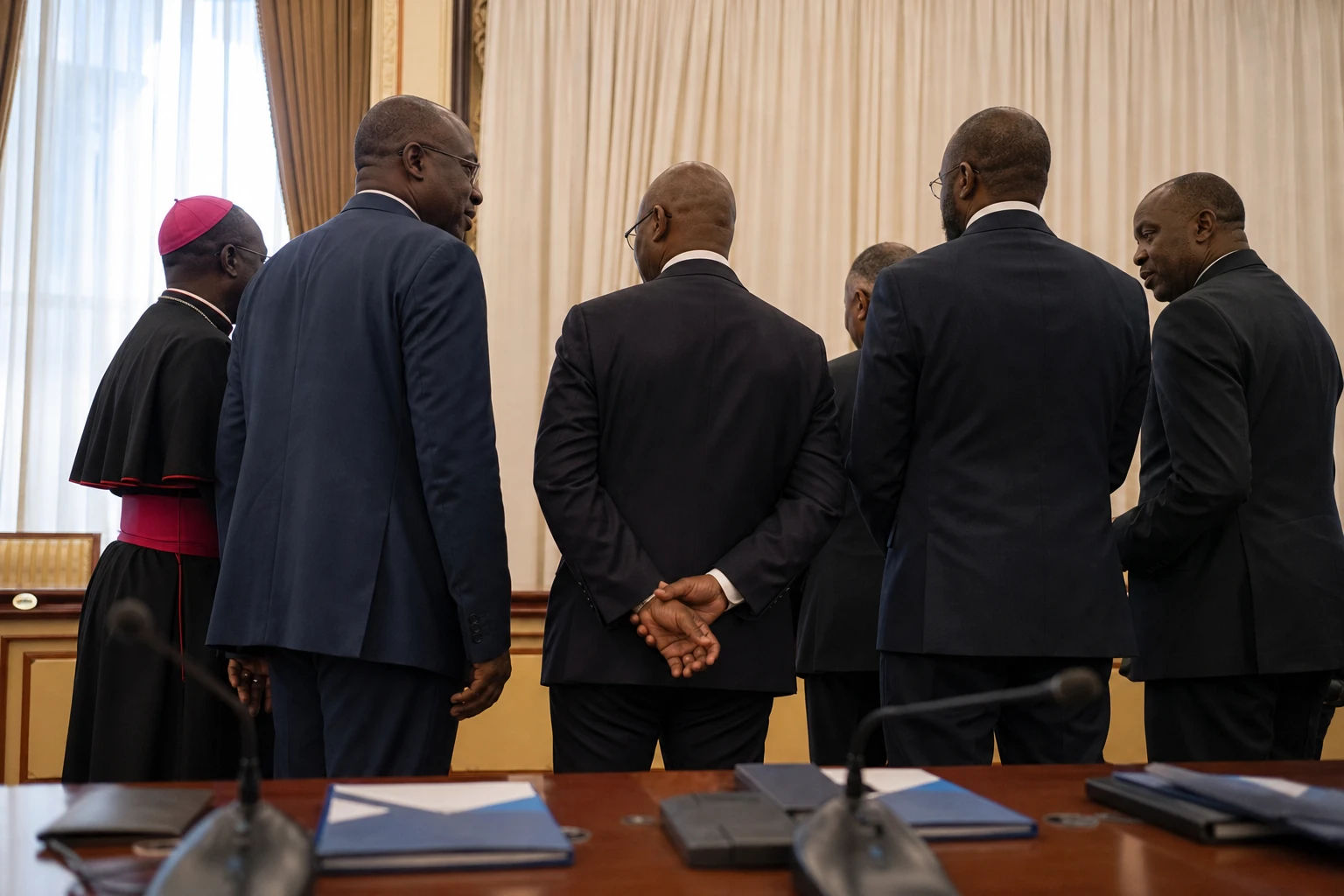
In Kinshasa, dialogue returns as a political test
In the Democratic Republic of the Congo, an opening to dialogue does more than change the political agenda. It also shows whether the authorities still want to lock in the balance of power, or rebuild a minimum of trust at a time when the east of the country remains tense.
On Friday 17 July 2026, in Kinshasa, Félix Tshisekedi received the leaders of the main religious denominations at the City of the African Union and accepted the principle of an inclusive national dialogue. The presidency presented this option as a response to the political and security crisis in a country still engaged in several channels for resolving the crisis, including the Washington and Doha processes.
The signal is significant. For months, churches, part of the opposition and civic organisations had been calling for a broader forum for discussion. Pressure was also mounting in Kinshasa over the debate on possible constitutional reform, an issue that has become one of the main points of tension in Congolese public debate.
A process still to be built
The head of state has not merely given his agreement in principle. He must now formalise the process by decree, set the facilitators’ mandate, specify the timetable and establish the framework for the talks. This step matters as much as the announcement itself, because it will show whether the dialogue is merely a gesture to ease tensions or a genuine political process.
Religious denominations have been placed at the heart of this preparatory phase. Cardinal Fridolin Ambongo welcomed a change of course and called on all political forces to join the initiative so that it produces concrete results. This position carries particular weight because churches in DR Congo often play a mediating role when political institutions are deadlocked.
The government, for its part, is insisting on a red line: no dialogue without a clear break with the violence affecting the east of the country. Government spokesman Patrick Muyaya defended the idea of a “domestic front” and reiterated that, in the executive’s view, inclusivity cannot provide cover for actors suspected of colluding with foreign aggression. In the Congolese context, this refers to the war and the external support that Kinshasa attributes to Rwanda and the M23/AFC rebels.
This caution is not incidental. It addresses a concern widely shared within the presidential majority: opening the door to all political forces without clarifying responsibilities would, in the government’s view, muddy the fight against insecurity in the east. The opposition, by contrast, believes credible dialogue requires measures to ease tensions, including the release of political prisoners and the abandonment of the proposed constitutional revision.
What this shift means for DR Congo and the region
This change of course comes after regional diplomatic consultations led by Burundi, Congo-Brazzaville and Angola. Luanda has a distinctive role in this process. Angola has already led mediation efforts on the Congolese crisis, and the African Union continues to favour inclusive political solutions over purely military ways out of the crisis.
The regional context is fraught. DR Congo belongs to several integration groupings, but it is the SADC that is currently most influential on the eastern crisis, alongside the African Union’s diplomatic initiatives. The Southern African Development Community held an extraordinary summit at the end of June 2026, which addressed, among other things, the security situation in eastern Congo. It also continued high-level consultations in Kinshasa in April 2026 on aligning DR Congo with certain regional protocols, a sign that economic integration and political stabilisation remain linked.
On the ground, the stakes are very real. For people in the east, dialogue matters only if it leads to a genuine reduction in fighting, forced displacement and abuses. For traders, transport operators and the informal economy, every week of instability pushes up prices, disrupts supply routes and blocks roads to major urban centres. For the state, the challenge is twofold: to maintain institutional authority in Kinshasa while showing that a way out of the crisis also requires domestic political compromises.
The continental dimension is just as clear. Since 1 July 2026, DR Congo has held the rotating presidency of the United Nations Security Council, a position that gives Kinshasa a higher-profile platform at a time when its own domestic situation remains volatile. At the same time, the country continues to call for external commitments to peace in the east to be honoured, putting the consistency of its diplomacy under scrutiny.
This dialogue will therefore be watched well beyond Kinshasa. If it leads to a clear framework, with credible facilitators, a precise mandate and rules accepted by the main actors, it could revive national cohesion damaged by war and mistrust. If it stalls, it will join the long list of mediation efforts announced and then watered down. In DR Congo, the question is no longer whether to proclaim inclusivity. It is how to make it useful, verifiable and politically sustainable.



