Algeria
 Egypt
 Libya
 Morocco
 Sudan
 Tunisia
 Benin
 Burkina Faso
 Cabo Verde
 Côte d'Ivoire
 Ghana
 Guinea
 Guinea-Bissau
 Liberia
 Mali
 Mauritania
 Niger
 Nigeria
 Sierra Leone
 The Gambia
 Togo
 Cameroon
 Central African Republic
 Chad
 DR Congo
 Equatorial Guinea
 Gabon
 Republic of the Congo
 São Tomé and Príncipe
 Burundi
 Comoros
 Djibouti
 Eritrea
 Ethiopia
 Kenya
 Madagascar
 Malawi
 Mauritius
 Mozambique
 Rwanda
 Seychelles
 Somalia
 South Sudan
 Tanzania
 Uganda
 Angola
 Botswana
 Eswatini
 Lesotho
 Namibia
 South Africa
 Zambia
 Zimbabwe
Parliamentary scrutiny amid sporting frustration
In Senegal, football remains a subject of public importance. It touches national pride, but also budgets, governance choices and very tangible expectations in Dakar and across the country.
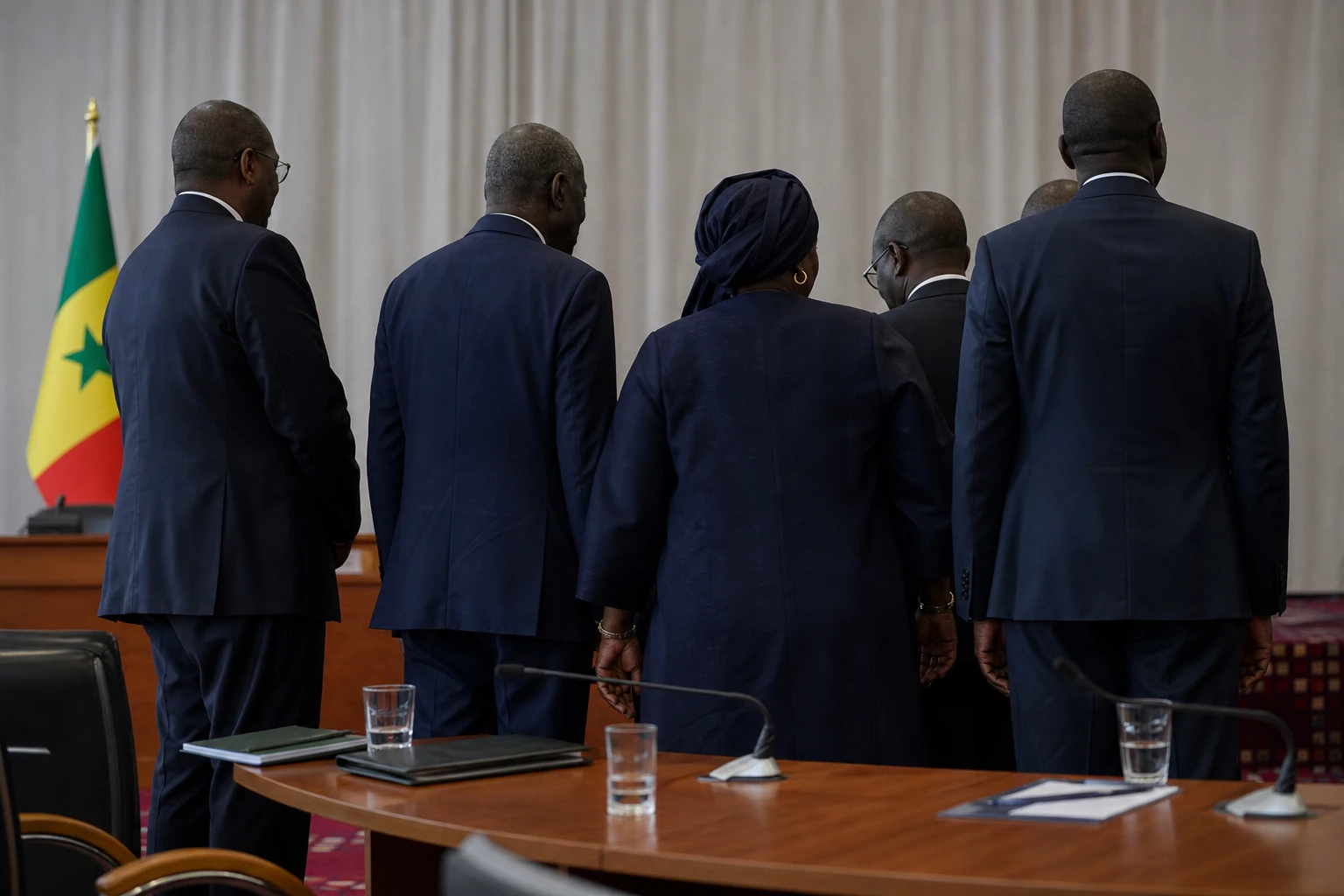
Against this backdrop, the National Assembly has decided to hold public hearings on the preparations for, and participation of, the Senegalese delegation at the 2026 FIFA World Cup. The Committee on Education, Youth, Sports and Leisure intends to hear from the people involved from 22 July, in what it describes as an exercise in evaluation and accountability.
The hearings come after the Lions’ World Cup campaign has already ended. Senegal were eliminated by Belgium in the round of 32, losing 3-2 after extra time, according to FIFA. The competition’s official schedule shows that the tournament ran from 11 June to 19 July 2026, placing the parliamentary initiative in a period of review, rather than making it merely a controversy over an early exit.
What MPs want to examine
The heart of the matter is not limited to results on the pitch. MPs want to understand how the delegation was prepared, which administrative decisions shaped the trip, how spending was authorised and on what basis sporting decisions were made. The Assembly describes this as a mission to scrutinise government action, a traditional role of Senegal’s parliament that goes beyond passing laws.
The announced hearings are expected to cover several areas at once: the composition of the official delegation, logistical management, financial matters, approval procedures and the role of public officials as well as the Senegalese Football Federation. The parliamentary institution also says it intends to uphold the right to a fair hearing, the rights of those giving evidence and any procedures that may be under way.
This approach is not insignificant. In a country where sport is often funded, overseen or supported with public resources, the question is not only whether the team wins. It is also whether the money, organisation and decision-making chain genuinely serve collective performance. In Dakar and in the regions, supporters are not looking only at the score. They are also watching how the sporting institution operates.
The Senegalese Football Federation and the relevant public authorities could therefore be called on to explain themselves to MPs. At this stage, parliament has not announced a sanctions process, but an exercise in clarification. That distinction matters, as it sets institutional scrutiny apart from political score-settling.
Good governance in sport, a broader political issue
Sport governance is coming under increasing scrutiny in Senegal. International competitions, whether the World Cup or the Africa Cup of Nations, involve funding, travel, technical staff and administrative decisions. When the preparation process breaks down, the credibility of the entire system is called into question.
The recent precedent of the Africa Cup of Nations in North Africa has already shown how sensitive relations can be between federations, national teams and continental institutions. The Confederation of African Football (CAF) itself published clarifications on the Senegalese Football Federation early in 2026, evidence that sporting power struggles also involve questions of rules, procedures and accountability.
At the same time, Senegal has shown that it wants to play a full part in continental and global events. Just months before the Dakar 2026 Youth Olympic Games, the country has already embarked on several projects related to hosting major events. Parliamentary scrutiny of the 2026 World Cup therefore forms part of a broader period in which the state is seeking to improve oversight of its major sporting events.
For leaders, the stakes are institutional. For athletes, they are technical and human. For the public, they are financial and symbolic. Better-documented preparations can prevent improvisation. They can also reduce the suspicions that arise whenever results disappoint. In this sense, the parliamentary initiative responds to an expectation of transparency that extends beyond football alone.
It also raises questions about the place of sport in Senegal’s public spending, at a time when citizens are demanding accountability for policies that are visible and measurable. In a country with a large youth population, where clubs, academies and federations shape part of social life, the quality of sport governance has a direct impact on the country’s image, as well as on the development of talent.
Implications beyond Dakar
Beyond Senegal, this initiative says something broader about West Africa. In the ECOWAS region, where sport often reflects the state’s ability to organise, fund and account for its actions, a parliament summoning those responsible for a World Cup campaign sends a strong institutional signal. The question is not only how to win. It is also how Africa’s leading teams prepare for increasingly demanding global competitions.
It is also a reminder that African football is not played only on the pitch. It is played in federations, ministries, parliamentary committees, preparation schedules and oversight mechanisms. That is where the conditions for lasting performance are built—or undermined. For Senegal, the next step will therefore be less about match commentary than about examining the hearings and any reforms that may emerge from them before the next national and international sporting events.