Algeria
 Egypt
 Libya
 Morocco
 Sudan
 Tunisia
 Benin
 Burkina Faso
 Cabo Verde
 Côte d'Ivoire
 Ghana
 Guinea
 Guinea-Bissau
 Liberia
 Mali
 Mauritania
 Niger
 Nigeria
 Senegal
 Sierra Leone
 The Gambia
 Togo
 Cameroon
 Central African Republic
 Chad
 DR Congo
 Equatorial Guinea
 Gabon
 Republic of the Congo
 São Tomé and Príncipe
 Burundi
 Comoros
 Djibouti
 Eritrea
 Ethiopia
 Kenya
 Madagascar
 Malawi
 Mauritius
 Mozambique
 Rwanda
 Seychelles
 Somalia
 South Sudan
 Tanzania
 Uganda
 Angola
 Botswana
 Eswatini
 Lesotho
 Namibia
 Zambia
 Zimbabwe
A local product with global ambitions
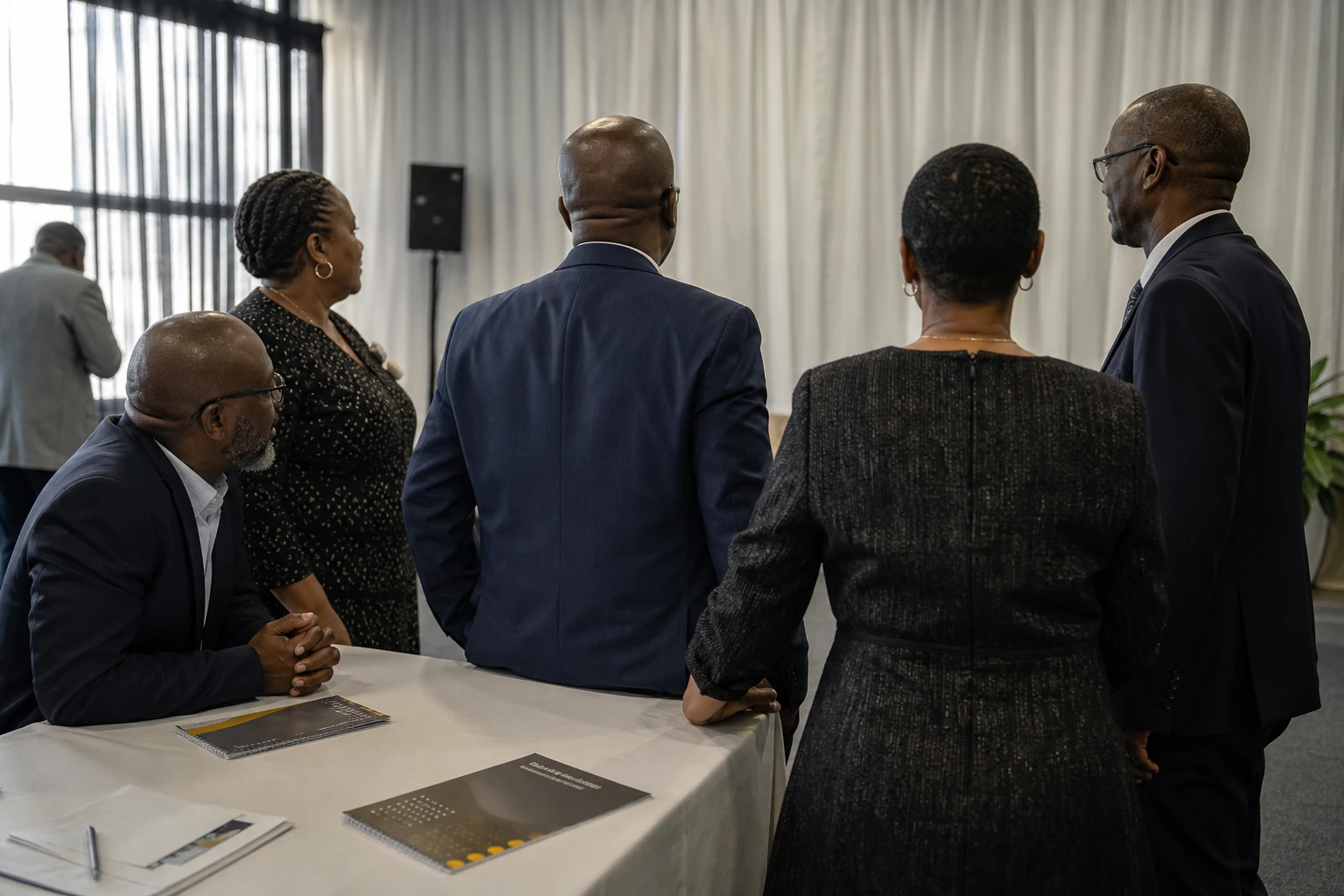
Rooibos is often associated with an everyday cup of tea. Yet this Western Cape plant also tells another story: that of a niche agricultural sector, a marker of origin and, now, an object of space research. For South Africa, sending seeds into orbit is more than a media-friendly gesture. It is a way of showing that a product deeply rooted in the Cederberg can take part in cutting-edge scientific programmes.
The project forms part of a broader national trajectory. From Pretoria, South African authorities are seeking to link agriculture, innovation and industrial upgrading. At the same time, the South African National Space Agency says it wants to develop space science, human skills and local industry. In southern Africa, projects of this kind also reinforce South Africa’s position as a scientific hub for SADC, the Southern African Development Community.
Rooibos seeds bound for the International Space Station
Organisers announced on Thursday 16 July 2026 that rooibos seeds are due to be sent to the International Space Station in October. The experiment is being presented as a first for the African continent: according to the South African Rooibos Council, these would be the first seeds from an indigenous South African species, and more broadly the first African seeds, to travel into space. They are expected to return to Earth in December or January, after exposure to microgravity and space radiation.
The principle is simple. Once the seeds return from orbit, they will be compared with control seeds that remained on the ground. Researchers will observe germination, growth and any differences in behaviour in particular. The aim is to understand how a plant responds to an extreme environment, as part of space biology research, but also to help prepare more resilient food systems on Earth.
The South African Rooibos Council has not disclosed the cost of the operation. The sector, however, stresses the project’s scientific and educational value. According to the council’s website, rooibos is generally sown between February and March, grown in a very specific natural area, and harvested after a growth cycle of about 18 months.
A Cederberg plant with an international market
Rooibos is no anonymous crop. It grows naturally in the Cederberg region, north-west of Cape Town, in sandy soils and a dry climate unique to the area. The industry council notes that the plant belongs to the fynbos, one of the world’s six recognised floral kingdoms. This strong link between product, territory and expertise explains why the name “Rooibos” received European protection as a protected designation of origin in 2021. Within the European Union, the term is therefore reserved for products from this defined area.
This protection has clear economic significance. The rooibos council says about 20,000 tonnes are produced each year in South Africa, with more than 50% consumed locally and the remainder exported. On its information pages, the organisation also cites more than 8,000 jobs linked to the sector and a presence in more than 50 countries. In 2025, its exports exceeded 10,000 tonnes for the first time, according to the same source.
This is no small matter for Western Cape producers. When a plant becomes a protected product, its value rests not only on volumes, but also on origin, traceability and reputation. That is precisely what the sector council underscores when it identifies “quality” and “integrity of origin” as pillars of the industry. The space experiment is therefore also part of this drive to add value.
What the experiment says about South Africa
In South Africa, space projects often serve two purposes at once: research and training. SANSA, based in Hermanus in the Western Cape, says it works on Earth observation, space science, space engineering and space operations, while supporting human capital and local industry. In this context, rooibos going into orbit also becomes a tool for popularising science, particularly among Western Cape pupils involved in the project.
The stakes therefore extend beyond the laboratory. For large processing and export companies, the experiment could strengthen the story of a premium product, identifiable and backed by a protected origin. For small-scale producers in the Cederberg and surrounding areas, it highlights a crop sensitive to rainfall, temperature and climate pressures. The sector council also notes that production varies sharply from year to year, depending on natural conditions.
The significance is also continental. By saying these are the first African seeds sent into space, the organisers are positioning Africa not as a spectator, but as a participant in space research applied to agriculture. This is an important signal at a time when several countries on the continent are investing more in practical uses of space, from food security to environmental monitoring. South Africa, already at the forefront in this field according to SANSA, is thus turning a national symbol into an object of shared scientific inquiry.
What to watch for before the end of the year
The next milestone will be the October launch, followed by the seeds’ return between December 2026 and January 2027. That is when the experiment will take on its true scientific significance. If there are clear differences between the orbital seeds and the control seeds, the sector could pursue further research into plant resilience, crop breeding and the agricultural systems of the future. If the differences are small, the experiment will still matter: the value of this type of mission also lies in its methodology, comparison and repetition.
Ultimately, the message from South Africa is clear. A product born in the mountains of the Western Cape can travel into Earth’s orbit without losing its local roots. That is where rooibos’s strength lies: in its ability to connect a specific territory, an export sector, a national scientific institution and a broader African ambition.