Algeria
 Egypt
 Libya
 Morocco
 Sudan
 Tunisia
 Benin
 Burkina Faso
 Cabo Verde
 Côte d'Ivoire
 Ghana
 Guinea
 Guinea-Bissau
 Liberia
 Mali
 Mauritania
 Niger
 Nigeria
 Senegal
 Sierra Leone
 The Gambia
 Togo
 Cameroon
 Central African Republic
 Chad
 DR Congo
 Equatorial Guinea
 Gabon
 Republic of the Congo
 São Tomé and Príncipe
 Burundi
 Comoros
 Djibouti
 Eritrea
 Ethiopia
 Kenya
 Madagascar
 Malawi
 Mauritius
 Mozambique
 Rwanda
 Seychelles
 Somalia
 South Sudan
 Tanzania
 Uganda
 Angola
 Botswana
 Eswatini
 Lesotho
 Namibia
 South Africa
 Zambia
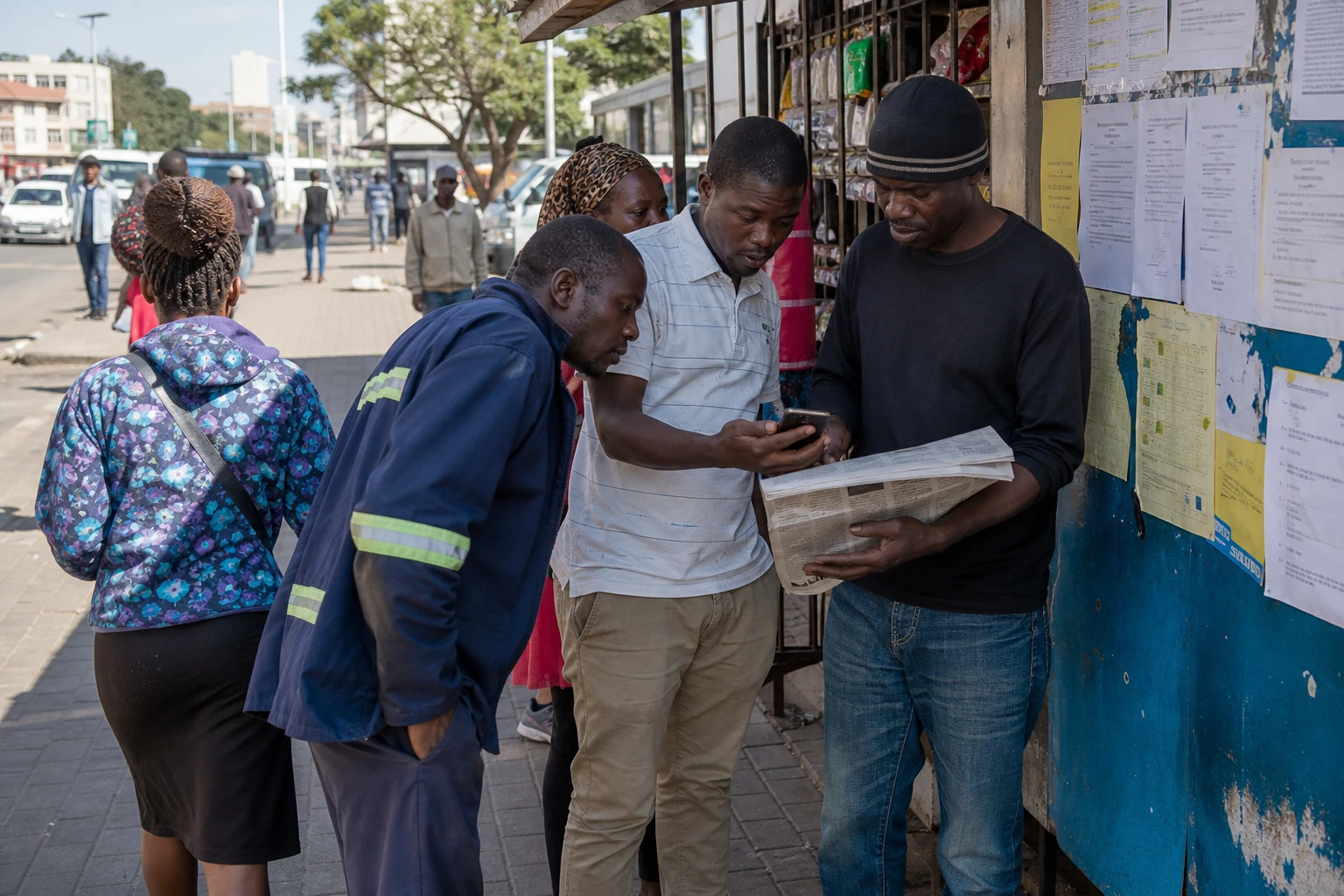
When a viral clip recycles a recent tragedy
On social media, the most shocking images often travel faster than the facts. This is especially true when an accident affects a community already reeling from significant loss of life. In Zimbabwe, the sinking of a ferry on Lake Kariba has opened the door to misleading, fabricated or recycled content designed to capture attention.
The country is also going through a period in which the safety of travel on water and preparedness for risks have become pressing issues. In June 2026, the Kariba and Hurungwe districts adopted disaster preparedness plans, with support from the Department of Civil Protection, just as local authorities were warning of increased threats from floods, droughts and transport incidents. This backdrop matters. It shows that a sinking is not merely a news story, but a public safety and infrastructure problem.
What the video actually shows
The clip that circulated does not document the sinking on Lake Kariba. It shows an overloaded boat capsizing in the Democratic Republic of the Congo, in Goma, on Lake Kivu, on 3 October 2024. The AFP news agency traced the clip through a reverse image search, then cross-checked it against a video published by the Associated Press the following day. The Goa police in India had already refuted another false attribution, clarifying that the accident had taken place in the Congo, in Africa.
The difference in location is no minor detail. Lake Kivu and Lake Kariba are in two distinct geographical areas, with their own routes, ports and vulnerabilities. On platforms, this kind of error is fuelled by repetition. The same video can be given a new context several times, in several countries, with different captions, as soon as a maritime tragedy stirs collective emotion. Here, the mechanism is clear: a real image, removed from its context, becomes false evidence.
The Lake Kariba sinking itself did take place on Tuesday 11 August 2026, according to information published by the AP. The ferry capsized in heavy waves. Authorities initially reported at least 15 dead and 27 missing; the toll then rose to 46, before climbing to 72 and then 84 dead after more bodies were recovered. On 16 August, the AP said 77 people had been rescued.
Zimbabwean authorities also said the ferry was carrying far more passengers than its authorised capacity. The AP reported estimates of up to 153 people on board, while the vessel was authorised to carry 90 passengers. The victims include 18 children, 16 of them aged 10 or under. These figures remain subject to change as search and recovery operations continue. They should therefore be read as provisional official tolls, not fixed totals.
Why this confusion says something about Zimbabwe and the region
Lake Kariba is not just scenery. It is a vital route for villages, fishing camps and rural communities where roads are sometimes in poor condition and alternative transport is scarce. When a ferry sinks, the impact goes beyond the crossing itself. Families lose a relative, an income, sometimes both. Local fishers and traders also see their transport networks disrupted. The accident is a reminder that in southern Africa, the safety of inland water transport is as much a public service issue as a matter of risk prevention.
The regional dimension is just as important. Lake Kariba is shared by Zimbabwe and Zambia, and cross-border cooperation there is ongoing, particularly on dam management, fisheries and human movement around the Zambezi basin. Across SADC, the disaster is a stark reminder: risk prevention, vessel maintenance, crew training and monitoring passenger loads are not minor technical concerns. They are matters of governance and human security.
The use of a repurposed video adds another layer. It shows how disinformation thrives around African disasters, especially when emotion comes before verification. People online do not see only a striking image. They project a context, a date, a country, sometimes anger onto it. In this specific case, the false caption did more than distort a fact; it exploited fresh grief in Zimbabwe and a regional memory marked by other sinkings. Caution is therefore needed on two fronts: in response to the accident, and in response to the fabricated account surrounding it.
For southern Africa, the stakes extend beyond Zimbabwe. River and lake disasters often involve the same factors: overloading, weather, ageing vessels, inadequate oversight and the remoteness of emergency services. Effective responses require regulation, maintenance and alerts, but also reliable local reporting capable of swiftly countering visual manipulation. That is where the continental significance of this case lies: protecting lives, but also defending truth from falsehood.