Algeria
 Egypt
 Libya
 Morocco
 Sudan
 Tunisia
 Benin
 Burkina Faso
 Cabo Verde
 Côte d'Ivoire
 Ghana
 Guinea
 Guinea-Bissau
 Liberia
 Mali
 Mauritania
 Niger
 Nigeria
 Senegal
 Sierra Leone
 The Gambia
 Togo
 Cameroon
 Central African Republic
 Chad
 DR Congo
 Equatorial Guinea
 Gabon
 Republic of the Congo
 São Tomé and Príncipe
 Burundi
 Comoros
 Djibouti
 Eritrea
 Ethiopia
 Kenya
 Madagascar
 Malawi
 Mauritius
 Mozambique
 Rwanda
 Seychelles
 Somalia
 South Sudan
 Tanzania
 Uganda
 Angola
 Botswana
 Eswatini
 Lesotho
 Namibia
 South Africa
 Zambia
Harare seeks to turn a technical signal into political credibility
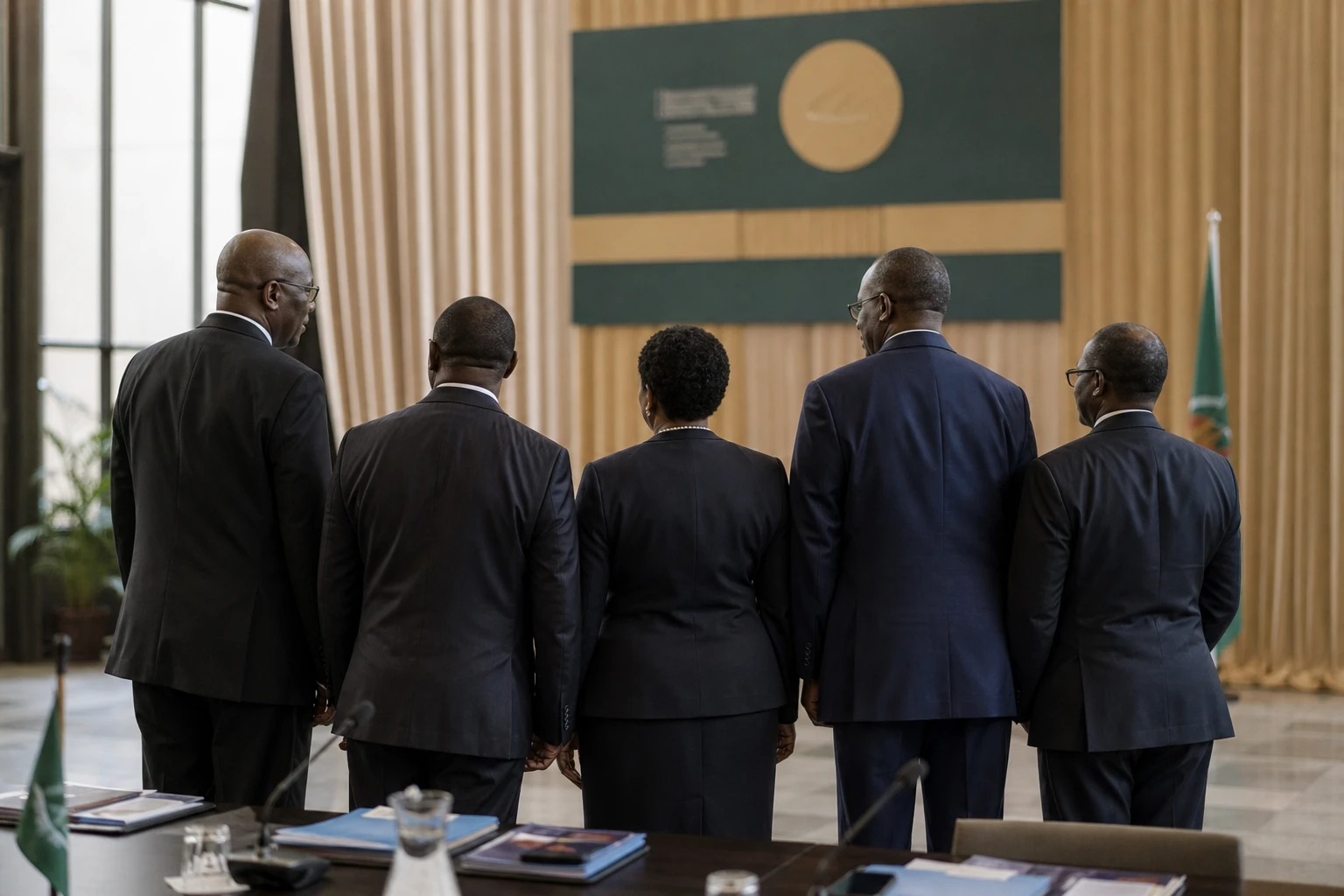
In Harare, Zimbabwean authorities are not just waiting for a green light from the International Monetary Fund. Above all, they are seeking to prove that a state often judged by its fiscal vulnerabilities can stay on a stabilisation course over the long term. The issue is far from trivial. It affects creditors’ confidence, the value of the ZiG, the local currency, and the government’s ability to fund public services without falling back into domestic arrears.
The debate extends beyond Zimbabwe alone. In southern Africa, SADC has for several years urged its members to strengthen macroeconomic surveillance, fiscal discipline and financial integration. Harare, which has hosted several regional meetings in recent months, is therefore at the intersection of two expectations: reassuring Washington and signalling to its neighbours that it remains an economic player seeking to matter in the region.
What the IMF approved, and what remains to be consolidated
On 27 July 2026, the IMF approved the conclusion of the first review of the Staff-Monitored Program, launched for ten months. This approval follows a staff-level agreement announced on 7 July, after a mission to Harare from 9 to 18 June. The institution considers that implementation of the programme through the end of March was broadly satisfactory.
According to the IMF, all quantitative targets were met. These include the primary fiscal balance, net official reserves, Reserve Bank of Zimbabwe credit to the non-financial public sector, new non-concessional external borrowing and growth in the ZiG monetary base. One sensitive indicator, however, fell short of its target: protected social spending and priority spending. This distinction matters, as it shows that fiscal consolidation can advance without always preserving, at the same pace, the resources allocated to social safety nets.
The benchmark programme was approved in April 2026 as a ten-month non-financial framework. Its objective is clear: to build a credible track record of implementation, improve public financial management and prepare for a possible Fund-supported programme. The IMF report also recalls a fundamental point: Zimbabwe has lived with substantial external arrears and very limited access to international capital markets for more than 20 years.
Why this review matters to the real economy
The Zimbabwean government needs visible results in three areas. First, fiscal discipline. Second, monetary stability, in a country where memories of inflationary shocks remain strong. Finally, the gradual normalisation of relations with creditors. The IMF also says Zimbabwe has weathered a more difficult external environment, marked by higher fuel and fertiliser prices, rising transport costs and maritime disruptions. The institution forecasts growth of about 5% in 2026, after 8.3% in 2025, with average inflation projected at around 5.1%.
For households, the issue is less abstract than it might seem. Better control of public spending can limit pressure on the currency and prices. But it can also narrow the government’s room for manoeuvre if budget trade-offs remain too tight. The fact that the social spending target was not fully met highlights this risk: in an economy where the informal sector plays a major role, every cut in priority spending quickly affects schools, primary healthcare and low incomes in both urban and rural areas. This interpretation follows from the priorities explicitly mentioned in the programme and the importance the IMF itself attaches to social protection.
For businesses, the signal is more favourable. A macroeconomic framework deemed solid can improve visibility on government payments, exchange-rate policy and the cost of risk. That does not solve everything. But it can reduce the uncertainty weighing on investment, particularly in the mining, agricultural and logistics sectors, which the IMF cites as drivers of the recovery.
A step in a broader process of re-engagement
The IMF file is part of a longer process. For several years, Zimbabwe has sought to make progress on settling external arrears, restructuring debt and returning to more concessional financing. The Fund presents the current programme as a stepping stone towards more conventional financial support in the future. It also sees it as a way to consolidate stabilisation gains and strengthen fiscal governance.
In the region, the issue reflects a broader concern. SADC emphasises macroeconomic surveillance, financial integration and control of public debt. Zimbabwe, often cited for past imbalances, wants to show that it can move from a crisis footing to compliance with regional standards. A meeting of finance and investment ministers in Harare in July 2026 also put this requirement back at the centre of the regional calendar.
That is where the continent-wide significance lies. At a time when several African states are seeking to restore confidence after currency, debt or liquidity shocks, Zimbabwe’s case is a reminder that credible adjustment depends less on announcements than on consistent implementation. The next focus will be on progress against the programme’s structural benchmarks, as well as the authorities’ ability to protect social spending while maintaining monetary and fiscal discipline.