Algeria
 Egypt
 Libya
 Morocco
 Sudan
 Tunisia
 Benin
 Burkina Faso
 Cabo Verde
 Côte d'Ivoire
 Ghana
 Guinea
 Guinea-Bissau
 Liberia
 Mali
 Mauritania
 Niger
 Nigeria
 Senegal
 Sierra Leone
 The Gambia
 Togo
 Cameroon
 Central African Republic
 Chad
 DR Congo
 Equatorial Guinea
 Gabon
 Republic of the Congo
 São Tomé and Príncipe
 Burundi
 Comoros
 Djibouti
 Eritrea
 Ethiopia
 Kenya
 Madagascar
 Malawi
 Mauritius
 Mozambique
 Rwanda
 Seychelles
 Somalia
 South Sudan
 Tanzania
 Uganda
 Angola
 Botswana
 Eswatini
 Lesotho
 Namibia
 South Africa
 Zambia
A mining project that says much about Zimbabwe’s economy
In Harare, the question is not only when a new gold mine will open. It is broader: how to turn mining revenues into more stable growth in a country where gold carries significant weight in exports, foreign-currency earnings and informal employment. Zimbabwe is coming off a record year for official gold deliveries in 2025, with 46,729 tonnes, according to the Chamber of Mines and the Treasury’s quarterly bulletin, while the government is targeting 53 tonnes in 2026.
Against this backdrop, the Dokwe project occupies a special place. It belongs to a new generation of industrial mines expected to complement, not replace, the weight of small-scale producers. That is also what makes the project sensitive for Zimbabwe’s economy: artisanal gold mining remains the sector’s backbone, but large projects offer hope of securing volumes, tax revenues and long-term investment.
Dokwe’s timeline is now clearer
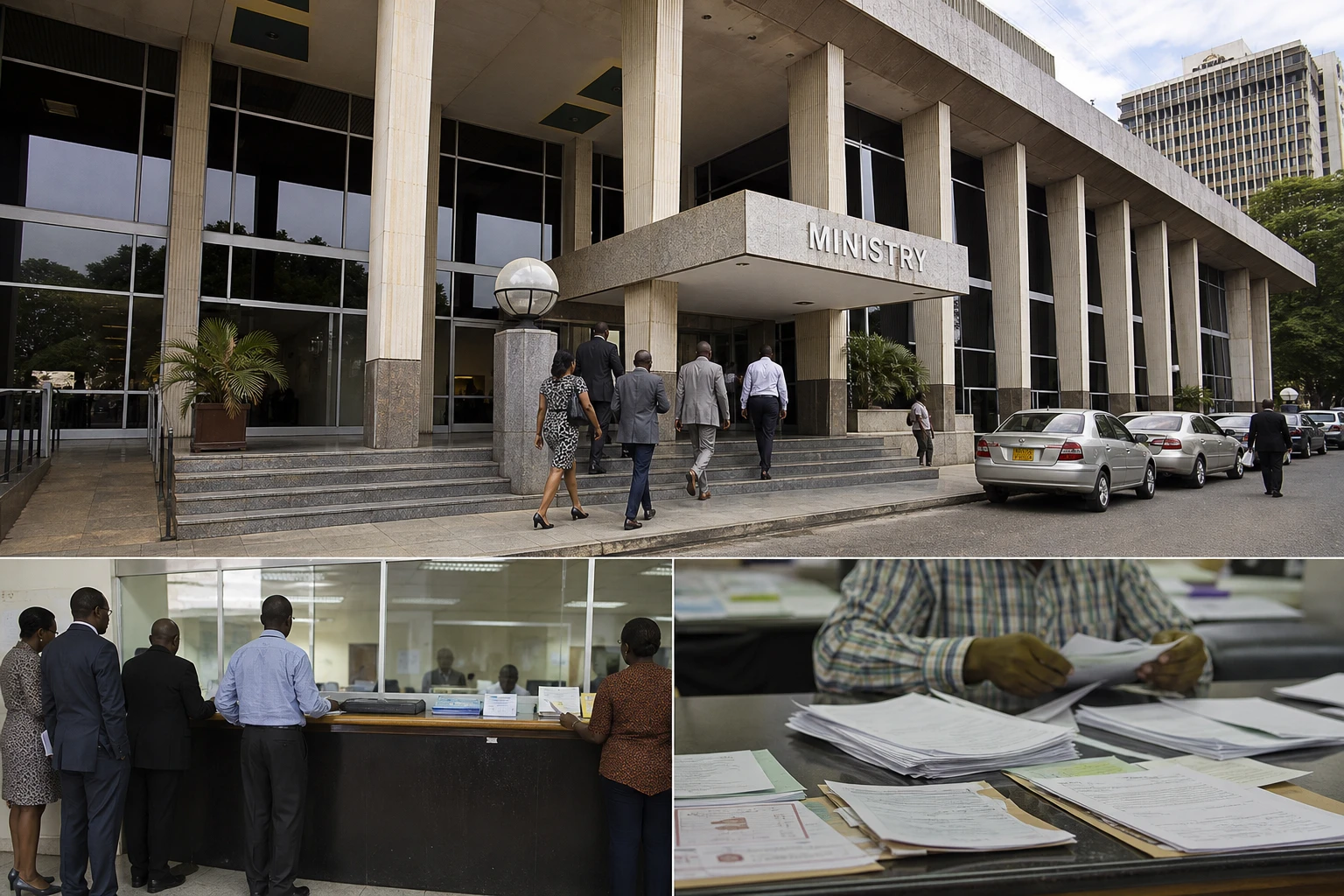
The timeline is now better defined. Ariana Resources expects the first gold pour at Dokwe in 2028, following several preliminary stages involving pre-development, financing and permits. The company says on its website that the project aims for average production of about 65,000 ounces of gold a year over 13 years at Dokwe North, using an open-pit mining plan, with initial capital of $82 million in the revised feasibility study of June 2025.
The economic parameters shifted again in spring 2026. Company documents and specialist media reports cite an updated pre-feasibility study raising pre-development investment to $164 million, with expected average production of 80,000 ounces a year over 12 years and a peak of up to 100,000 ounces. This update was published in May 2026, before the company’s chief executive confirmed in early August that production was expected to start in 2028.
The headline figures matter, but the next steps matter even more. Dokwe still needs to secure financing, finalise its engineering contracts, obtain regulatory approvals and turn geological optimism into a real construction site. This is the usual path for a mining project of this scale, but in Zimbabwe’s context, even a minor delay has a direct impact on jobs, local revenues and investor confidence.
The project also forms part of a broader industrial trajectory. Ariana estimates that Dokwe contains a JORC resource of 1.42 million ounces, with potential for expansion, and highlights its long-life operation. In other words, Dokwe is not presented as a simple opportunistic deposit, but as an asset designed to last, in a country where supply stability remains a central concern.
What this means for Zimbabwe and southern Africa
Dokwe’s significance extends beyond the mine site itself. Gold accounts for a decisive share of Zimbabwe’s exports and remains a source of foreign currency for the national economy. The Zimbabwean Treasury’s bulletin says mineral exports generated about $8.2 billion in 2025, or nearly 60% of the country’s foreign-currency inflows, while growth in the sector was driven by gold and platinum group metals.
This momentum also has a social dimension. According to the Chamber of Mines of Zimbabwe, the gold industry supports about 2 million people directly, with a much wider ripple effect across transport, trade, supplies and services. This is one reason why formalising artisanal miners remains a major policy priority: the country cannot depend solely on large investors, but neither can it allow all growth to rest on the informal sector.
The balance of power is therefore clear. On one side, small-scale producers drove most of the recent increase, delivering 34.875 tonnes in 2025 through the artisanal and semi-industrial segment, compared with 11.854 tonnes from large-scale mines, according to the Treasury bulletin. On the other, new industrial projects such as Dokwe and Bilboes, along with the restart of Redwing, are expected to provide greater scale, predictability and additional tax revenues. The sector does not pit these two worlds against each other; it depends on their coexistence.
The regional context makes this issue more significant. Zimbabwe is a founding member of SADC, the Southern African Development Community, whose aims include supporting growth, economic integration and peace in the region. Across southern Africa, each major Zimbabwean mining project therefore affects supply chains, energy, freight, technical services and capital flows. Harare is not only tracking its own figures; it is also seeking to remain competitive with its mining-sector neighbours.
This competition is taking place in an environment favourable to precious metals. High gold prices supported Zimbabwe’s deliveries in 2025 and continue to attract capital to development projects. But they also put pressure on costs, energy and profitability requirements. In other words, a higher gold price is not enough. Infrastructure, regulatory stability and financing capable of carrying a project through the full mining cycle are also needed.
The continental significance is clear. Zimbabwe shows how an African country can combine artisanal mining, the reopening of historic mines and new industrial projects to defend its place in the gold market. If Dokwe stays on schedule, it will show whether this strategy can deliver sustainable production. The next milestone is therefore not a statement of intent but a series of concrete steps: financing, permits, preparatory work and, finally, commissioning. In a sector this important, that is often where the difference between promise and results is decided.