Algeria
 Egypt
 Libya
 Morocco
 Sudan
 Tunisia
 Benin
 Burkina Faso
 Cabo Verde
 Côte d'Ivoire
 Ghana
 Guinea
 Guinea-Bissau
 Liberia
 Mali
 Mauritania
 Niger
 Nigeria
 Senegal
 Sierra Leone
 The Gambia
 Togo
 Cameroon
 Central African Republic
 Chad
 DR Congo
 Equatorial Guinea
 Gabon
 Republic of the Congo
 São Tomé and Príncipe
 Burundi
 Comoros
 Djibouti
 Eritrea
 Ethiopia
 Kenya
 Madagascar
 Malawi
 Mauritius
 Mozambique
 Rwanda
 Seychelles
 Somalia
 South Sudan
 Tanzania
 Uganda
 Angola
 Botswana
 Eswatini
 Lesotho
 Namibia
 South Africa
 Zimbabwe
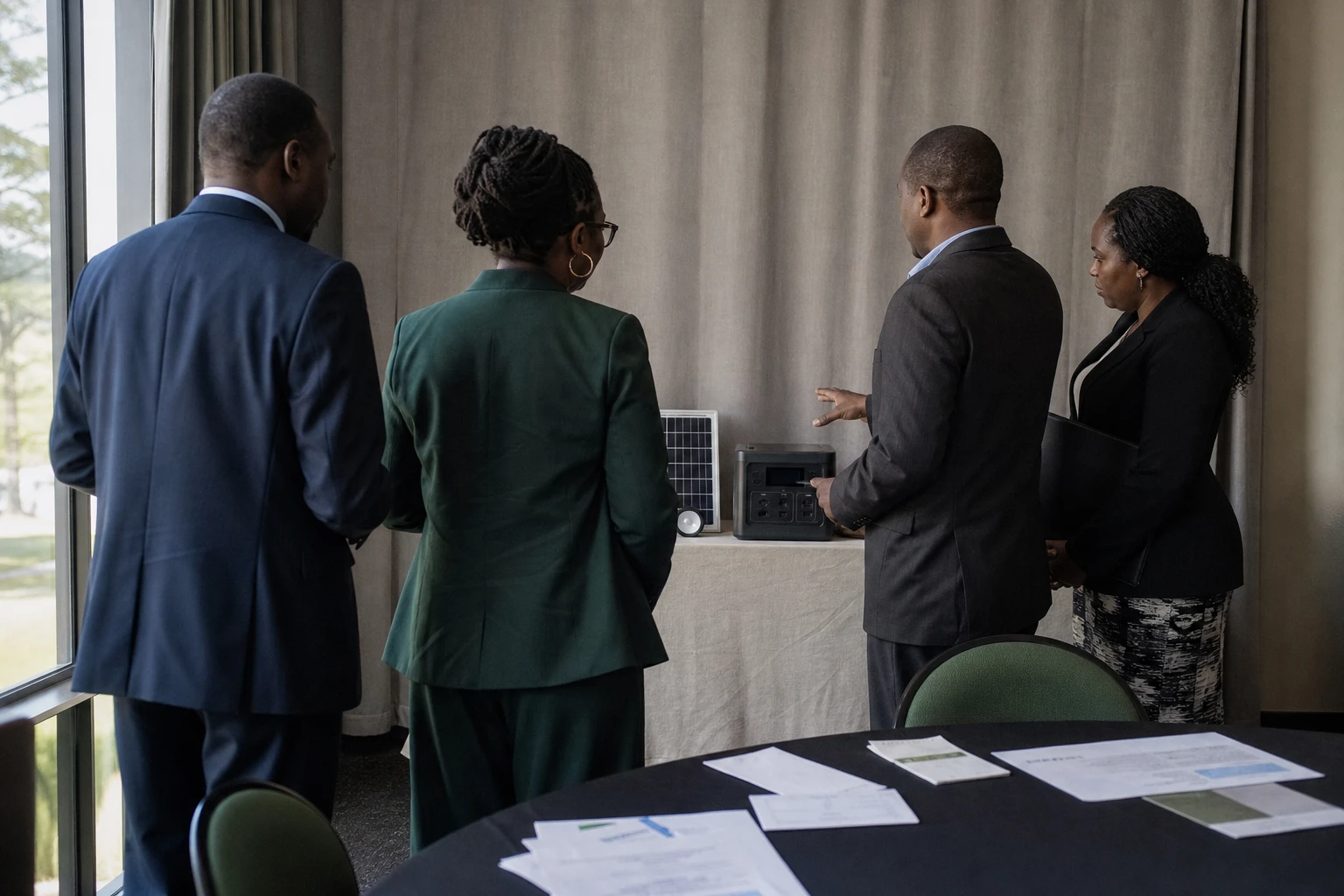
In Lusaka and in rural areas, the question is no longer simply how to generate more electricity. The energy must also be delivered to homes, schools, health centres and small businesses. For a significant part of Zambia’s population, the quickest solution will not necessarily be a high-voltage line.
Universal access depends on several types of network
Zambia aims to achieve universal access to electricity by 2030. However, the country is starting from an inadequate level: access reaches nearly half the population, up from about 30% in 2017, according to data presented by the World Bank.
This progress masks a significant geographical gap. Urban centres and areas close to major transport routes are better served. Rural regions, by contrast, still face long distances, low population density and high connection costs. In these areas, extending the national grid is not always the most economical option.
Zambia’s energy plan therefore envisages combining three approaches: grid expansion, mini-grids and individual solar systems. A mini-grid is a small local infrastructure capable of generating, storing and distributing electricity to several users. A home solar system, meanwhile, supplies a household or small business without a connection to the national grid.
In its National Energy Compact, Zambia is targeting at least 294,719 new off-grid connections a year through to 2030. This amounts to more than 1.7 million additional connections over the period, mainly through mini-grids and home solar kits.
Financing becomes the main bottleneck
The government estimates that $2.18bn in investment will be needed to expand off-grid access by 2030. The private sector is expected to contribute about $1.5bn. This requirement goes well beyond financing a simple equipment programme: it also covers distribution, storage, after-sales service and credit for users.
The business model remains fragile in sparsely populated areas. Companies have to install equipment in remote communities, where household incomes are often irregular. Instalment payments, particularly by mobile phone, help reduce the upfront cost. But they also expose operators to the risk of non-payment and currency fluctuations.
It is against this backdrop that Acumen announced on 23 September 2026 a $5m investment in Sun King’s Zambian subsidiary. The investment, made through the Hardest-to-Reach Catalyze initiative, is intended to finance the company’s expansion and facilitate the mobilisation of local-currency loans from Zambian financial institutions.
Sun King sells solar systems on a pay-as-you-go basis, or PayGo. Customers pay for their equipment gradually, often using mobile money. According to Acumen, the planned expansion could provide new or improved access to nearly 5.6 million people over five years. The organisation stresses, however, that this figure is a projection linked to the company’s growth, not a result already achieved.
The investment is therefore about more than the $5m announced. Acumen aims to use equity — a direct stake in the company — to give local lenders confidence to provide financing. This approach could reduce dependence on foreign-currency funding and limit exposure to the Zambian kwacha.
Utility-scale solar is also advancing
Off-grid development does not mean Zambia is turning away from large power plants. On the contrary, the country is accelerating solar projects connected to the national grid. In 2026, the second phase of the Chisamba project brought the site’s capacity to 200 megawatts, according to the Zambian presidency.
This expansion addresses a national emergency. Zambia depends heavily on hydropower, which accounts for about 80% of its electricity generation. Droughts, however, lower dam levels and threaten supply. Solar can then generate more electricity during daylight hours, but it cannot on its own meet night-time demand or solve problems with electricity transmission.
The debate is therefore not about choosing between large power plants and small systems. It is about how they complement each other. Power plants strengthen supply in cities, mining areas and industrial corridors. Decentralised solutions respond more quickly to the needs of remote communities and local businesses.
This combination remains essential in a large, sparsely populated country. The World Bank estimates that solar mini-grids and individual systems could potentially serve 8.5 million Zambians who still lack electricity. It also notes that Zambia is targeting at least 200 operational solar mini-grids by 2030.
A test for SADC’s regional strategy
Zambia’s trajectory is in line with the priorities of the Southern African Development Community (SADC). The regional organisation aims to strengthen electricity trading among its members while supporting investment in renewable energy and interconnectors.
For Lusaka, large projects remain necessary to reduce the generation shortfall and support industry. Regional electricity trading, however, will not replace local infrastructure. A cross-border line can strengthen the national system, but it will not directly connect an isolated clinic or a small farm.
The plan’s success will therefore depend on several conditions: stable rules, appropriate tariffs, access to local credit and the long-term maintenance of equipment. Urban households, formal businesses and mining areas will face different constraints from rural communities and workers in the informal economy.
The next indicator to watch will be the actual pace of new off-grid connections. To meet its 2030 target, Zambia will have to turn investment announcements into functioning, accessible and well-maintained installations. The energy battle will be fought as much in remote villages as at the sites of large solar power plants.