Algeria
 Egypt
 Libya
 Morocco
 Sudan
 Tunisia
 Benin
 Burkina Faso
 Cabo Verde
 Côte d'Ivoire
 Ghana
 Guinea
 Guinea-Bissau
 Liberia
 Mali
 Mauritania
 Niger
 Nigeria
 Senegal
 Sierra Leone
 The Gambia
 Togo
 Cameroon
 Central African Republic
 Chad
 DR Congo
 Equatorial Guinea
 Gabon
 Republic of the Congo
 São Tomé and Príncipe
 Burundi
 Comoros
 Djibouti
 Eritrea
 Ethiopia
 Kenya
 Madagascar
 Malawi
 Mauritius
 Mozambique
 Rwanda
 Seychelles
 Somalia
 South Sudan
 Tanzania
 Uganda
 Angola
 Botswana
 Eswatini
 Lesotho
 Namibia
 South Africa
 Zimbabwe
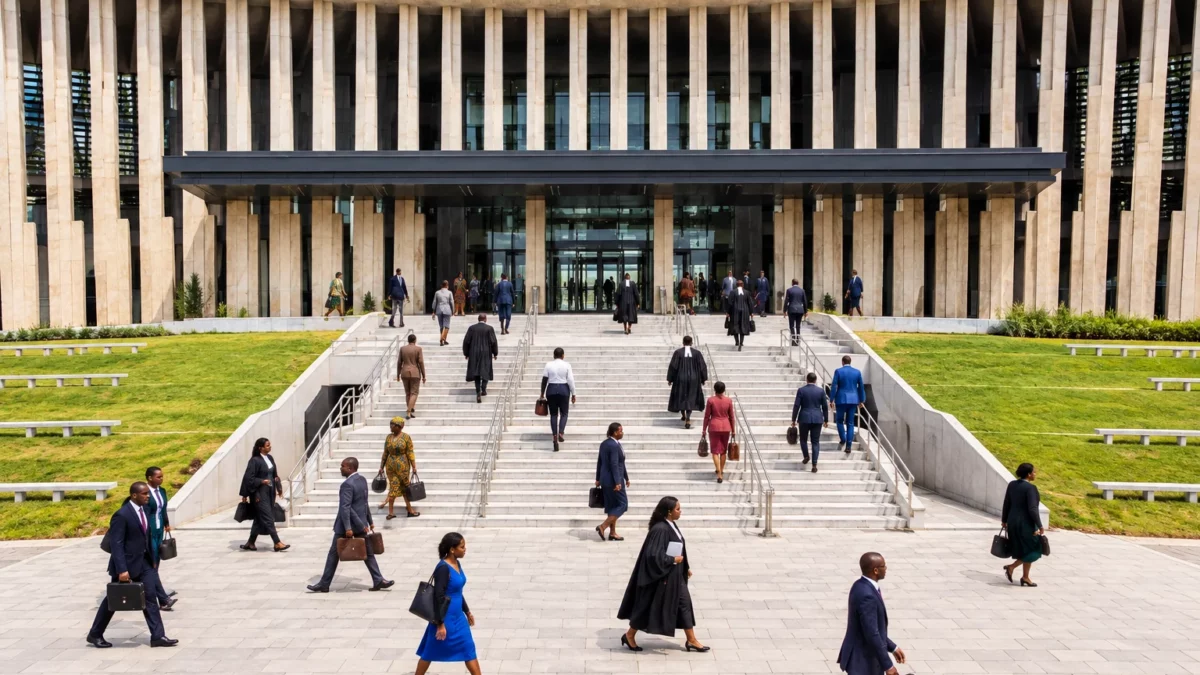
In Zambia, a treason charge against the main opposition candidate has placed the justice system at the centre of a political crisis that erupted after the 13 August election. The stakes go beyond Brian Mundubile’s fate: they also concern the institutions’ ability to handle serious allegations without further undermining confidence in the electoral process.
Proceedings enter a new phase
On Monday 23 November 2026, Brian Mundubile, his running mate Makebi Zulu and 12 others were formally charged with treason and committed to the High Court, according to reports by Zambia’s public broadcaster ZNBC and local outlet Zambia Monitor. The committal means the case can be heard by that court; it is not a verdict of guilt.
The indictment accuses them of preparing or attempting to overthrow the Zambian government by illegal means. Prosecutors place the alleged acts between 1st April and 14 August 2026, in Lusaka. They also allege that Mundubile and a businessman financed military training in Russia and arranged for people to travel there to take part. These remain legal allegations, which the evidence will have to establish at trial.
Brian Mundubile, a former minister and the presidential runner-up, has denied any involvement in a plot. The trial date had not been announced at the time of the charges. Local reports indicate that the accused face life imprisonment if convicted.
The case follows a period already marked by arrests and the prolonged detention of opposition figures. Amnesty International says that Mundubile and several others were arrested after the election and that treason charges had already been filed in August. The 23 November charges therefore formalise a new stage in the proceedings, rather than marking an unprecedented event.
A disputed election puts institutions under pressure
The electoral commission declared President Hakainde Hichilema re-elected on 18 August. Official figures gave him 60.49% of the vote, against 37.87% for Mundubile. The latter contested the result. Observers noted irregularities in the conduct of the election, while the Southern African Development Community (SADC) mission called on stakeholders to maintain calm and allow the commission to complete the process.
These reservations do not, on their own, prove that the result was rigged. They do, however, make the ability to challenge decisions through legal channels all the more important. For voters, activists and civil society organisations, the way the courts handle both election petitions and criminal prosecutions will weigh on the credibility of the rule of law.
The government rejects allegations of political repression made by human rights advocates. Amnesty International, for its part, reports arrests and detentions it considers troubling in the wake of the election. Neither position takes the place of a court’s findings. They nonetheless highlight the need for an independent examination of the allegations, respect for the rights of the defence and effective access to judicial proceedings.
Impact beyond the political leadership
For political leaders, the charges increase the risk of criminal penalties and narrow the room for manoeuvre of an opposition already weakened by arrests. For citizens, the question is more immediate: can they challenge the government, its decisions or election results without fearing that political debate will be treated as a threat to the state? The answer will depend on the facts presented at trial and on how the justice system ensures a fair hearing.
The case also has an economic and diplomatic dimension. The allegation of training in Russia is not proof of foreign interference. It nonetheless puts Lusaka’s foreign relations under public scrutiny. In a country where copper plays a major role in the economy, a period of political uncertainty may also affect investor perceptions and business decisions, although no automatic economic impact can be inferred.
Zambia is a member of SADC, a southern African organisation that promotes, among other things, regional cooperation. Its elections and the challenges to them are therefore being watched beyond Lusaka. For the region, the case tests an essential principle: national security allegations must be investigated rigorously, but cannot displace judicial safeguards or political pluralism.
Next step: trial safeguards
The immediate point to watch is the setting of a timetable in the High Court, followed by the presentation of the prosecution’s evidence and the defence’s arguments. The presumption of innocence applies to each of the 14 accused. The strength of the evidence, lawyers’ access to the case file and the public nature of hearings will help distinguish a well-founded prosecution from an allegation that remains contested.
This case does not settle the debate over the election. It does, however, present Zambia with an institutional test: the justice system must establish the facts without becoming an extension of political confrontation. Monitoring by SADC and African human rights organisations may also help document compliance with procedure, without prejudging the judges’ decision.