Algeria
 Egypt
 Libya
 Morocco
 Sudan
 Tunisia
 Benin
 Burkina Faso
 Cabo Verde
 Côte d'Ivoire
 Ghana
 Guinea
 Guinea-Bissau
 Liberia
 Mali
 Mauritania
 Niger
 Nigeria
 Senegal
 Sierra Leone
 The Gambia
 Togo
 Cameroon
 Central African Republic
 Chad
 DR Congo
 Equatorial Guinea
 Gabon
 Republic of the Congo
 São Tomé and Príncipe
 Burundi
 Comoros
 Djibouti
 Eritrea
 Ethiopia
 Kenya
 Madagascar
 Malawi
 Mauritius
 Mozambique
 Rwanda
 Seychelles
 Somalia
 South Sudan
 Tanzania
 Uganda
 Angola
 Botswana
 Eswatini
 Lesotho
 Namibia
 South Africa
 Zimbabwe
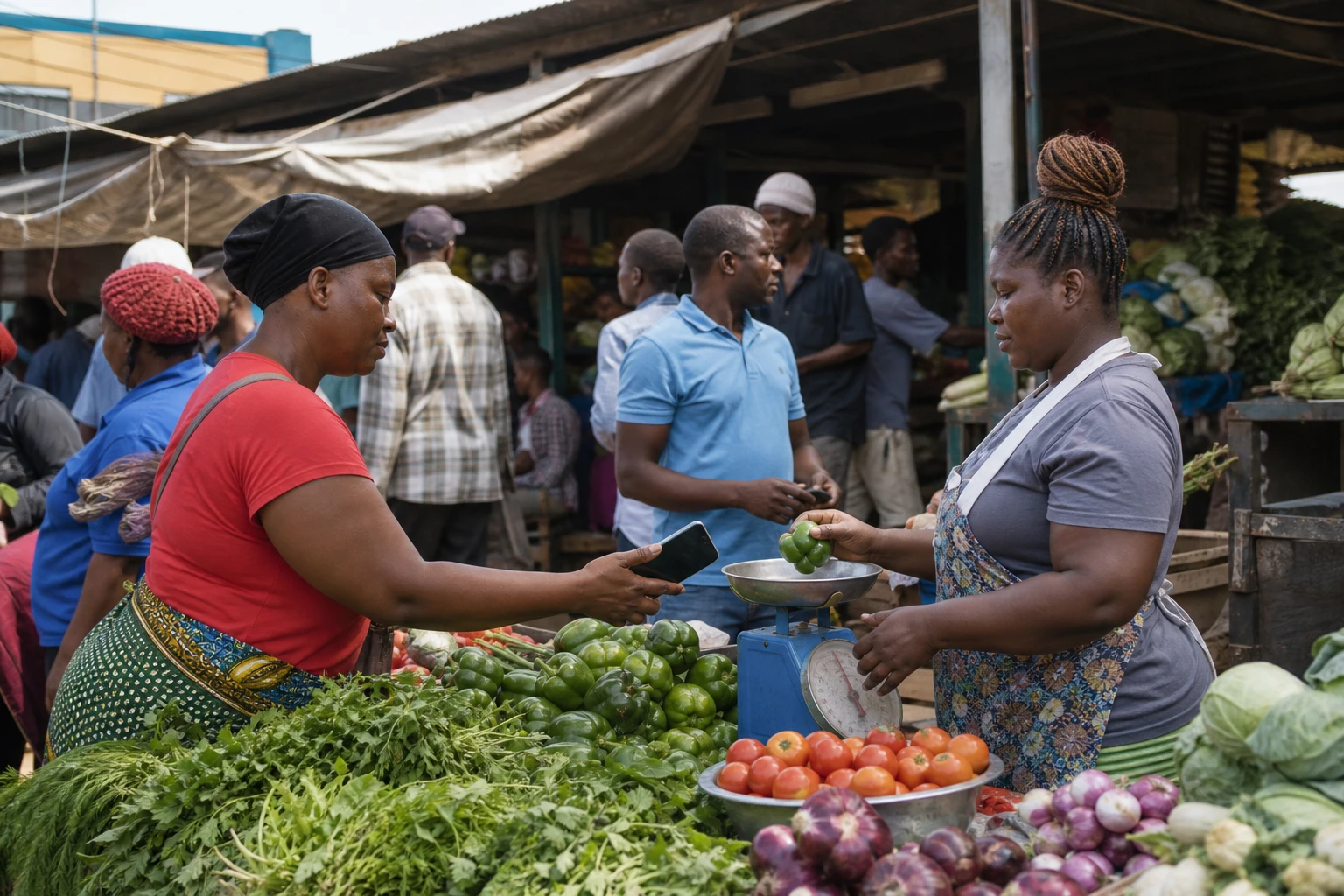
In Lusaka, the economic debate is shifting ground. After several years focused on debt, deficits and stabilising the kwacha, the Zambian government now wants to measure its success by production, exports and jobs.
This shift is set out in the 2027-2029 Medium-Term Budget Plan and the Green Paper on the 2027 national budget. Published in late September 2026 by the Ministry of Finance and National Planning, these documents are still to serve as a basis for budget decisions. They nevertheless set out a clear ambition: to turn improving macroeconomic indicators into more visible economic activity for households and businesses.
From crisis management to the pursuit of growth
The timing matters. Zambia defaulted on several external bonds during the Covid-19 pandemic. Since then, Lusaka has been negotiating with public and private creditors to reorganise debt repayments and ease pressure on public finances.
According to the International Monetary Fund, agreements cover about 94 % of the debt included in the restructuring perimeter. This progress does not mean the issue is definitively resolved. The institution still considers Zambia to be at high risk of debt distress, particularly in the event of a climate shock, a fall in public revenues or a decline in commodity prices.
The government nevertheless wants to open a new chapter. Secretary to the Treasury Felix Nkulukusa presents the new framework as a continuation of progress on debt and overall economic stability. The message is simple: fiscal discipline must now create room to invest and produce more.
The ministry forecasts growth of 6 % in 2027, followed by 7.5 % in 2028 and 7.1 % in 2029. The average would thus reach nearly 7 % over the period. These targets remain government forecasts, not results already achieved. In its latest available projections, the IMF still had a more cautious outlook for short-term growth.
An agenda focused on production and exports
To give this direction concrete form, the authorities have summarised their targets in a formula: “ 10-10-5-3-3-1-1-1 ”. It includes targets of 10 million tonnes of maize, 10,000 megawatts of electricity capacity, 5 million tourists and 3 million tonnes of copper.
The plan also calls for 3 million tonnes of soya, 1 million tonnes of wheat, 1 million tonnes of sugar and $1 billion in beef export revenues. These goals bring together agriculture, mining, energy, tourism and agro-processing. The challenge is therefore not simply to extract more copper, but to broaden the country’s productive base.
Copper will nevertheless remain central. Zambia is one of Africa’s major producers of the metal, which is essential to electricity grids, electric vehicles and several energy-transition technologies. The government wants to exceed the one-million-tonne production threshold while attracting new investment in mines and electricity-related infrastructure.
This strategy carries an industrial requirement. Without local processing, increased export volumes risk generating fewer jobs and less income than hoped. The authorities therefore want to encourage mineral processing, agricultural product processing and the establishment of companies able to sell more goods abroad.
The private sector is expected to play a greater role. The plan emphasises investment, access to credit for productive activity and the participation of financial institutions. For small businesses, particularly in trade, agriculture and services, the cost of finance will nevertheless remain a decisive test. High growth on paper will not be enough if it is not accompanied by real access to capital.
Improved indicators, but persistent vulnerabilities
Several recent figures give the authorities political room to manoeuvre. Annual inflation stood at 6.1 % in September 2026, down from 6.2 % in August, according to the Zambia Statistics Agency. It is therefore within the 6-8 % range set as the medium-term target.
Price stabilisation remains uneven, however. Households feel the impact of changes in food, electricity and transport costs acutely. In rural areas, a good harvest and access to inputs can have a greater effect on disposable income than the financial indicators monitored in Lusaka.
The government also points to rising international reserves, a trade surplus and a stronger kwacha. These developments can make it easier to import equipment and ease pressure on businesses. They nevertheless remain sensitive to copper prices, energy imports and weather conditions.
Drought has already exposed the vulnerability of Zambia’s electricity and agricultural systems. The 10,000-megawatt target therefore requires substantial investment in electricity generation, transmission and distribution. Network maintenance will also need to improve, and energy sources to be diversified, to limit outages that affect households and industry alike.
A trajectory watched by SADC
Zambia’s strategy is part of the Southern African Development Community, or SADC, which brings together several economies linked by trade, transport corridors and energy networks. Lusaka’s ambitions will therefore have effects beyond its borders.
A sustained increase in copper production could strengthen Zambian exports and support regional industrial supply chains. More productive agriculture could likewise increase trade with neighbouring countries. Conversely, electricity shortages, logistical barriers and financing difficulties could limit this integration.
The next step will be to translate these goals into the 2027 budget. Observers will pay particular attention to allocations for energy, agriculture, infrastructure and business support. They will also watch whether the new growth phase retains the safeguards imposed by the debt restructuring.
Zambia’s challenge is now to move from stabilisation to expansion without returning to the imbalances that triggered the debt crisis. The plan’s success will depend less on its list of targets than on their concrete delivery: producing more, processing more and ensuring that the gains from growth reach households and regions far from Lusaka.