Algeria
 Egypt
 Libya
 Morocco
 Sudan
 Tunisia
 Benin
 Burkina Faso
 Cabo Verde
 Côte d'Ivoire
 Ghana
 Guinea
 Guinea-Bissau
 Liberia
 Mali
 Mauritania
 Niger
 Nigeria
 Senegal
 Sierra Leone
 The Gambia
 Togo
 Cameroon
 Central African Republic
 Chad
 DR Congo
 Equatorial Guinea
 Gabon
 Republic of the Congo
 São Tomé and Príncipe
 Burundi
 Comoros
 Djibouti
 Eritrea
 Ethiopia
 Kenya
 Madagascar
 Malawi
 Mauritius
 Mozambique
 Rwanda
 Seychelles
 Somalia
 South Sudan
 Tanzania
 Uganda
 Angola
 Botswana
 Eswatini
 Lesotho
 Namibia
 South Africa
 Zimbabwe
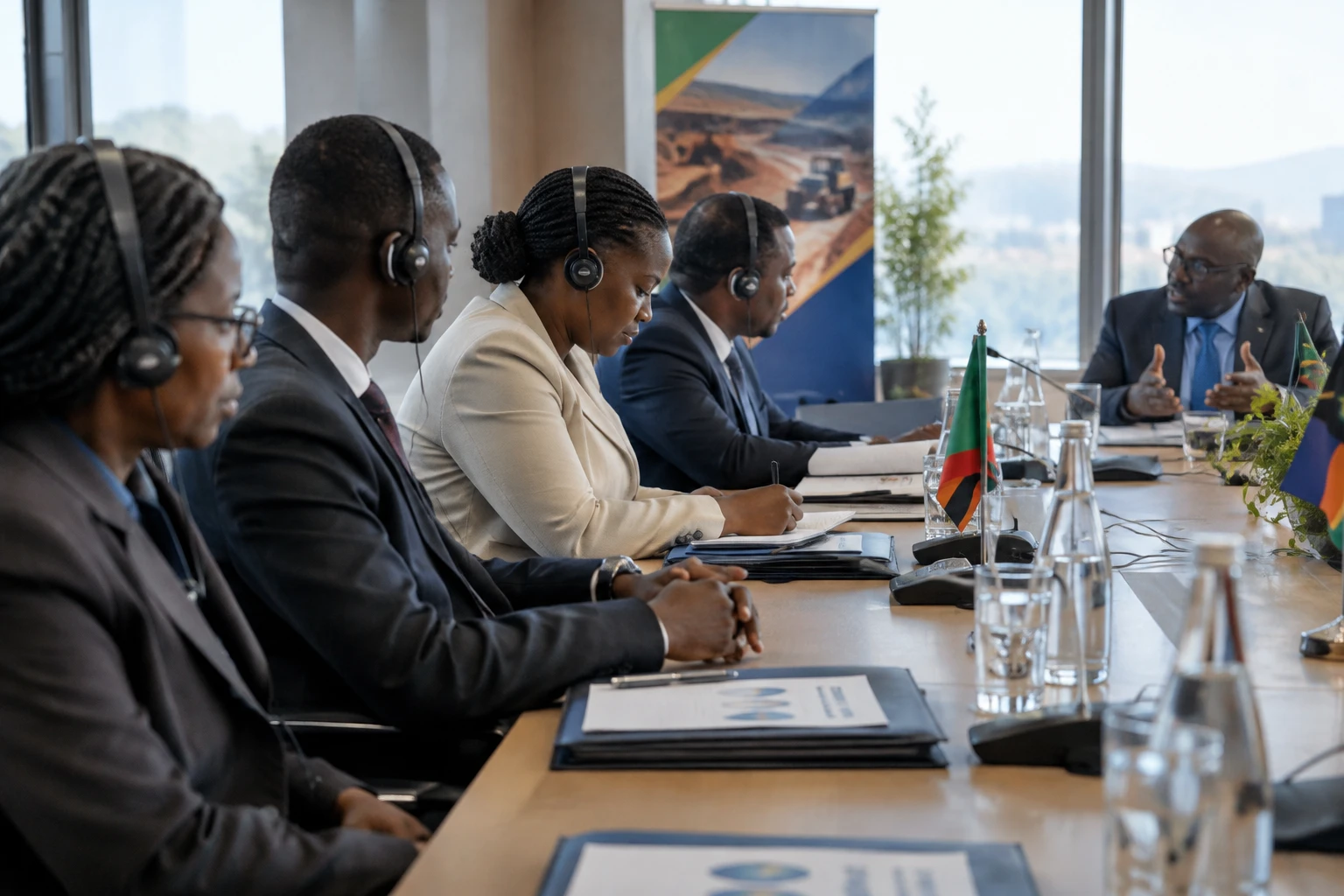
Zambia’s one-million-tonne copper target remains within reach, but First Quantum Minerals’ latest figures are a reminder of how much it depends on the performance of a handful of major mines. For 2026, the group has narrowed its forecasts for Kansanshi and Sentinel, two sites that account for a significant share of national production.
Two mines central to Zambia’s equation
Zambia, whose capital is Lusaka, produced about 890,346 tonnes of copper in 2025. This record level, confirmed by data from the Zambia Revenue Authority, remains below the one-million-tonne threshold sought by the authorities. The government nevertheless says it believes production can increase in 2026, according to the public agency ZANIS.
First Quantum operates Kansanshi, near Solwezi, and Sentinel, in the Kalumbila region. In 2025, the two mines produced about 370,000 tonnes of copper combined. The group’s detailed figures put Kansanshi at 181,183 tonnes and Sentinel at 189,040 tonnes. Their share of national production makes their results important, though they are not the only determinants: other mines also contribute to the country’s total.
Zambia is a member of the Southern African Development Community (SADC), a regional organisation that supports economic cooperation and integration. Its mining industry is also part of a cross-border region in which transport, energy and supply chains affect producers’ ability to extract and export copper.
2026 targets revised after nine months
In its results published on 28 October 2026, First Quantum lowered the expected production ranges for both sites. At Kansanshi, the group now expects 175,000 to 185,000 tonnes of copper in 2026, compared with a previous upper limit of 205,000 tonnes. For Sentinel, the new forecast is 190,000 to 200,000 tonnes, against a previous range of up to 220,000 tonnes.
The company attributes the adjustments to lower-than-expected ore grades. Grade refers to the proportion of copper contained in the extracted rock; when it falls, more ore generally has to be processed to obtain an equivalent amount of metal. At Kansanshi, First Quantum also reports lower recoveries and changes in the quality of the ore fed to the plant.
At Sentinel, third-quarter production was 48,816 tonnes, down from 50,335 tonnes in the previous quarter. The group attributes the decline to a lower grade and delayed access to some richer mining areas. It expects an improvement in the final quarter as extraction advances into another phase of the mine. This timetable remains the company’s forecast, not an assured result.
The new combined ranges allow for a maximum of 385,000 tonnes from the two mines. This ceiling is above their 2025 production, but is not a certain estimate of the final result. Actual volumes will depend in particular on ore grade, the operation of facilities and the pace of extraction through to year-end.
Mining growth must deliver beyond volumes
The revision comes as the country seeks to revive production on a sustained basis. In 2025, First Quantum produced 396,000 tonnes of copper across its operations, including 181,183 tonnes at Kansanshi and 189,040 at Sentinel. At Kansanshi, the S3 expansion added about 25,000 tonnes and achieved commercial production in December 2025. But this increase did not offset the decline recorded at Sentinel.
For the state, higher production can boost exports and revenues linked to the mining sector. For workers, contractors and local businesses, the impact also depends on jobs, purchases made in Zambia and tax revenues. The volume extracted alone therefore does not show what share of the value remains in the national economy.
The issue concerns mining centres in the north-west as much as Lusaka, where budgetary and regulatory decisions are made. The authorities have announced sector reforms and rules intended to strengthen Zambian participation in the mining chain. Their practical implementation, as well as the ability of infrastructure to support activity, will affect the impact of new investment.
Regionally, Zambia’s results matter in a copper market where Southern African producers are seeking to attract capital and develop infrastructure. SADC provides a framework for cooperation, but competition between mining projects and logistical constraints remain national and local concerns. For Zambia, the challenge is not limited to crossing a production threshold: it also involves processing, public revenues and the resilience of communities dependent on mining activity.
The final quarter will be decisive
The next milestone will be the publication of full-year 2026 results, which will allow actual volumes to be compared with the revised forecasts. Until then, the national target of one million tonnes remains a government objective, not a guaranteed outcome. The gap between ambition and final figures will depend on the sector as a whole, not just First Quantum.
The two mines’ results nevertheless offer a clear indication: Zambia’s growth rests on operations where ore quality and production stability can cause volumes to fluctuate substantially. Monitoring other producers, investment and local benefits will help establish whether the expected increase translates into broader gains for the country’s economy.