Algeria
 Egypt
 Libya
 Morocco
 Sudan
 Tunisia
 Benin
 Burkina Faso
 Cabo Verde
 Côte d'Ivoire
 Ghana
 Guinea
 Guinea-Bissau
 Liberia
 Mali
 Mauritania
 Niger
 Nigeria
 Senegal
 Sierra Leone
 The Gambia
 Togo
 Cameroon
 Central African Republic
 Chad
 DR Congo
 Equatorial Guinea
 Gabon
 Republic of the Congo
 São Tomé and Príncipe
 Burundi
 Comoros
 Djibouti
 Eritrea
 Ethiopia
 Kenya
 Madagascar
 Malawi
 Mauritius
 Mozambique
 Rwanda
 Seychelles
 Somalia
 South Sudan
 Uganda
 Angola
 Botswana
 Eswatini
 Lesotho
 Namibia
 South Africa
 Zambia
 Zimbabwe
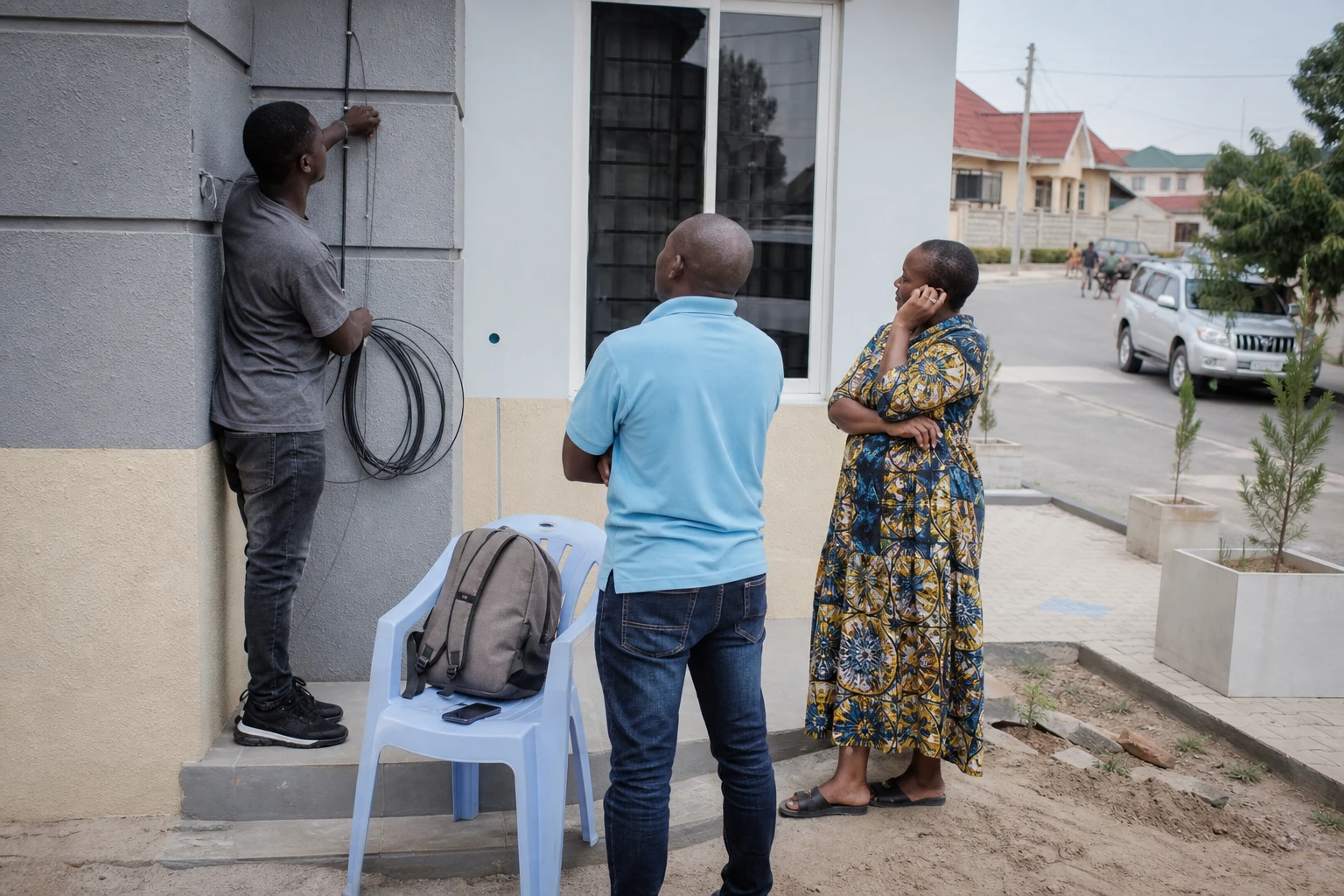
In Dodoma, fibre is no longer a luxury but a test of credibility
In Tanzania’s capital, the question is no longer simply who sells the fastest internet. It is more straightforward, and more political: who can connect households, businesses and public services reliably to a fixed network in a city set to host more government departments and economic activity? Dodoma is the country’s capital, while Dar es Salaam remains its main commercial centre. The stakes therefore go beyond competition between operators. They concern how Tanzania organises its digital transition.
The launch comes in a market where mobile still dominates by a wide margin. Statistics from the Tanzania Communications Regulatory Authority show that fixed subscriptions remain a minority compared with mobile. The regulator also published a new series of quarterly reports on the sector in 2026, a sign that monitoring this growth remains high on the public agenda.
A still-narrow market, but a strategic one for the state and operators
Yas Tanzania, a subsidiary of Axian Telecom, has launched its home fibre offer in some neighbourhoods of Dodoma, with a gradual expansion planned according to demand. The operator has presented the service as a tool for students, entrepreneurs, businesses and families, offering more than simply faster speeds. The launch area includes Ilazo, Ipagala, Swaswa, Mjini Kati and Barabara za Namba, according to the company’s public communications.
The rollout in Dodoma comes a few weeks after an agreement was signed in Zanzibar with the archipelago’s authorities. The operator then announced an investment of about 300 billion Tanzanian shillings over 20 years, with the aim of connecting up to 100,000 households in the first three years. The sequence confirms a clear strategy: Yas is seeking to establish itself, city by city, in the most profitable and visible segments of the fixed broadband market.
The move is significant in Tanzania. The country has more than 60 million fixed and mobile subscriptions combined, but the market remains structurally skewed in favour of mobile. In fixed services, competition is concentrated among a few major players, led by Vodacom and Airtel, followed by TTCL, Wananchi, Savana Fibre, Halotel and Yas. This explains why every newly covered city matters. It also helps explain why Dodoma, as the administrative capital, has particular symbolic and commercial value.
The real obstacle is not just the network, but the cost of entry
Affordability remains the main challenge. For fixed broadband, the International Telecommunication Union uses a reference basket based on 5 GB of data per month. In its 2025 data, the organisation notes that the Broadband Commission’s target is to bring the cost of basic services below 2% of gross national income per capita in developing countries. Tanzania was still above that threshold, with the cost of this 5 GB basket estimated at 28% of gross national income per capita.
This point is central. In a capital where ministries, parastatal services, small and medium-sized enterprises, private schools and parts of the formal economy need stable connections, price may matter more than the technology itself. If the package remains too expensive, fibre risks being confined to high-income areas, offices or households that already have a connection. Conversely, a competitive offer could accelerate the use of online services, support remote working, distance learning, digital sales and access to e-government. That is where Yas’s success in Dodoma will be decided.
The launch is also part of a wider shift in Tanzania’s telecommunications sector. TCRA has said that internet coverage and usage continue to grow, while the expansion of 5G shows the market’s appetite for higher-performance services. But fibre has a different advantage: it provides a stable connection for institutions, businesses and households that no longer want to rely solely on wireless services.
What Dodoma says about digital Tanzania, and beyond the capital
Nationally, Dodoma serves as a showcase. The city is home to the state, regulatory decision-making and some public investment. If fibre gains traction there, it will send a strong signal to Tanzania’s other urban centres. If it struggles to win over users, the problem will not be technological, but commercial and social. As a founding member of the East African Community, Tanzania also has a stake in this issue in terms of regional integration: the movement of services, network continuity, platform development and business competitiveness.
The Dodoma-Zanzibar sequence also shows how one company can advance on several fronts: the political capital, the archipelago, then other cities across the country. This approach reflects the realities of East Africa, where operators often target pockets of solvent demand before extending their networks. For Tanzania, the challenge is to turn these starting points into a broader network without neglecting secondary areas where demand exists but is less profitable. The true reach of Yas Fiber’s expansion will be determined in the coming months.