Algeria
 Egypt
 Libya
 Morocco
 Sudan
 Tunisia
 Benin
 Burkina Faso
 Cabo Verde
 Côte d'Ivoire
 Ghana
 Guinea
 Guinea-Bissau
 Liberia
 Mali
 Mauritania
 Niger
 Nigeria
 Senegal
 Sierra Leone
 The Gambia
 Togo
 Cameroon
 Central African Republic
 Chad
 DR Congo
 Equatorial Guinea
 Gabon
 Republic of the Congo
 São Tomé and Príncipe
 Burundi
 Comoros
 Djibouti
 Eritrea
 Ethiopia
 Kenya
 Madagascar
 Malawi
 Mauritius
 Mozambique
 Rwanda
 Seychelles
 Somalia
 South Sudan
 Tanzania
 Uganda
 Angola
 Botswana
 Eswatini
 Lesotho
 Namibia
 South Africa
 Zambia
 Zimbabwe
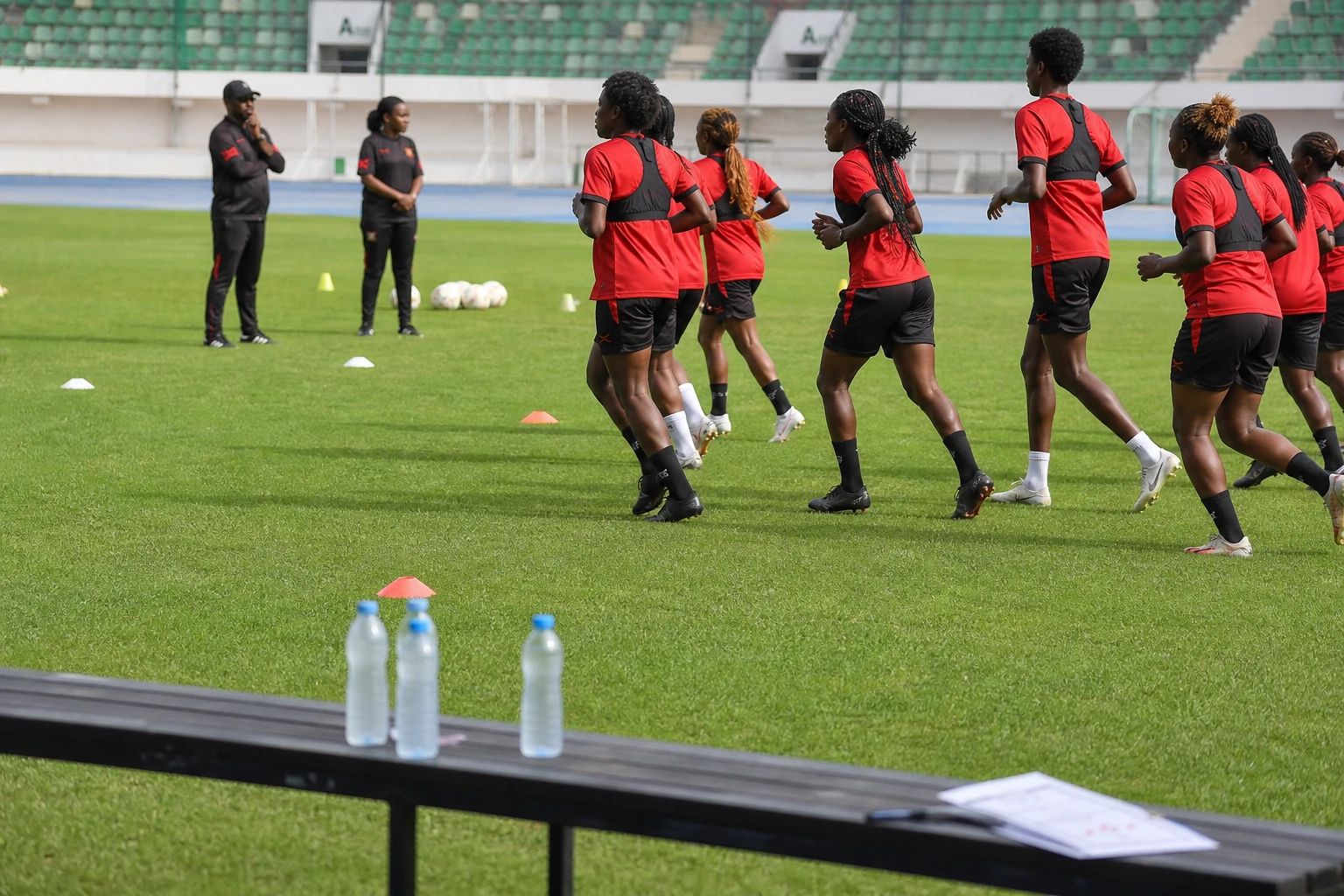
The final turn before the title
In a tournament that has expanded and become more professional, the slightest slip-up carries more weight than before. At the 2026 Women’s Africa Cup of Nations in Morocco, the quarter-finals no longer simply separate the contenders. They also open the way to the 2027 Women’s World Cup, since teams that get through this stage remain in contention for the intercontinental play-offs. The competition is being held between Rabat and Casablanca over a compressed period that leaves little room for calculation.
The context matters. Since expanding to 16 teams, the Women’s AFCON has better reflected the diversity of African football. It brings together established sides such as Nigeria and South Africa, and outsiders challenging the established order, such as Malawi and Cape Verde. The CAF has also put in place a format that extends the stakes beyond the trophy itself: the semi-finalists secure direct qualification for the 2027 World Cup, while the other quarter-finalists remain in contention for the play-offs.
A tight knockout bracket, very different paths
At the end of the group stage, eight teams secured a place in the knockout rounds. The tournament’s official schedule sets the quarter-finals for 8 and 9 August 2026, following a group stage played from 26 July to 6 August. The fixtures reveal the hierarchy, but also its cracks. Hosts Morocco kicked off the tournament in Rabat. Nigeria found its stride again after a shaky start. Malawi confirmed its status as an unexpected contender. Cameroon, meanwhile, marked its return to the competition with a composed performance.
The quarter-final schedule reflects the sporting logic. Group winners will face the runners-up according to the official format published by the CAF: Group A winner against Group B runner-up, Group B winner against Group A runner-up, Group C winner against Group D runner-up, then Group D winner against Group C runner-up. The semi-finals will be played in Rabat on 12 August. The play-off matches for the quarter-final losers are scheduled for 13 August in Casablanca.
In this context, the match-ups carry clear symbolic weight. Morocco are defending home advantage and the ambition of winning their first continental title on home soil. South Africa, the defending champions and a recent benchmark in African women’s football, remain a reference point. Nigeria, the continent’s historic standard-bearers, want to show that no generational transition can erase experience. And Cameroon, after missing the last edition, are seeking to prove that an absence does not mean a loss of relevance.
Outsiders shift the balance
Malawi is attracting attention for a simple reason: its presence at this stage of the competition marks a turning point. The country has established its place in the continental women’s game through steady progress, and this qualification shows that a team long seen as secondary can now threaten more established nations. Cape Verde’s case points in the same direction, although the islanders have mainly served to highlight the level of depth reached in this edition.
Ghana and Algeria illustrate a different reality: returning to the forefront often takes patience and stability. The Black Queens have long been inconsistent, but they have managed to land in the right half of the bracket. Algeria, for its part, arrives with a more competitive squad than in recent cycles, in a group where every point mattered. Across the continent, this confirms that the depth of African women’s football is no longer limited to a contest between a few historic powers.
Ivory Coast, finally, is back at the continental tournament after a long absence. This matters for Ivorian football as a whole, because the visibility of a major women’s competition helps develop local pathways, coaching and public interest. In many countries, the difference also lies here: between a team that serves as a one-off showcase and one that drives lasting momentum in clubs, academies and domestic leagues.
What this final stage says about African football
The 2026 format tells a broader story. African women’s football is entering a phase in which organisation matters almost as much as talent. Two cities, a concentrated schedule, a direct link to the 2027 World Cup and announced prize money of one million dollars for the winner: all of this shows a competition becoming a genuine continental sporting product, not just a symbolic event.
For federations, the stakes are twofold. Winning is essential, of course. But they must also build on the structure in place: physical preparation, media coverage, reviews of experience and sustained work with clubs. For supporters, the next stages will show whether the hierarchy remains true to the major nations or whether new voices emerge. For the CAF, this edition is a full-scale test following the expansion of the tournament to 16 teams. If the competition maintains its pace, intensity and clarity, it will strengthen the standing of African women’s football on the global stage.
The rest of the schedule is already mapped out. The quarter-finals will be played on 8 and 9 August, the semi-finals on 12 August, followed by the play-offs for the quarter-final losers on 13 August, before the third-place match on 15 August and the final on 16 August in Rabat. In other words, the 2026 Women’s AFCON is entering its most decisive phase: one in which every match can shift the balance of the tournament and reshape, in a matter of days, the map of African women’s football.