Algeria
 Egypt
 Libya
 Morocco
 Sudan
 Tunisia
 Burkina Faso
 Cabo Verde
 Côte d'Ivoire
 Ghana
 Guinea
 Guinea-Bissau
 Liberia
 Mali
 Mauritania
 Niger
 Nigeria
 Senegal
 Sierra Leone
 The Gambia
 Togo
 Cameroon
 Central African Republic
 Chad
 DR Congo
 Equatorial Guinea
 Gabon
 Republic of the Congo
 São Tomé and Príncipe
 Burundi
 Comoros
 Djibouti
 Eritrea
 Ethiopia
 Kenya
 Madagascar
 Malawi
 Mauritius
 Mozambique
 Rwanda
 Seychelles
 Somalia
 South Sudan
 Tanzania
 Uganda
 Angola
 Botswana
 Eswatini
 Lesotho
 Namibia
 South Africa
 Zambia
 Zimbabwe
A new contest is unfolding far from the beaches and heritage sites
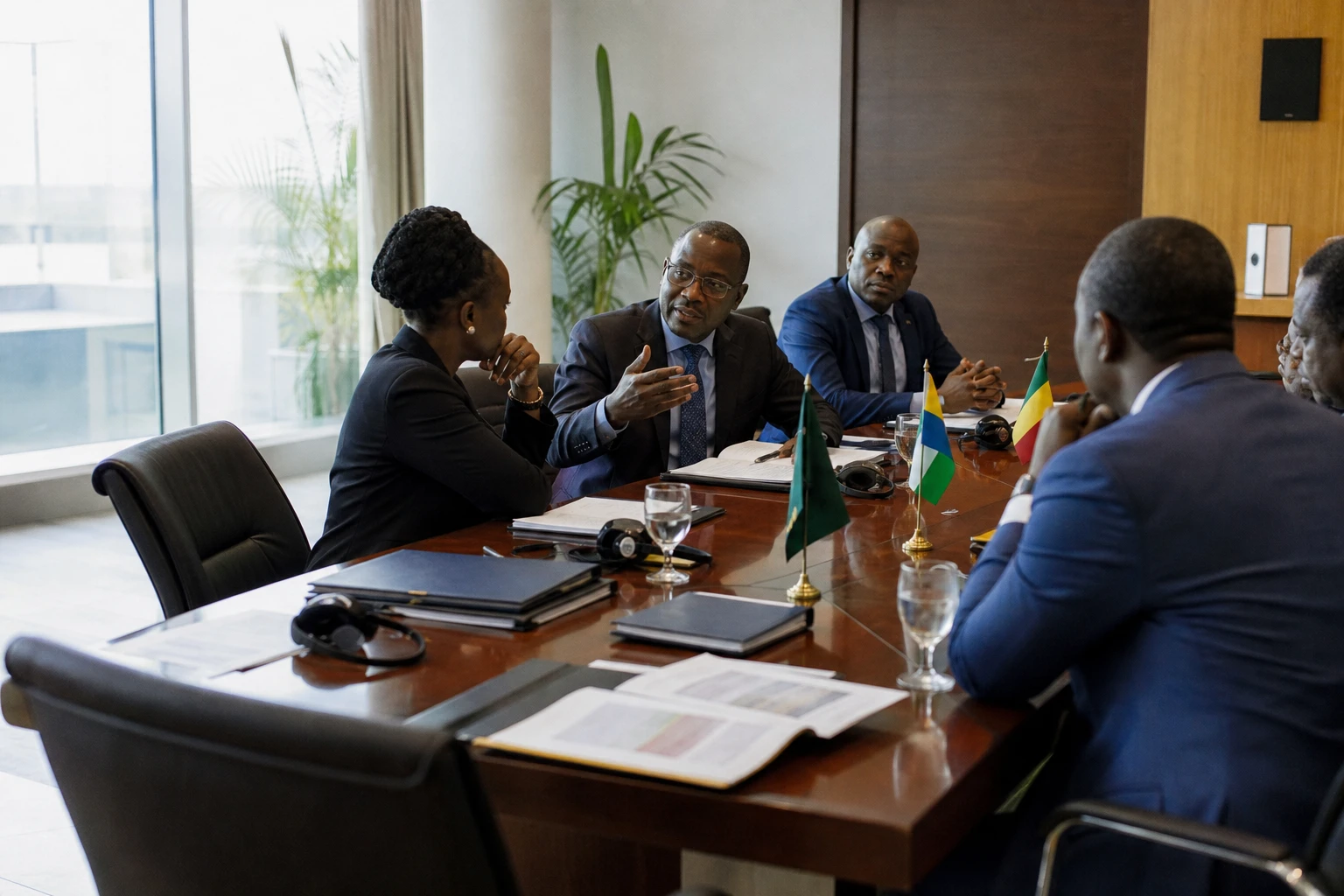
Business tourism is no longer confined to conference rooms. It supports hotels, taxis, restaurants and event agencies, and sometimes entire neighbourhoods around airports and conference centres. In French-speaking West Africa, this clientele has shifted towards a complete-destination model: air access, security, service quality, hotel capacity and international visibility.
In this landscape, Cotonou, Abidjan and Dakar are pursuing different strategies, but share a common goal: attracting business meetings, trade fairs and conventions that carry significant weight in local economies. The sector is widely known as MICE, for meetings, incentives, conferences and exhibitions. Globally, this market remains substantial: in 2025, business events brought together 1.65 billion participants and generated $1.3 trillion in direct spending, according to the latest data published by the Events Industry Council with Oxford Economics.
This regional competition does not pit only three cities against one another. It also reflects a broader shift: West African capitals are seeking to capture high-value visitor flows as governments look to diversify their economies, make the most of their infrastructure and extend the benefits well beyond the events themselves. Cotonou is now pursuing this strategy with greater confidence, while Abidjan builds on a structural lead and Dakar seeks to turn its major facilities into drivers of growth.
Cotonou steps up, with new facilities and a packed events calendar
Benin has made Cotonou a showcase for its move upmarket in tourism. The city is benefiting from a new hotel landscape and infrastructure designed for major events. The Sofitel Cotonou Marina Hotel & Spa has 198 rooms and is part of a national strategy clearly aimed at business travellers. The Beninese government is also preparing a partnership involving the Hilton Hotel Cotonou, with about 200 rooms and meeting rooms intended to strengthen the city’s capacity to host international conferences.
This increase in capacity is accompanied by a notable run of events. In 2025, Cotonou hosted the Choiseul Africa Summit, an economic mission from the Francophonie and the Cyber Africa Forum. The 2026 calendar includes further regional-level gatherings, among them a United Nations meeting on passenger data and the return of the Cyber Africa Forum. Benin is seeking to establish a reputation as a reliable destination for mid-sized meetings and specialist forums, a market previously dominated by a handful of more established hubs.
This strategy is not just about hotels. It also depends on the country’s ability to make it easier to host events and link them to other urban and tourism activities. Cotonou wants to bring business, culture, the coastline and heritage together. It is a complete-destination approach, in which a conference should lead to an extra night’s stay, a dinner, a visit and then further spending in the local economy. The benefits can then be measured in temporary jobs, hotel occupancy and money circulating in the services sector.
Abidjan retains the advantage, but the contest is shifting towards connectivity
Côte d’Ivoire remains the best-equipped of the three. Abidjan already has a deeper ecosystem, with a well-connected international airport, a large hotel stock and an exhibition centre sized for major events. The Abidjan Exhibition Centre, inaugurated in July 2023, cost more than CFA francs 75 billion and includes a convention centre with seating for 5,000, with an overall capacity of more than 12,000 people. The facility was designed to attract trade fairs, sector-specific exhibitions and international congresses.
The 2025 ICCA ranking confirms this relative lead. Abidjan ranks ahead of Cotonou and Dakar for the number of eligible international association meetings, reflecting a stronger presence in the market for structured professional gatherings. At country level, Côte d’Ivoire ranks ahead of Senegal and Benin. These figures should nevertheless be treated with caution: the ICCA ranking covers only part of the market, but remains a reliable indicator of destinations already well established on the international circuit.
For Abidjan, the focus is now shifting to connectivity and building organiser loyalty. The agreement announced with Emirates on 14 September is intended to strengthen joint promotion, data sharing and the city’s appeal to tour operators. The logic is clear: a major venue is not enough. Air links, reliable services and the ability to turn a hub’s image into actual traffic are also needed. In a metropolis where the cost of a trip matters, ease of access is almost as important as the size of the meeting rooms.
Dakar aims to turn major events into a lasting driver of growth
Senegal has a longer history of hosting congresses, but recent momentum has been less favourable. The country recorded only nine eligible international association meetings in the 2025 ICCA ranking, six of them in Dakar. This remains a respectable foundation, but falls short of the authorities’ ambitions, particularly given the facilities available in Diamniadio and Dakar.
Senegal’s main asset is its cluster of infrastructure around Diamniadio, where the Abdou Diouf International Conference Centre, exhibition spaces, Dakar Arena and Abdoulaye-Wade Stadium are located. The country is also counting on the Dakar 2026 Youth Olympic Games, the first Olympic Games to be held in Africa, to leave a legacy extending beyond sport. The International Olympic Committee says the event is to take place from 31 October to 13 November 2026, with a strong urban and logistical dimension.
In this context, the creation of a convention bureau, announced by Senegalese tourism officials, reflects a growing awareness that the country needs to prospect more effectively, market itself better and follow up on bids more closely. Senegal is not short of assets. It now needs a more aggressive commercial operation, capable of turning the experience gained from major political, sporting and association events into regular economic activity. That is what distinguishes a capital that hosts events occasionally from a destination that sells itself over the long term.
What this competition says about West Africa
The rivalry between Cotonou, Abidjan and Dakar is about more than a symbolic ranking. It says something about the maturing of West African urban economies. Cities are seeking to attract visitors who spend across several sectors, not just in a meeting room. They also want to retain more value locally, rather than see organisers, sponsors and delegations leave as soon as an event ends.
This contest will have different effects depending on the stakeholders. For governments, it raises the profile of public investment already made. For local businesses, it creates demand for transport, catering, event technology and communications. For urban populations, it can generate jobs and greater economic activity, but only if service quality keeps pace and the benefits do not remain confined to a few hotel enclaves.
The next test will not be the prestige of a summit, but each capital’s ability to make events a lasting feature. Cotonou will have to show that its progress is structural. Abidjan will need to turn its advantage into a more diverse offering. Dakar will have to prove that its major facilities, and the Dakar 2026 milestone, can reinvigorate a broader strategy for congresses and exhibitions. In this competition, the real victory will not be hosting one major event, but establishing a steady flow of business visitors and local spending.