Algeria
 Egypt
 Libya
 Morocco
 Sudan
 Tunisia
 Burkina Faso
 Cabo Verde
 Côte d'Ivoire
 Ghana
 Guinea
 Guinea-Bissau
 Liberia
 Mali
 Mauritania
 Niger
 Nigeria
 Senegal
 Sierra Leone
 The Gambia
 Togo
 Cameroon
 Central African Republic
 Chad
 DR Congo
 Equatorial Guinea
 Gabon
 Republic of the Congo
 São Tomé and Príncipe
 Burundi
 Comoros
 Djibouti
 Eritrea
 Ethiopia
 Kenya
 Madagascar
 Malawi
 Mauritius
 Mozambique
 Rwanda
 Seychelles
 Somalia
 South Sudan
 Tanzania
 Uganda
 Angola
 Botswana
 Eswatini
 Lesotho
 Namibia
 South Africa
 Zambia
 Zimbabwe
When a regional union seeks to make its strategy clear
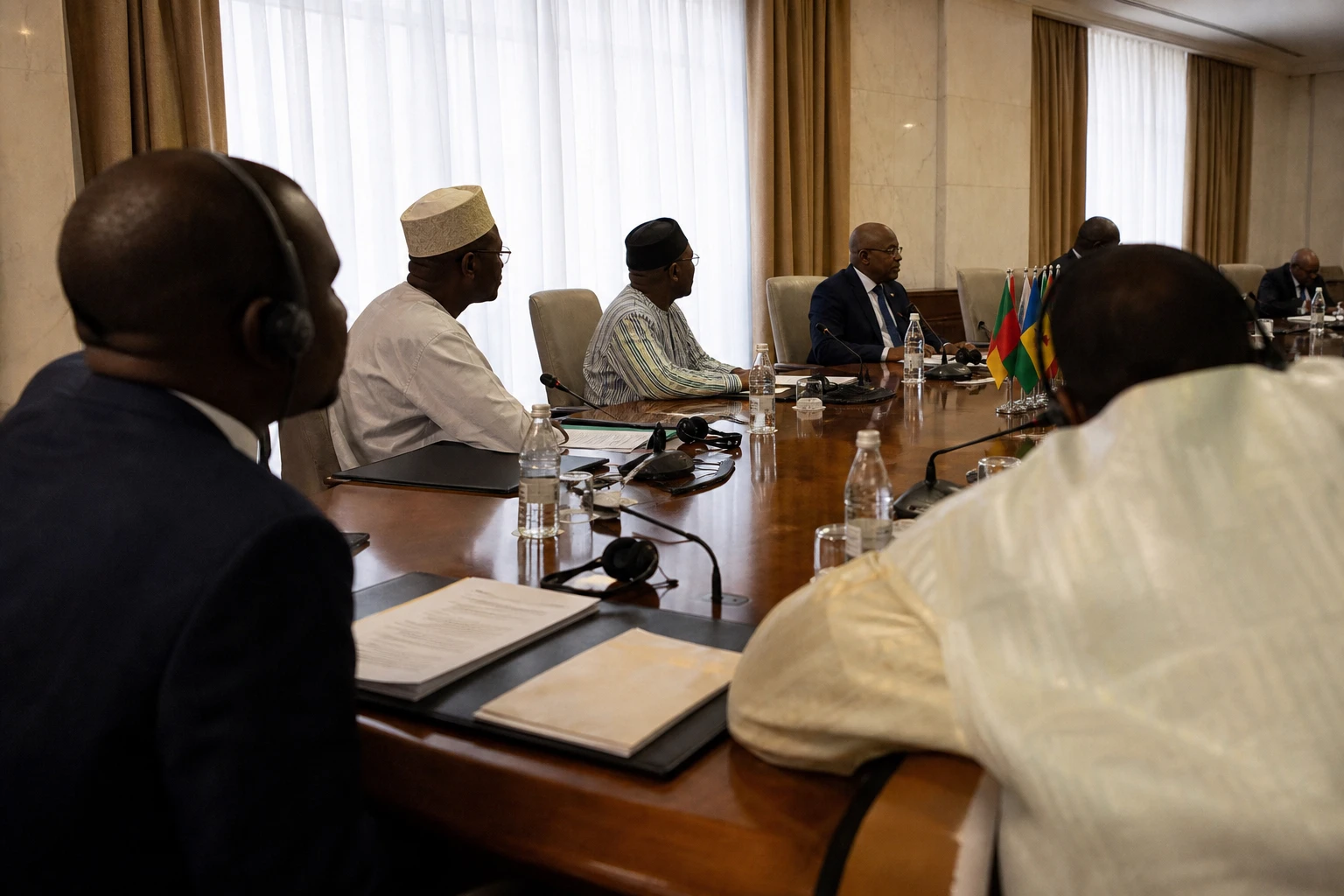
In the WAEMU region, the challenge is no longer simply to adopt rules. It is also to explain what they are for to households, businesses and administrations seeking to see tangible effects on prices, employment and services. It is in this spirit that the Commission opened a training session in Ouagadougou for economic and financial journalists from the eight member states.
The event comes as the West African Economic and Monetary Union prepares to implement its 2025-2030 Strategic Plan, known as IMPACT 2030, and its Vision 2040. These two frameworks were designed as milestones towards regional integration that is more useful to real economies, amid a West African context marked by security tensions, pressure on public finances and strong expectations of visible results.
What IMPACT 2030 changes in WAEMU’s approach
IMPACT 2030 marks a deliberate shift. The Commission is no longer limiting itself to harmonising policies and regulations. It also wants to act on regional value chains, competitiveness, infrastructure and human development. The plan is structured around five pillars and twelve programmes, with particular attention to thirteen promising ecosystems, including rice, cotton, extractive industries, digital technology, logistics, agro-industry and value-added services.
The strategic document also emphasises internal transformation within the Commission. It provides for a 24-month reform plan to modernise working tools, strengthen human resources management and improve project oversight. The idea is simple: a regional institution that wants to make an impact must first become more effective.
This approach did not come out of nowhere. The assessment that informed the plan notes that trade within WAEMU remains too limited and that the region’s economies still export a great deal of minimally processed raw materials. The proposed response is to better connect agricultural production, mining, energy, logistics and services in order to capture more value locally.
In Ouagadougou, the media at the heart of the initiative
The session opened on 14 September 2026 in Ouagadougou and will run for several days, until 18 September, according to the Commission’s official statement. It brings together journalists from the member states to discuss the main community initiatives, with sessions devoted to IMPACT 2030, Vision 2040, competition, infrastructure, artificial intelligence, public-private dialogue and the cotton-textiles, fertiliser-phosphate and rice sectors.
The Commission is advancing a specific idea here: regional integration progresses not only through institutions, but also through public support. This is the thinking behind the emphasis on information that is “fair, credible, accessible and of high quality”, as expressed at the opening of the proceedings by the Commission’s head of communications. The aim is to improve understanding of community policies so that they are no longer seen as distant, technical instruments.
The choice of Ouagadougou is no coincidence. Burkina Faso’s capital regularly hosts major WAEMU events, including discussions on Vision 2040 and several information sessions for journalists. This continuity reflects a shared need: to establish a common language among technical experts, decision-makers and newsrooms in a region where economic policies are often judged by their immediate impact on markets, transport and households’ daily lives.
An economic shift, but also a political one
Behind the effort to explain the strategy lies a governance issue. WAEMU wants to show that a regional organisation can do more than establish common rules: it can also develop value chains, ease the movement of goods and provide a framework for productive investment. For member states, the benefits are twofold. On the one hand, they retain their shared monetary framework. On the other, they expect the Commission to deliver projects that can support local transformation, reduce production costs and expand regional markets.
For businesses, the issue is predictability. A credible regional strategy can influence competition rules, transport infrastructure, access to energy, product standards and the development of higher-value industries. For the public, the expected effects are even more tangible: more jobs in processing, more value added captured locally and, in time, public services better aligned with economic activity.
This perspective matters because the WAEMU region is not a single economy. It comprises Benin, Burkina Faso, Côte d’Ivoire, Guinea-Bissau, Mali, Niger, Senegal and Togo, with differing production profiles, levels of industrialisation and security constraints. In this context, talk of competitiveness is meaningful only if it translates into sectoral policies tailored to each country’s realities, from coastal areas to the Sahel, and from capitals to rural regions.
Its significance extends beyond the sub-region
What is at stake with IMPACT 2030 goes beyond WAEMU. The Commission wants to align its work with the broader framework of the African Continental Free Trade Area, which is encouraging African economies to trade more with one another and process more goods locally. Consistency between these regional frameworks will be crucial in the coming years, especially in sectors where too much value is still lost between extraction, the export of raw materials and final consumption.
The timetable also offers a sense of what lies ahead. The Ouagadougou session runs until 18 September 2026, while the plan’s implementation continues until 2030 and is underpinned by Vision 2040. In other words, WAEMU is seeking to align a medium-term horizon with a longer-term ambition: to build a more agile institution and integration that is finally visible in production chains, infrastructure and living conditions.