Algeria
 Egypt
 Libya
 Morocco
 Sudan
 Tunisia
 Benin
 Burkina Faso
 Côte d'Ivoire
 Ghana
 Guinea
 Guinea-Bissau
 Liberia
 Mali
 Mauritania
 Niger
 Nigeria
 Senegal
 Sierra Leone
 The Gambia
 Togo
 Cameroon
 Central African Republic
 Chad
 DR Congo
 Equatorial Guinea
 Gabon
 Republic of the Congo
 São Tomé and Príncipe
 Burundi
 Comoros
 Djibouti
 Eritrea
 Ethiopia
 Kenya
 Madagascar
 Malawi
 Mauritius
 Mozambique
 Rwanda
 Seychelles
 Somalia
 South Sudan
 Tanzania
 Uganda
 Angola
 Botswana
 Eswatini
 Lesotho
 Namibia
 South Africa
 Zambia
 Zimbabwe
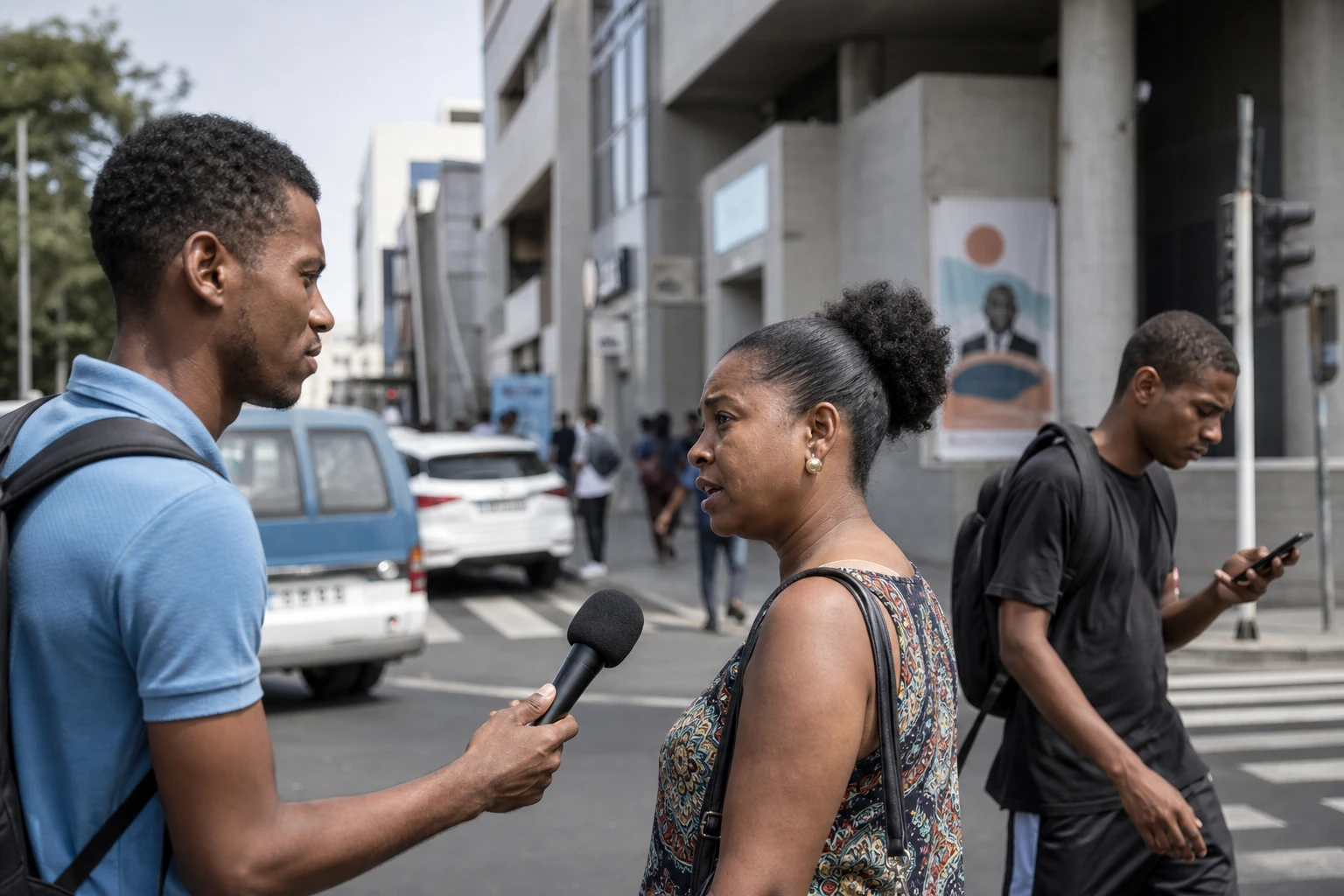
A Cape Verdean goalkeeper at the centre of a major public event in Santiago
In South American football, often dominated by the same narratives, some arrivals go beyond the usual business of recruitment. Vozinha’s move to Colo-Colo became an event at the stadium as much as a sporting statement in Santiago. The Cape Verdean goalkeeper, who made a name for himself at the last World Cup, was welcomed by a large crowd at the Monumental Stadium in a celebratory atmosphere rarely seen at a player presentation.
The moment also says something about Cape Verde. In this West African archipelago, the international profile of football is built on more than results. It also rests on individual careers that can open doors far from Praia, the capital, where the national team made one of the most remarkable chapters in its recent history by qualifying for the 2026 World Cup.
From Praia to Santiago: what Vozinha’s career tells us
The goalkeeper, known by the nickname Vozinha, did not arrive in Chile as an unknown quantity. He is one of the mainstays of the Cape Verdean national team. FIFA describes him as one of Cabo Verde’s most experienced players, with 88 caps and a central role in the country’s historic qualification for its first World Cup. The Confederation of African Football also hailed the achievement, secured on 13 October 2025 against Eswatini in Praia.
This sporting recognition has reached beyond Africa’s borders. In its coverage of the 2026 World Cup, FIFA notes that Cape Verde, a country of just over 500,000 people, earned its place after a consistent and disciplined CAF qualifying campaign. Vozinha’s case symbolises this rise in stature: a mature player, accustomed to major occasions, who has become one of the faces of a Cape Verdean generation that is more visible and respected on the world stage.
In Chile, Colo-Colo confirmed his arrival after his move from European football. The most decorated club in the Primera División confirmed the deal at the end of July 2026, then held his presentation at the Monumental in Santiago before an unusually large crowd for such an event. Media present reported an attendance of close to 30,000, far exceeding the initial estimates circulating ahead of the event.
Why Colo-Colo is banking on him now
The timing is no coincidence. The 2026 Liga de Primera has entered the second half of the season, and Colo-Colo are top of the Chilean league with a comfortable lead, according to reports published at the end of July. The club are not competing in a CONMEBOL continental competition this year. They are therefore focusing their efforts on the national title and on managing a squad capable of keeping up the pace through to December.
In this context, bringing in an experienced goalkeeper makes clear sense. Colo-Colo are looking for security, authority and a presence capable of absorbing the pressure of major occasions. The club has also understood the symbolic weight of a name like his. In Chile, football remains a powerful force for bringing people together, but it is also a market highly attuned to image, social media and stories that extend beyond the pitch. The Vozinha effect is therefore sporting, commercial and popular all at once.
The goalkeeper has spoken to thank supporters for their welcome. That matters. At 40, he joins a dressing room where experience counts as much as current form. For a club targeting the title, mental stability behind the defensive line can matter as much as a more high-profile signing. That is where Colo-Colo’s gamble becomes clear: turning a global figure into a useful asset in a tight league campaign.
A Cape Verdean perspective and continental significance
For Cape Verde, this episode goes beyond individual success. It confirms the rise of a national talent pool that now forms part of a broader pan-African picture: a country with a small population, but one capable of placing players at leading clubs outside the continent and then using that exposure to strengthen its sporting image. Qualification for the 2026 World Cup, confirmed by CAF and FIFA, has already placed Cabo Verde in a different category in the public eye.
In Lusophone African countries and, more broadly, in West Africa, this kind of career path also feeds a practical discussion about development systems, career management and the international value of players from small federations. Vozinha’s case shows that a national football system is measured not only by the number of titles or the revenues of its clubs. It is also measured by its ability to produce players who are exportable, credible and immediately recognisable to audiences a long way from Praia.
The next steps will come quickly on the pitch. Colo-Colo must now integrate their new goalkeeper into a season in which every point counts. The Chilean fixture list already includes a first run of domestic matches in the coming days, while the Superclásico between Universidad de Chile and Colo-Colo has been scheduled for 23 August, with away supporters set to return. In other words, the Santiago club has not simply signed a name. It has added a story at a time when the Chilean league is seeking to maintain its intensity and attract its fans.