Algeria
 Egypt
 Libya
 Morocco
 Tunisia
 Benin
 Burkina Faso
 Cabo Verde
 Côte d'Ivoire
 Ghana
 Guinea
 Guinea-Bissau
 Liberia
 Mali
 Mauritania
 Niger
 Nigeria
 Senegal
 Sierra Leone
 The Gambia
 Togo
 Cameroon
 Central African Republic
 Chad
 DR Congo
 Equatorial Guinea
 Gabon
 Republic of the Congo
 São Tomé and Príncipe
 Burundi
 Comoros
 Djibouti
 Eritrea
 Ethiopia
 Kenya
 Madagascar
 Malawi
 Mauritius
 Mozambique
 Rwanda
 Seychelles
 Somalia
 South Sudan
 Tanzania
 Uganda
 Angola
 Botswana
 Eswatini
 Lesotho
 Namibia
 South Africa
 Zambia
 Zimbabwe
A war already spilling across borders
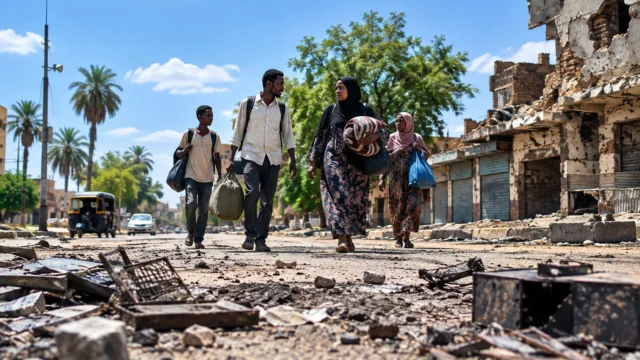
In Sudan, the conflict is no longer being fought solely between the Sudanese Armed Forces and the Rapid Support Forces. It is also affecting neighbouring countries, trade routes, refugee flows and the security balance across the entire Horn of Africa. It was against this backdrop that Washington called on Monday 24 August 2026 for the UN arms embargo, until now limited to Darfur, to be extended across Sudan.
The idea did not emerge in a vacuum. Since 2004, the Security Council has maintained an arms restriction regime initially targeting Darfur, where the war had already revealed how easily supply networks cross borders. In 2024 and again in 2025, the UN extended the measures and targeted sanctions. But the conflict from 2023 to 2026 has grown in scale. The fighting, drones, external support and mass displacement of civilians have made the distinction between Darfur and the rest of the country increasingly artificial.
What Washington wants to change at the Security Council
The American argument at the Security Council is simple: if arms continue to enter Sudan through regional and international channels, an embargo confined to Darfur is no longer enough. Massad Boulos, senior adviser on Africa to US President Donald Trump, has advocated a resolution that would extend the ban to the entire territory of Sudan and explicitly bring drones and unmanned systems within the scope of the embargo. The stated aim is to curb the “military, political and financial assistance” fuelling the conflict.
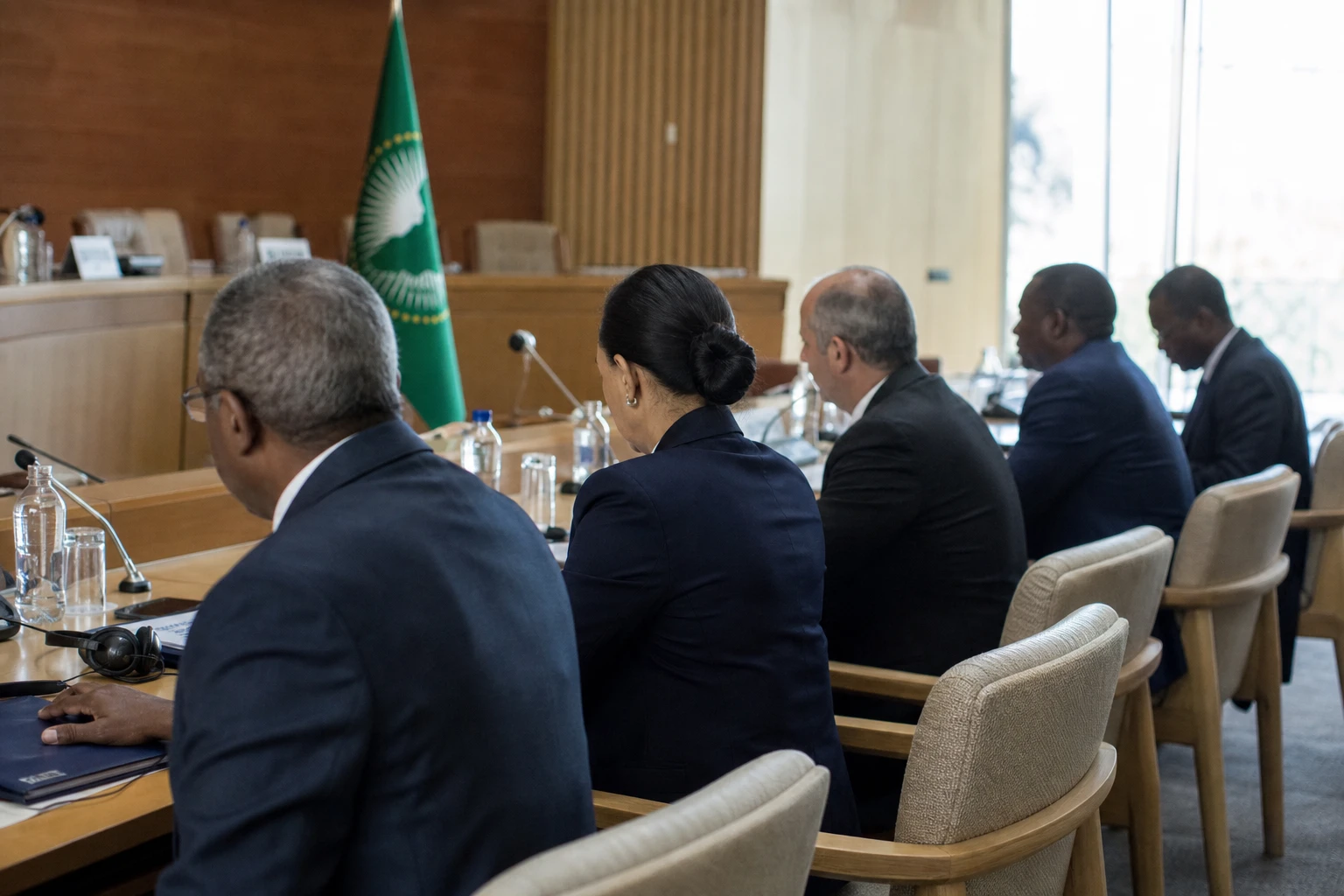
This position echoes an assessment already advanced by several UN and African observers: Sudan’s war is no longer merely an internal affair. It is attracting external support, fuelling trafficking and exposing neighbouring states to spillover effects. The president of the Security Council, Danish Foreign Minister Lars Løkke Rasmussen, summed up the stakes by noting that the conflict is destabilising neighbouring countries and “the entire region”. The African Union, too, reaffirmed in June 2026 its commitment to Sudan’s unity, sovereignty and territorial integrity, while calling for an inclusive political process.
The political timetable matters greatly. Sudan is at the centre of a tangle of initiatives involving the African Union, IGAD, the Arab League, the UN and the so-called Quad, comprising the United States, Egypt, Saudi Arabia and the United Arab Emirates. In April 2026, these frameworks sought a way out of the crisis centred on a humanitarian truce and a return to a civilian process. In August, the Security Council again debated Sudan, a sign that no durable peace framework has yet taken the place of the front lines.
The heart of the problem: arms, support and corridors
The American proposal touches a sensitive issue. Several UN reports and briefings have indicated that arms are reaching Sudan through networks running via neighbouring countries, particularly eastern Chad, Libya and areas towards Darfur. At the same time, persistent accusations concern external support for both sides. Sudanese authorities regularly denounce deliveries intended for the RSF, while other actors point out that the Sudanese army also receives regional support. In this kind of war, partial embargoes often have a limited effect as long as the corridors remain open.
The main obstacle this time is diplomatic. Russia, a permanent member of the Security Council, has already warned that it would oppose any measure it considered unfavourable to the Sudanese Armed Forces of General Abdel Fattah al-Burhan. A Russian veto would be enough to block a resolution if Moscow believed the text created an imbalance between the warring parties. In other words, the debate is not only about arms. It is also about how to define the balance between pressure on the parties, Sudanese sovereignty and the responsibility of external supporters.
For Sudanese people, the stakes are tangible. The UN and its agencies describe a massive crisis: tens of millions of people need aid, millions have been displaced, and hunger is spreading across several regions. The WFP estimates that around 19.5 million people face crisis-level hunger, while UNICEF reports that 33.7 million people will need humanitarian assistance in 2026. Meanwhile, the UN says Sudan remains the world’s largest internal displacement crisis. As long as arms continue to flow in, markets, schools, hospitals and aid corridors pay the heaviest price.
The government, for its part, fears that a wider embargo would further constrain the military capabilities of the regular forces, which are already engaged on several fronts. Civilians, meanwhile, are above all waiting for a real reduction in violence and reliable access to aid. This is where the sanctions debate becomes political: another text in New York will not be enough if supply routes, external support and regional interests remain untouched. That is also why the AU and IGAD are pressing for a negotiated, civilian and inclusive way out of the crisis rather than a logic of military victory.
A Sudanese issue with continental reach
The Sudan file now goes beyond the diplomacy of sanctions alone. It tests the ability of the African Union, IGAD and the Security Council to curb a war in which borders serve as corridors, drones move faster than negotiations and famine becomes an instrument of indirect pressure. In the short term, the key issue to watch is clear: the response of the permanent members of the Security Council, particularly Moscow’s position, and what follows from consultations within the Quad and among regional mediators.
Across Africa, Sudan is a test case. If the war continues to drive the movement of arms, fighters and resources across the Sahel, the Red Sea and the Horn of Africa, other fragile states could be drawn into the same spiral. For Khartoum, the stakes are no longer just about gaining ground. They are about halting the country’s fragmentation and regaining control of its borders, institutions and political future.