Algeria
 Egypt
 Libya
 Morocco
 Sudan
 Tunisia
 Benin
 Burkina Faso
 Cabo Verde
 Côte d'Ivoire
 Ghana
 Guinea
 Guinea-Bissau
 Liberia
 Mali
 Mauritania
 Niger
 Nigeria
 Senegal
 Sierra Leone
 The Gambia
 Togo
 Cameroon
 Central African Republic
 Chad
 DR Congo
 Equatorial Guinea
 Gabon
 Republic of the Congo
 São Tomé and Príncipe
 Comoros
 Djibouti
 Eritrea
 Ethiopia
 Kenya
 Madagascar
 Malawi
 Mauritius
 Mozambique
 Rwanda
 Seychelles
 Somalia
 South Sudan
 Tanzania
 Uganda
 Angola
 Botswana
 Eswatini
 Lesotho
 Namibia
 South Africa
 Zambia
 Zimbabwe
An African issue at the heart of a global diplomatic test
At first glance, the question may seem remote for Kampala or Bujumbura. In reality, it touches on a very concrete issue for several African capitals: how far can the continent’s military engagement in external operations go when these involve security, diplomacy and political risk? The prospect of deploying Ugandan and Burundian troops to Gaza falls into this grey area, where African armies are being called upon well beyond their immediate neighbourhood.
The issue also has a regional dimension. Uganda and Burundi belong to blocs where collective security is already central to discussions, from the African Union to the East African Community, which deployed a regional force in the east of the Democratic Republic of the Congo, including Burundian and Ugandan contingents. These precedents matter. They show that the countries have gained experience in stabilisation operations, but also that every external mission is scrutinised for its costs, mandates and political consequences.
What has been established so far
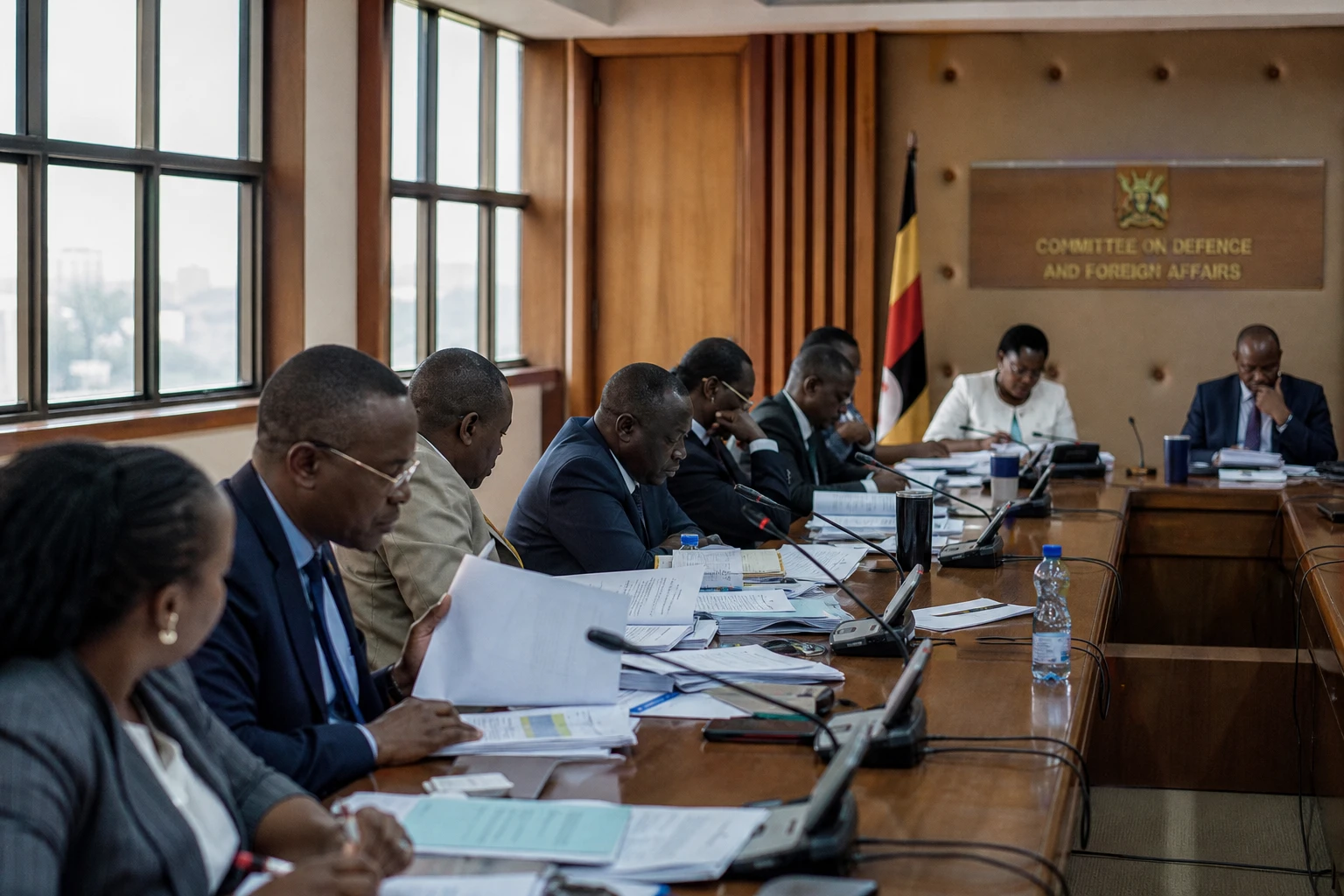
The confirmed details are precise. On 6 August 2026, Uganda’s parliament approved in principle the deployment of the Ugandan army to the Gaza Strip as part of an international stabilisation force envisaged under the US plan backed by Donald Trump’s Board of Peace. The resolution authorises the government to proceed if the force is indeed established. Ugandan officials subsequently suggested that about 1,200 troops could be offered.
For Burundi, the issue remains more open. Burundian military officials travelled to Israel to discuss possible participation, but nothing has yet been finalised. An official involved in the Board of Peace framework said Ugandan officers had joined a Burundian delegation last week and that Bujumbura appeared interested, though it had made no firm commitment at this stage. Sources cited in the Israeli press confirmed that the discussions had included a pre-deployment visit to Rafah, in southern Gaza.
The international framework has also begun to take shape. The US peace plan was ratified early in 2026, and the UN then authorised a temporary stabilisation force in Gaza through Resolution 2803. According to UN documents, the force is to help secure the post-conflict environment, while the first known signatories were Albania, Indonesia, Kazakhstan, Kosovo and Morocco. Other capitals have since been mentioned in discussions, but commitments remain fragile and often conditional.
Why Uganda and Burundi matter to this initiative
The presence of African countries in this kind of mission is no mere footnote. Uganda and Burundi have built up experience in peace operations, notably in Somalia as part of African Union deployments. This experience gives them operational strengths, particularly in maintaining order, coordinating with local forces and protecting civilians. It also exposes them to a recurring criticism: that they are called in to reinforce operations in distant theatres while their own security environments remain under pressure.
In Uganda’s case, the domestic debate is not neutral. Parliamentary approval was voted through as the majority defended the idea of Uganda making an international contribution to peace operations, while the opposition denounced what it considered an overly rapid process. This matters because an overseas deployment involves public finances, equipment, human risks and the political interpretation of the army’s role. For Kampala, the question is therefore not solely military. It also concerns the image of a state seeking to play a role in regional and international affairs.
Burundi approaches the issue from a different position. Bujumbura has not yet publicly approved participation, but sending officers to discussions in Israel indicates at least a willingness to explore the country’s possible role. For a state whose forces are already known for their peacekeeping experience, taking part in Gaza would offer diplomatic visibility. But it would also expose Burundi to a mission carrying great symbolic weight, in an environment where every detail of the mandate, command structure and political legitimacy will be scrutinised.
An issue that goes beyond Gaza
That is the heart of the problem: this future force would not be merely a security component. It would become a test of credibility for a still-incomplete transition framework. Discussions cover monitoring the ceasefire, supporting humanitarian aid, overseeing a future Palestinian police force and securing the ground. Yet these goals remain dependent on unresolved questions: who would really be in command, what exact mandate would the soldiers be given, what political guarantees would be in place, and under what conditions would Israeli forces withdraw?
For Africa, the issue is also institutional. The African Union has long promoted the idea of a credible African peace and security capacity through its Peace and Security Council and the African Peace and Security Architecture. But when African states join an operation designed outside the continent, the question becomes a delicate one: is this an extension of African expertise, or an outsourcing of risks that do not primarily serve their priorities? The answer will vary between capitals, but the debate is real.
In the short term, three developments warrant close attention. First, whether a formal agreement with Burundi is confirmed. Second, the precise form of the stabilisation force in Gaza, which is still subject to delays and negotiations. Finally, how Kampala will justify domestically a commitment that links the Ugandan army to a diplomatic initiative led under US auspices. For now, this is not a story of a deployment already agreed. It is a story of a shift under way, as African states seek to influence a Middle Eastern crisis without losing sight of their own political and strategic balances.