Algeria
 Egypt
 Libya
 Morocco
 Sudan
 Tunisia
 Benin
 Burkina Faso
 Cabo Verde
 Côte d'Ivoire
 Ghana
 Guinea
 Guinea-Bissau
 Liberia
 Mali
 Mauritania
 Niger
 Nigeria
 Senegal
 Sierra Leone
 The Gambia
 Cameroon
 Central African Republic
 Chad
 DR Congo
 Equatorial Guinea
 Gabon
 Republic of the Congo
 São Tomé and Príncipe
 Burundi
 Comoros
 Djibouti
 Eritrea
 Ethiopia
 Kenya
 Madagascar
 Malawi
 Mauritius
 Mozambique
 Rwanda
 Seychelles
 Somalia
 South Sudan
 Tanzania
 Uganda
 Angola
 Botswana
 Eswatini
 Lesotho
 Namibia
 South Africa
 Zambia
 Zimbabwe
A bid to shift up a gear
In Lomé, the debate is no longer just about visible infrastructure projects. It is now about how to finance, over 15 years, an economic transformation that goes beyond the usual pace of public budgets. Togo wants the private sector to become a central driver of this shift, in a country where economic activity depends heavily on logistics, services, agro-industry and regional trade.
This choice is not an isolated one. It is part of a broader process that began at the government seminar in Djamdè in June 2026, where the Togolese executive set out a path aimed at doubling average living standards by 2040 and bringing poverty below 15%. The World Bank, for its part, also stresses the need for structural reforms to support growth driven by private investment and productive employment.
Vision 2040: Lomé’s plans
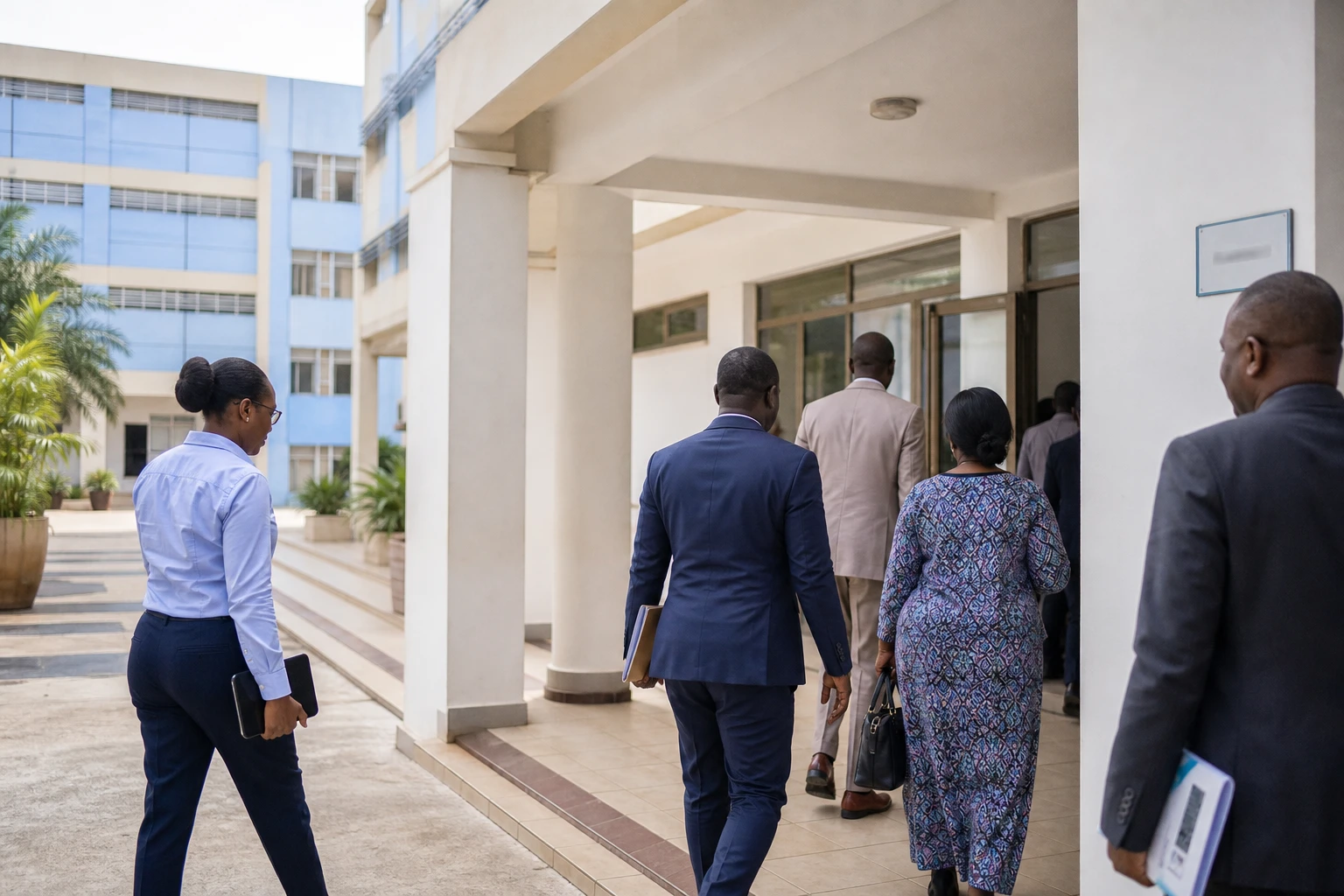
On 30 July 2026, the Togolese government brought together business organisations, companies and financial partners in Lomé to clarify the private sector’s expected contribution to Vision Togo 2040. The stated goal is twofold: to accelerate the structural transformation of the economy and to define reforms capable of attracting more productive investment. The political message is clear: the state no longer wants merely to build; it also wants to create a clearer framework for investment.
Sandra Ablamba Johnson, Minister and Secretary-General of the Presidency of the Council, presented this step as an opportunity to align national strategy, reforms and capital mobilisation. The government also discussed a growth model driven more by private investment, while keeping the state at the centre of coordination. In practice, this means very concrete decisions on tax, land, customs procedures, contract security, access to energy and financing for SMEs.
The private sector is already part of Togo’s economic landscape. Across the country, micro, small and medium-sized enterprises make up most of the business community, according to recent official statements. The government has also highlighted the Adétikopé Industrial Platform, north of Lomé, as a tool for industrialisation and attracting investment, with more than CFAF 350 billion announced since its launch and activity gradually increasing.
Figures to treat with caution
The government reported a 27.3% rise in the stock of foreign direct investment in 2025, to $2,063 million. The figure warrants careful reading: it represents just over $2bn, not a marginal sum. UNCTAD databases already put Togo’s FDI stock at around $1.9bn in 2021, confirming growth, but also showing that the base remains modest relative to the country’s industrialisation needs.
The regional context helps explain this shift. Togo is a member of ECOWAS, the West African organisation that brings several coastal and landlocked economies into a shared area of movement. The Port of Lomé, already described by the World Bank as a major logistics asset in West Africa, and the Adétikopé Industrial Platform are at the heart of this strategy. The country wants to capture more freight flows and then process a larger share of agricultural and mining raw materials locally.
This approach also aligns with the priorities of financial partners. The World Bank Group says its work in Togo focuses on agriculture, logistics, energy and digitalisation, with an emphasis on public-private partnerships. The IFC has already invested and mobilised $172 million across several sectors, according to its country overview. This shows that the focus on the private sector is not based solely on political intent, but on an existing framework of instruments.
What this means for Togolese people
For large companies, the Lomé meeting opens a window for negotiations on what the state is expected to offer in return. For SMEs, the challenge is more straightforward and decisive: access to credit, public contracts, subcontracting chains and a faster administration. This is often where the difference lies between an announced strategy and a genuinely transformed economy. The government seems to understand this, placing agro-industry, logistics, transport and energy at the centre of the discussions.
The social challenge remains, however. Recent World Bank reports highlight persistent gaps between urban and rural areas, as well as poverty that is declining slowly. In other words, increased investment alone is not enough. It must translate into jobs, training and productive activity beyond Lomé. Otherwise, growth may remain concentrated, while the promise of Vision 2040 remains largely urban and institutional.
Togo nevertheless has real strengths. Its position as a hub between the Gulf of Guinea and the Sahelian hinterland, the modernisation of customs and land procedures, and recent transport projects connecting the Port of Lomé to Adétikopé bolster its profile as a regional hub. The World Bank even announced a $225 million programme in June 2026 to improve urban mobility and logistics, proof that the issue extends beyond national rhetoric alone.
Significance beyond Togo
What is at stake in Lomé also concerns West Africa as a whole. In an ECOWAS region weakened by political tensions, budget constraints and pressure on supply chains, Togo is relying on the relative stability of its infrastructure and its commercial position to remain attractive. If Vision 2040 succeeds, it will offer a concrete example of transformation underpinned by the private sector, logistics and light industry in a medium-sized coastal country.
But what happens next will depend less on declarations than on decisions expected by the end of the year. The government must spell out the reciprocal commitments between the state and private operators. That is where the credibility of the initiative will be judged: in incentives, legal certainty, infrastructure quality and the ability to channel capital into activities that genuinely transform the Togolese economy.