Algeria
 Egypt
 Libya
 Morocco
 Sudan
 Tunisia
 Benin
 Burkina Faso
 Cabo Verde
 Côte d'Ivoire
 Ghana
 Guinea
 Guinea-Bissau
 Liberia
 Mali
 Mauritania
 Niger
 Nigeria
 Senegal
 Sierra Leone
 The Gambia
 Cameroon
 Central African Republic
 Chad
 DR Congo
 Equatorial Guinea
 Gabon
 Republic of the Congo
 São Tomé and Príncipe
 Burundi
 Comoros
 Djibouti
 Eritrea
 Ethiopia
 Kenya
 Madagascar
 Malawi
 Mauritius
 Mozambique
 Rwanda
 Seychelles
 Somalia
 South Sudan
 Tanzania
 Uganda
 Angola
 Botswana
 Eswatini
 Lesotho
 Namibia
 South Africa
 Zambia
 Zimbabwe
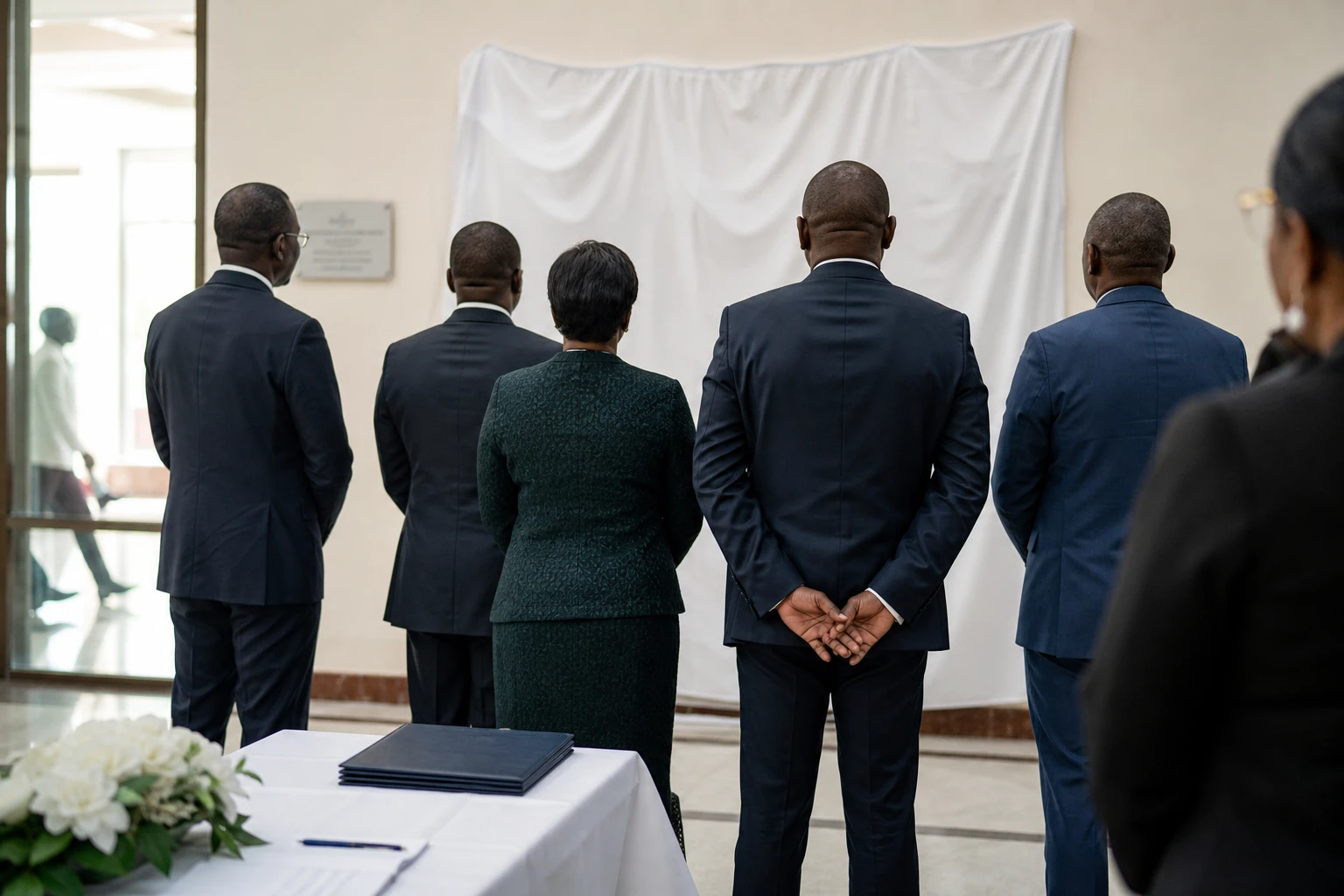
In Togo’s armed forces, continuity matters as much as rank
In Lomé, changes at the head of military units are never merely name changes. They say something broader about how the authorities want to hold together internal security, the chain of command and the loyalty of men in uniform. In a country where the armed threat from the north remains a real concern, every appointment at this level is also a political signal.
In recent years, Togo has strengthened the framework linking the presidency, the armed forces and the response to insecurity in the Savanes region, which borders Burkina Faso. Operation Koundjoaré, launched to contain the risk of terrorist incursions, relies precisely on this chain of command. It is also part of a regional effort, as the West African coastline seeks to prevent the spread of insecurity from the Sahel.
A wave of decrees redistributes sensitive posts
On 17 August 2026, several decrees were published in Lomé to reshape the balance of power within the Togolese Armed Forces. Colonel Tchakpelé Aklesso was promoted to brigadier general and then appointed chief of staff of the Togolese Armed Forces. He takes charge of the military apparatus after heading the National Intelligence Agency, itself a strategic post, and serving in the presidential guard. This career path confirms his position at the heart of the circle of trust around the authorities.
The chain of command does not stop there. The intelligence service is changing hands, while the army is placed under the authority of Colonel Kombaté Latiembe and the air force under that of Colonel Idrissou Abdu Ahabou. Other changes complete the reshuffle, including the appointment of Colonel Kilimou Mazama Esso as chief of the special staff. A pilot brigadier general has also been appointed to head civil aviation. This latest decision is a reminder that, in Togo, military officers are often used as a lever in administrative sectors considered sensitive.
These officers have established records. Colonel Kombaté Latiembe, for example, has already been identified as an operational commander in the fight against the threat in the north of the country. In May 2026, he was still welcoming the President of the Council in the Koundjoaré area. This shows that the August appointments do not mark a sharp break, but rather an internal reshuffle around officers already tested in the field.
What these choices say about the relationship between security and power
The first reading is military. The new chief of staff must defend the territory, coordinate the armed services and maintain pressure on armed groups active along the country’s northern edge. This is a demanding mission, because the threat is not confined to the border. It affects roads, markets, residents’ movements and economic activity in rural areas. People in the Savanes face a daily constraint that is not felt to the same degree in Lomé.
The second reading is political. The promotion of officials considered close to the President of the Council reinforces the impression of a tight circle of trust around sovereign functions. This is not unique to Togo, but the Togolese context gives it particular weight. Since the 2024 constitutional reform and the reshaping of the executive institutions, the balance between the presidency, government and security command has become even more clearly centred on the head of the executive.
For the administration, this choice could bring discipline, speed and better flows of information. For critical observers, it raises a more familiar question: how can the management of civilian or quasi-civilian sectors be prevented from shifting too often to military officers? The debate is a longstanding one in Togo, where the army has long occupied a central place in the architecture of the state. What is new here is not the presence of uniforms, but their extension into broader governance roles.
Significance beyond Lomé
These appointments must also be viewed in a West African context. For several years, Togo has cooperated with its neighbours through the Accra Initiative, which focuses on intelligence-sharing, training and joint operations. The logic responds to a simple reality: threats move faster than administrative borders. The strengthening of intelligence and the military hierarchy in Lomé is therefore part of a broader regional effort to tighten security.
ECOWAS is not at the centre of every national military decision, but it remains the political framework for West African stability. In a region shaped by military transitions, constitutional crises and expanding insecurity, Togo is seeking to present itself as a country of order, institutional continuity and the capacity to anticipate threats. This is also a way to reassure security partners and business operators, for whom Lomé’s stability remains valuable to its role as a regional hub.
The question of what follows remains. The coming months will show whether these appointments lead to better coordination on the ground, particularly in the Savanes, or whether they mainly confirm a further concentration of power around officers regarded as loyal. Either way, the message is clear: Togo treats security as a matter of state, not simply a question for the barracks.