Algeria
 Egypt
 Libya
 Morocco
 Sudan
 Tunisia
 Benin
 Burkina Faso
 Cabo Verde
 Côte d'Ivoire
 Ghana
 Guinea
 Guinea-Bissau
 Liberia
 Mali
 Mauritania
 Niger
 Nigeria
 Senegal
 Sierra Leone
 The Gambia
 Cameroon
 Central African Republic
 Chad
 DR Congo
 Equatorial Guinea
 Gabon
 Republic of the Congo
 São Tomé and Príncipe
 Burundi
 Comoros
 Djibouti
 Eritrea
 Ethiopia
 Kenya
 Madagascar
 Malawi
 Mauritius
 Mozambique
 Rwanda
 Seychelles
 Somalia
 South Sudan
 Tanzania
 Uganda
 Angola
 Botswana
 Eswatini
 Lesotho
 Namibia
 South Africa
 Zambia
 Zimbabwe
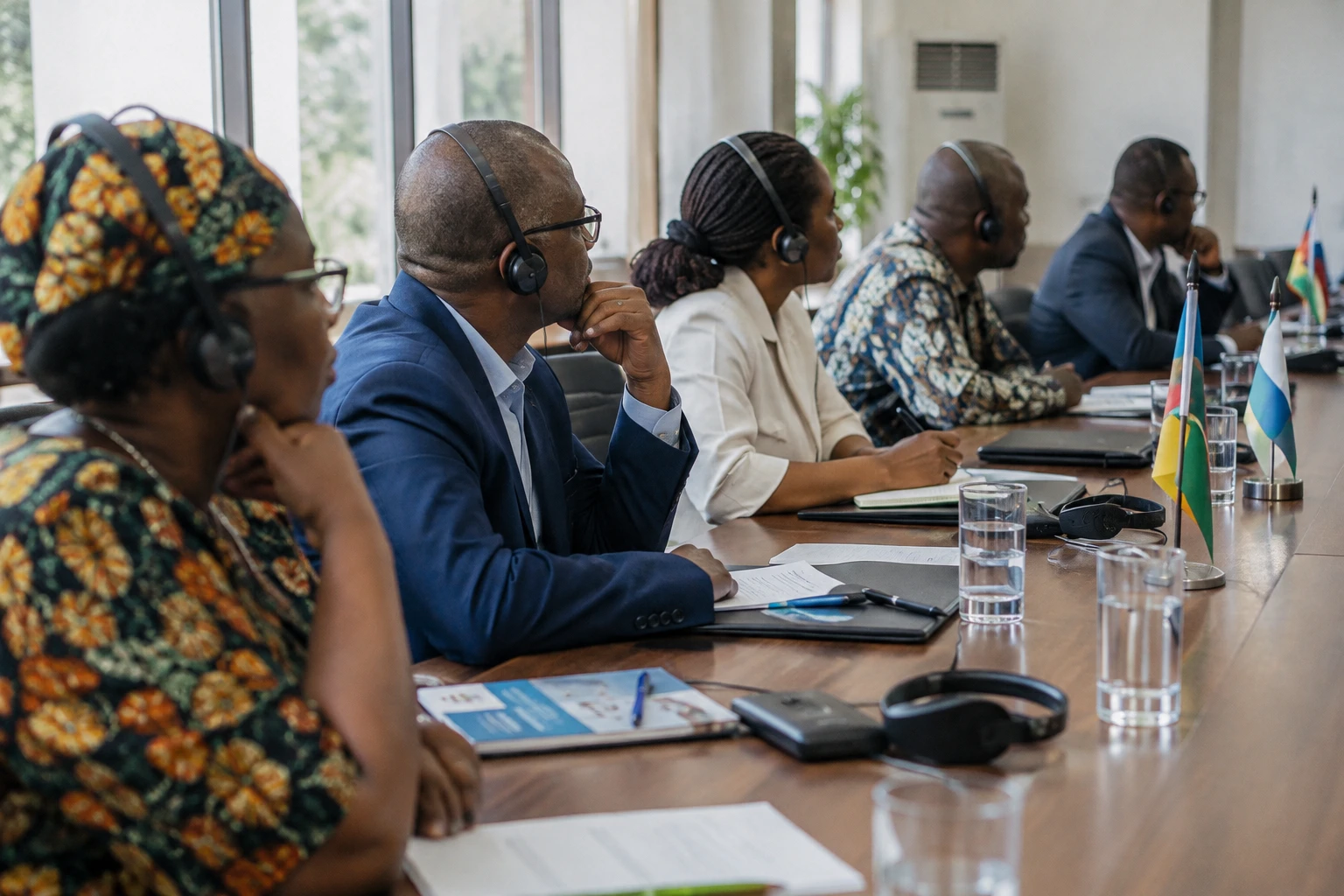
Reading a prescription, keeping the accounts of a small business or taking part in agricultural training: these activities also rely on basic skills. In Togo, funding for literacy and non-formal education remains far below the needs projected for 2024 and 2025.
A significant gap at the start of the strategy
Of the CFAF 4 billion allocated for these two years, only CFAF 403 million had been mobilised, leaving a shortfall of about CFAF 3.6 billion. The figures were presented at a round-table discussion organised in Lomé on 23 October 2026 by the Directorate General for Literacy and Non-Formal Education. They cover the first two years of the 2024–2028 national strategy. The meeting report and the amounts announced were also reported by Togolese media.
The shortfall is more than an accounting figure. It could reduce the number of people supported, the length of training courses or the resources available to adapt lessons to local realities. The projects presented in Lomé cover two areas: PAJAGO, aimed at young people and adults belonging to organised groups, and a programme devoted to non-formal education, meaning learning pathways outside the conventional school system.
The five-year plan is broader than the immediate needs discussed at the round table. The 2024–2028 strategy puts its overall budget at about CFAF 12.4 billion. It aims to improve access and equity, the quality of learning, and governance and funding in the sector. The strategy document also provides for monitoring results and mobilising resources from several stakeholders.
Learning linked to everyday life
Literacy is not limited to learning to read and write. Officials at the meeting highlighted its links with health, agriculture and trade. Understanding an instruction, reading health information, calculating an expense or keeping a register can help people make use of other services and training.
Needs vary from place to place. In cities, traders and workers in the informal economy may seek skills directly related to their activities. In rural areas, training can help people access agricultural information or better manage a collective activity. Course content must therefore take account of learners’ languages, occupations and time constraints, rather than apply a single model everywhere.
The challenge also affects people who left school early or never had access to it. In 2024, Togo began updating its literacy, post-literacy and non-formal education programmes. The work, carried out with public services, civil society organisations and partners, was intended to link the content more closely to socio-economic and professional needs. The organisation DVV International documented this initiative, launched in Lomé in March 2024.
A model that depends on partnerships
Working with associations and external providers follows a policy already adopted by the government. In 2019, the authorities decided to entrust the implementation of certain programmes to specialised organisations, while the state retained responsibility for setting policy, monitoring and evaluation. This approach, known as “faire-faire” (“getting others to do it”), aims to draw on organisations active on the ground. However, it does not resolve questions about continuity of funding or quality control.
The current strategy also provides for associations and non-governmental organisations to implement projects under the coordination of the Directorate General. It also involves local authorities, civil society and the private sector. For this division of responsibilities to work, responsibilities, available funding and expected results must be monitored transparently. To that end, the strategy provides for annual evaluations and a dedicated information system.
The national budget offers further context, although it does not make it possible to measure spending on literacy directly. The Ministry of National Education has a projected allocation of CFAF 212 billion for 2026, but this covers several sub-sectors. It does not, on its own, specify the funds earmarked for non-formal education. The Ministry of Finance sets out the main features of the 2026 budget, while figures reported by the Togolese press detail the ministry’s allocation.
The next challenge: turning pledges into resources
For learners, the effects of underfunding may mean fewer places, courses that are harder to sustain or insufficient support after training. For municipalities and local organisations, uncertainty over resources makes planning more difficult. Financial partners, meanwhile, are being called on to provide financial, technical and institutional support, without the strategy relying solely on external contributions.
This issue also sits within a regional framework. Togo is a member of WAEMU, the West African Economic and Monetary Union, and ECOWAS, the Economic Community of West African States. The Togolese strategy is aligned with its 2020–2030 education sector plan and reflects continental priorities on lifelong learning. But regional pledges cannot replace executed budgets and programmes accessible across the country’s different regions.
The central question is now how to turn commitments into funding that is actually available. The amounts announced for 2024–2025 indicate the size of the gap to be bridged; they do not yet specify how much will be mobilised for the projects presented in Lomé, or their deployment timetable. Implementation of the 2024–2028 strategy and publication of monitoring results will make it possible to assess whether new resources are reaching learners.