Algeria
 Egypt
 Libya
 Morocco
 Sudan
 Tunisia
 Benin
 Burkina Faso
 Cabo Verde
 Côte d'Ivoire
 Ghana
 Guinea
 Guinea-Bissau
 Liberia
 Mali
 Mauritania
 Niger
 Nigeria
 Senegal
 Sierra Leone
 The Gambia
 Cameroon
 Central African Republic
 Chad
 DR Congo
 Equatorial Guinea
 Gabon
 Republic of the Congo
 São Tomé and Príncipe
 Burundi
 Comoros
 Djibouti
 Eritrea
 Ethiopia
 Kenya
 Madagascar
 Malawi
 Mauritius
 Mozambique
 Rwanda
 Seychelles
 Somalia
 South Sudan
 Tanzania
 Uganda
 Angola
 Botswana
 Eswatini
 Lesotho
 Namibia
 South Africa
 Zambia
 Zimbabwe
When rumour takes the place of fact
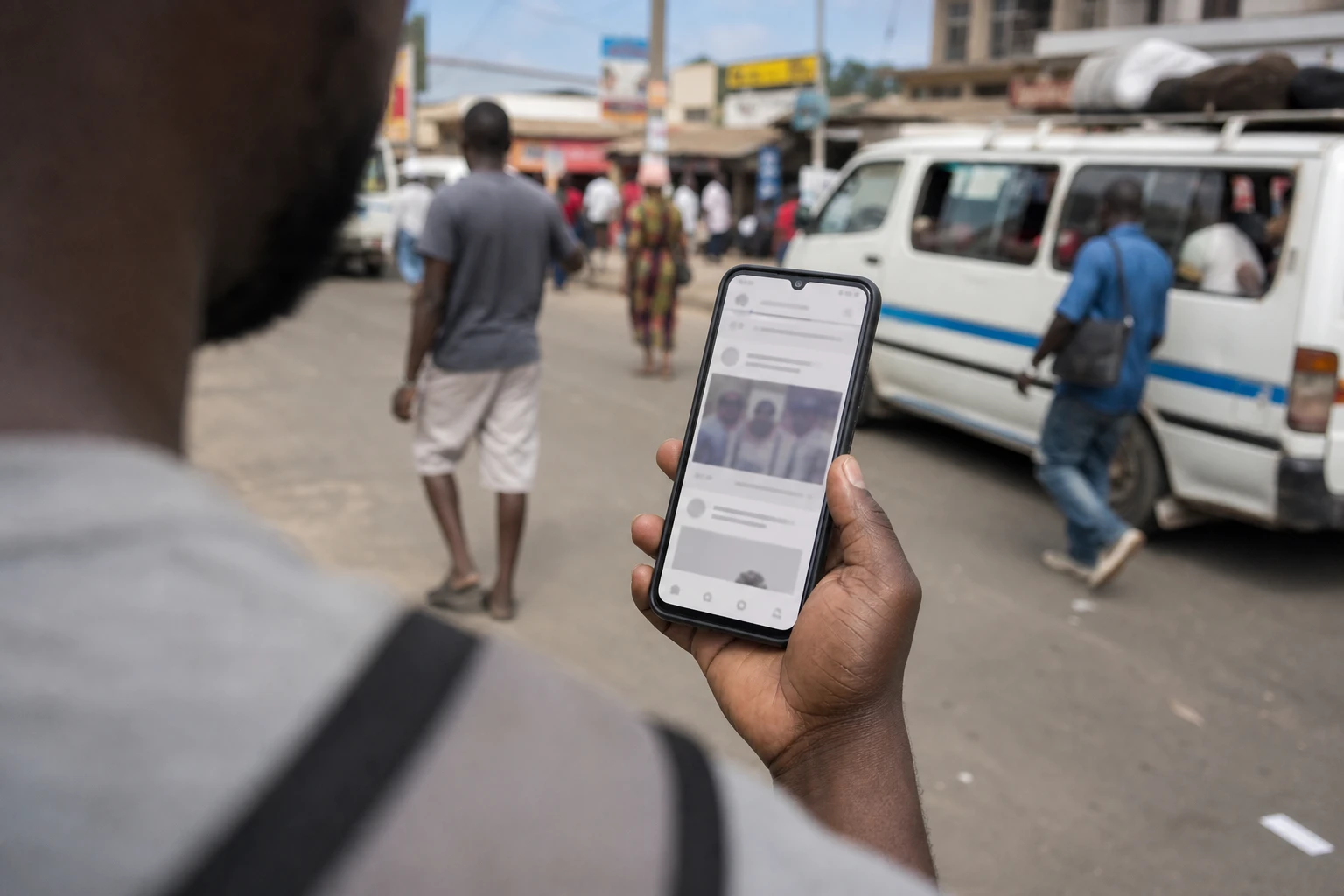
In Togo, a handshake can sometimes be enough to trigger a collective alarm. For several weeks, rumours of “genital disappearance” have circulated in several localities, from Kara to Sokodé and as far as Lomé. In each of the reported cases, medical examinations found nothing abnormal. The problem is therefore not only a health matter. It concerns trust, fear and the speed at which content spreads on social media.
This type of story is not unique to Togo. In several West African countries, similar beliefs resurface in waves, often where word of mouth, social tensions and digital circulation meet. In Togo, the Ministry of Security recently reminded the public that this kind of rumour can lead to acts of mob justice against people who are wrongly suspected.
A country already alert to the effects of disinformation
In recent months, Togo has stepped up its focus on public safety and the circulation of sensitive information. The Ministry of Security says it is responsible for protecting people and property, maintaining public order and ensuring public tranquillity. At the same time, the University of Lomé, together with Togocheck, held an awareness-raising session on disinformation in the university community, showing that the fight against fake news extends beyond policing alone.
This vigilance is also part of a broader national context. In Lomé, the authorities have recently issued statements about other episodes of rumours and viral alerts, such as unverified reports of abductions or disappearances, which were ultimately examined by the relevant services. The government has stressed the same response each time: report, verify, do not share.
The issue also affects the north of the country, where security concerns are more acute. In March 2026, the Togolese authorities reiterated that the terrorist threat remains a concern in the Savanes region, with a state of security emergency extended to protect people and their property. In this context, any rumour that puts a crowd on edge can complicate the work of public forces and further undermine local trust.
The facts: accusations, followed by negative medical examinations
The cases mentioned in several Togolese localities follow a recurring pattern. A person claims to have felt a sudden chill or malaise, or to have experienced the sudden disappearance of their genitals after brief contact. The account spreads quickly. Medical examinations then show no abnormality. The gap between emotion and evidence fuels confusion and, at times, anger.
In one case cited publicly, a lecturer and researcher at the University of Kara said he had followed a case at a police station, where a young man accused an older woman with whom he had had brief contact. The investigation, as it was described, did not confirm the accusation. This episode illustrates an essential point: rumour feeds first on an impression, not on a medical finding.
The Ministry of Security has therefore called on the public to remain calm and exercise restraint. It has asked people not to share unverified information and to report any suspicious incident to the relevant services. The statement reported by the Togolese press also lists several emergency numbers. This official response shows that the state is seeking not to stoke alarm, but to stop the escalation.
Why these rumours take hold
Social sciences help explain the phenomenon. A researcher at the University of Lomé interviewed about these cases cited fear, uncertainty and cultural beliefs. Another academic in Kara highlighted the role of social media and the power of collective buy-in. In other words, rumour does not thrive in a vacuum. It takes root where fear is already circulating.
It is also important to consider the relationship between these stories and the everyday tensions of social life. In environments where institutional voices are slow to respond, trust in the authorities is fragile and viral messages circulate widely, even the smallest incident can become an all-encompassing narrative. The body, shame, fear and suspicion then combine in a single sequence. This sociological perspective does not validate anything; it explains why noise sometimes outweighs evidence.
The Togolese authorities have already faced other social-media-driven viral panics. On several occasions, they have issued statements about false information concerning security, the movement of people or alleged criminal networks. The common thread is the same: when information is not verified, the risk is not merely error, but the social violence that may follow.
A national issue with regional resonance
In Togo, the matter therefore goes beyond supposed folklore. It raises questions about how society deals with rumour, authority and evidence. It also highlights the role of schools, universities, local media and health services in fostering a habit of verification. In Lomé as in Kara, the challenge is to protect people without allowing the crowd to take the place of justice.
Across West Africa, the issue connects with a broader question: how are ECOWAS member states — the Economic Community of West African States — dealing with digital panics that cross borders faster than denials can catch up? The Togolese case shows that a local rumour can become a regional social phenomenon as soon as it taps into existing fears and the viral formats used by platforms.
What happens next will depend less on another statement than on the institutions’ ability to maintain the same approach: verify, reassure, explain. In a context where Togo remains on security alert in the north and fake news continues to spread rapidly, the priority is clear. A fragile belief must be prevented from turning into real harm.