Algeria
 Egypt
 Libya
 Morocco
 Sudan
 Tunisia
 Benin
 Burkina Faso
 Cabo Verde
 Côte d'Ivoire
 Ghana
 Guinea
 Guinea-Bissau
 Liberia
 Mali
 Mauritania
 Niger
 Nigeria
 Senegal
 Sierra Leone
 The Gambia
 Cameroon
 Central African Republic
 Chad
 DR Congo
 Equatorial Guinea
 Gabon
 Republic of the Congo
 São Tomé and Príncipe
 Burundi
 Comoros
 Djibouti
 Eritrea
 Ethiopia
 Kenya
 Madagascar
 Malawi
 Mauritius
 Mozambique
 Rwanda
 Seychelles
 Somalia
 South Sudan
 Tanzania
 Uganda
 Angola
 Botswana
 Eswatini
 Lesotho
 Namibia
 South Africa
 Zambia
 Zimbabwe
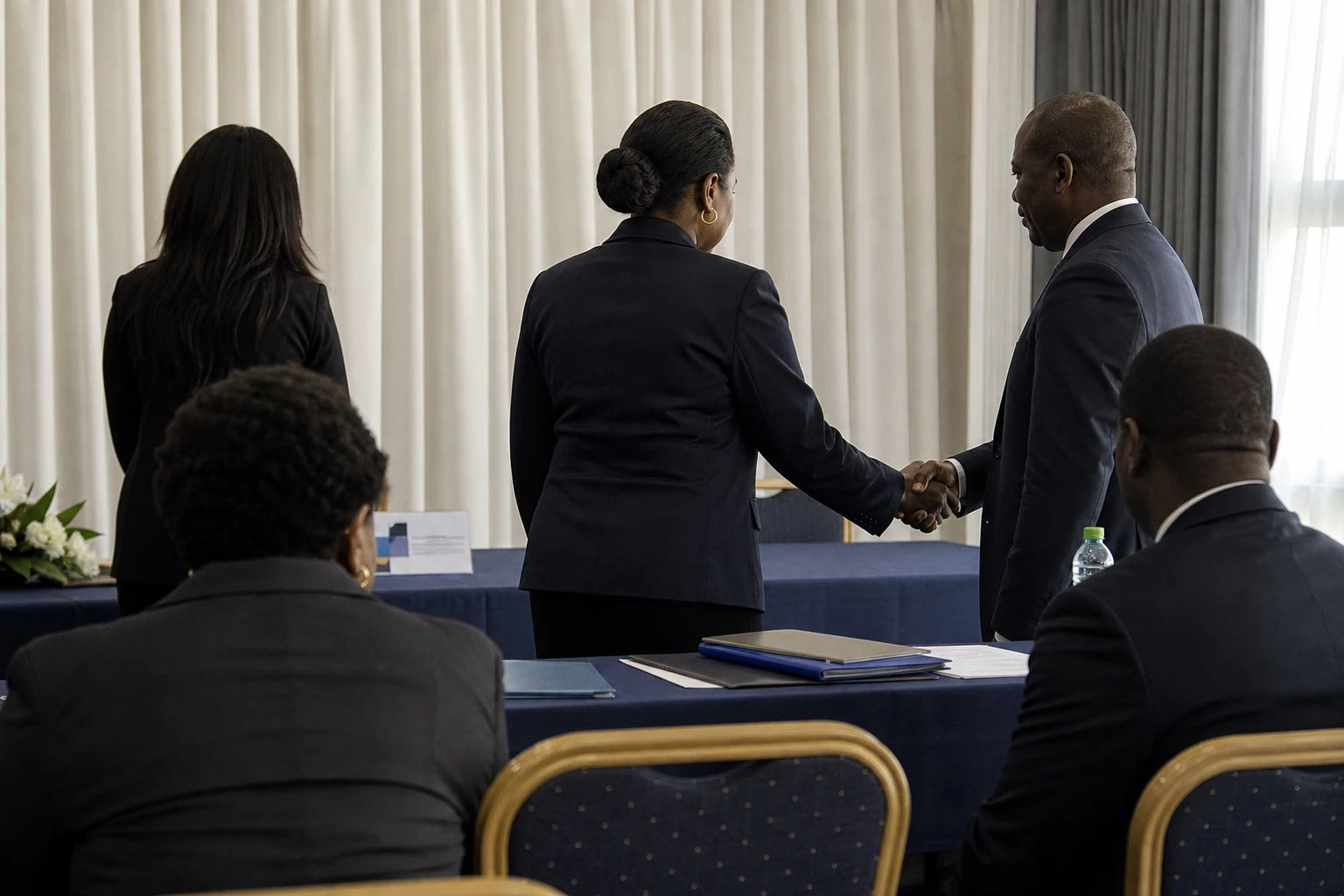
In Lomé, a legal case becomes a matter of cooperation
The case of the two French filmmakers detained in Togo has gone beyond the confines of a criminal proceeding. It has touched on the movement of filming crews, security in the north of the country and the already sensitive climate between Lomé and Paris. With the Savanes region still under a state of security emergency, every mission in the area requires strict preparation and unequivocal authorisations.
Togo, whose capital is Lomé, has faced pressure from the Sahel for several years. The Togolese authorities have strengthened their security measures in the Savanes region following incursions attributed to armed groups active across the border in Burkina Faso. ECOWAS continues to present security and early warning as regional priorities, placing northern Togo within a broader context than that of the national border alone.
What happened, and why leaving the country matters
Gaël Mocaër and Sebastian Perez Pezzani, along with their Togolese collaborator Fred Vedomey, were arrested on 27 July 2026 in northern Togo while filming an episode of Les Routes de l’impossible, a documentary series broadcast by France Télévisions. They were charged with “false declarations”, a charge they contest, according to their counsel. In early September, the Togolese justice system granted them provisional release. The two Frenchmen were then authorised to leave the country, and their return to France was announced for the morning of Thursday 3 September 2026.
Permission to leave is the key point in the case. Provisional release does not necessarily end the proceedings, but it eases the immediate restrictions. It brings to a close a period that drew in families, lawyers and French diplomats. It also shows that the dispute was not just about the presence of foreigners in the field. It concerned how the Togolese state regulates filming in an area considered sensitive.
Northern Togo, an area under constant surveillance
The Togolese authorities have themselves acknowledged since 2021 that the terrorist threat has reached the country’s far north. In March 2026, the government extended the state of security emergency in the Savanes region for a further 12 months, citing the persistent danger and the need to protect people and their property. Lomé has also expanded civilian and security programmes, from PURS, the emergency programme for community resilience and security, to humanitarian support initiatives with ECOWAS.
In this context, the issue of filming permits has very concrete administrative and security implications. In border areas, the use of drones, the precise location of crews and the nature of the images captured can be viewed as matters of sovereignty. The Togolese authorities also cited several irregularities in the preparation and execution of the mission, as well as the use of a drone in the north of the country. The production company, for its part, says the three men were acting lawfully.
For people in the Savanes region, the stakes are less diplomatic than practical. In this part of the country, the priorities remain safe travel, access to basic services and the maintenance of economic activity. Cross-border trade, small-scale farming and informal exchanges depend on safe roads and clear borders. When an area is designated high-risk, it is first and foremost the people who live there who face more checks, caution and uncertainty.
A local case with repercussions across West Africa
The case is a reminder that in West Africa, security is no longer confined to the Sahelian countries. The spread of violence from Burkina Faso to coastal states has forced several governments, including Togo’s, to adapt their surveillance strategies. Despite recent internal tensions, ECOWAS retains a coordinating role in early warning, border security and stabilisation. The Togolese case illustrates this reality: a legal incident can quickly be viewed through the lens of regional security.
It also reveals how fragile relations between longstanding partners can become when security affects the movement of journalists, documentary filmmakers and camera crews. France remains an important economic and diplomatic player in Togo, but for several years Lomé has pursued a more assertive strategy on security sovereignty and its assessment of threats in the Sahel. The significance of the case lies in this balance: it is a procedural matter, certainly, but also a test of trust between a coastal state on alert, a partner power and a region still seeking its own answers to cross-border insecurity.