Algeria
 Egypt
 Libya
 Morocco
 Sudan
 Tunisia
 Benin
 Burkina Faso
 Cabo Verde
 Côte d'Ivoire
 Ghana
 Guinea
 Guinea-Bissau
 Liberia
 Mali
 Mauritania
 Niger
 Nigeria
 Senegal
 Sierra Leone
 The Gambia
 Cameroon
 Central African Republic
 Chad
 DR Congo
 Equatorial Guinea
 Gabon
 Republic of the Congo
 São Tomé and Príncipe
 Burundi
 Comoros
 Djibouti
 Eritrea
 Ethiopia
 Kenya
 Madagascar
 Malawi
 Mauritius
 Mozambique
 Rwanda
 Seychelles
 Somalia
 South Sudan
 Tanzania
 Uganda
 Angola
 Botswana
 Eswatini
 Lesotho
 Namibia
 South Africa
 Zambia
 Zimbabwe
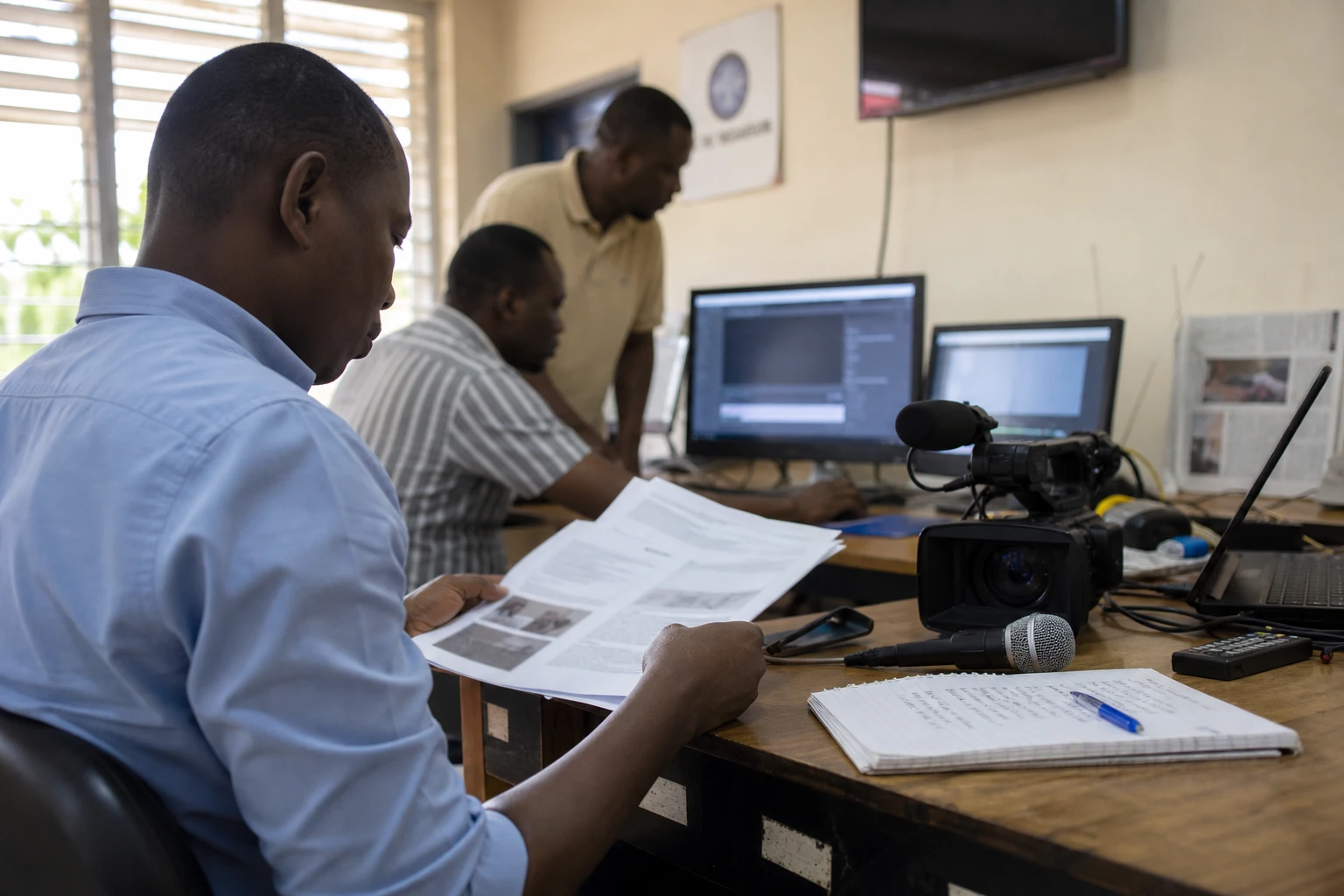
In northern Togo, a case that goes beyond a simple filming trip
In northern Togo, a filming trip can quickly become a matter of state. When image professionals are arrested, the issue is not only their presence in the field. It also touches on the circulation of information, administrative oversight and the way Lomé manages foreign scrutiny of its territory.
Since 27 July 2026, two French filmmakers, Gaël Mocaër and Sebastian Perez Pezzani, and their Togolese collaborator Fred Vedomey have been deprived of their liberty in Togo. Reporters Without Borders is calling for their immediate release. Their families say they fear for their health, and one of them has cited serious medical problems in the case of Sebastian Perez Pezzani.
The case takes on added significance because it comes in a country where the media environment remains closely monitored and filming permits are subject to specific procedures. In Togo, audiovisual production is governed by an administrative framework involving the ministry responsible for culture and the relevant communications regulatory bodies.
What the authorities say, and what the families dispute
According to information made public, the three men were first arrested in the Kara region in the north of the country, then placed in pre-trial detention and charged with “false declarations”. The Associated Press reports that they were arrested on 27 July, briefly released on 30 July, then detained again before being transferred to Lomé.
Reporters Without Borders says the two Frenchmen were working on an episode of the documentary series “Les routes de l’impossible” for French public television. The organisation maintains that they had sought the necessary permits and that their applications were in order. This account is disputed by Togo’s Culture Minister, Isaac Tchiakpé, who told the Associated Press that the ministry had not issued the permit cited by Reporters Without Borders.
The High Authority for Written, Audiovisual and Digital Communication Regulation, known as HARC, says it received no accreditation request from the men or France Télévisions. The regulator says it was not informed of their arrival or filming activities in the north of the country. It is therefore leaving the next steps in the case to the Togolese justice system.
This divergence is central to the case. It pits an interpretation based on permits obtained from a ministry against one based on the absence of accreditation from the regulator. In Togo, as in several West African states, the distinction between cultural authorisation, administrative formalities and media oversight remains sensitive.
A case that reflects the climate surrounding the media
Togo is not neutral ground for foreign journalists. In 2025, the Togolese authorities suspended broadcasts by Radio France Internationale and France 24 for three months, citing content they deemed inaccurate and biased during protests against the government. Reporters Without Borders also notes that the country has previously expelled or sanctioned foreign journalists.
Reporters Without Borders’ index places Togo in a zone of concern for press freedom. The indicator changes each year, but the message remains the same: media work can run up against suspensions, complaints and swift administrative decisions.
The security situation adds another layer. In northern Togo, proximity to Burkina Faso and the tri-border area affects travel, reporting and field projects. The Togolese authorities remain alert to unreported crossings in this part of the country, where the presence of armed groups in the sub-region fuels administrative caution.
For the families, the immediate concerns are the detainees’ health, their conditions of detention and the speed of the proceedings. For the authorities, the case concerns sovereignty, compliance with formalities and control over the flow of images from an area deemed sensitive. Between the two, the Togolese justice system has become the arbiter of a case that is at once judicial, media-related and diplomatic.
What the case says about Togo and the region
Togo has been led since 2005 by Faure Gnassingbé, who succeeded his father, Gnassingbé Eyadéma. This political continuity shapes how institutions handle sensitive cases, including those involving the media and public opinion. Lomé seeks to preserve stability, but that stability often comes with tight control of public discourse.
At the same time, the country wants to develop its film sector. The Culture Ministry recently reiterated that filming is governed by specific rules, with procedures relating to cinematography, permits and the monitoring of projects. The current debate shows that cultural openness and administrative control do not always move at the same pace.
Across West Africa, the case resonates beyond Togo alone. It highlights the fragility of journalistic and documentary travel in a region where ECOWAS, cross-border insecurity and political tensions are imposing increasingly stringent rules on field teams. For the diaspora and African film professionals alike, the message is clear: making images on the continent now requires a close understanding of local frameworks, risks and institutional counterparts.
The next point to watch will be the legal proceedings. As long as the case remains open, the detainees’ health, the precise nature of the charges and the consistency of the various permits cited will remain under scrutiny. In a country where Lomé wants both to attract and regulate productions, this case will undoubtedly serve as a test of procedural transparency.