Algeria
 Egypt
 Libya
 Morocco
 Sudan
 Tunisia
 Benin
 Burkina Faso
 Cabo Verde
 Côte d'Ivoire
 Ghana
 Guinea
 Guinea-Bissau
 Liberia
 Mali
 Mauritania
 Niger
 Nigeria
 Senegal
 Sierra Leone
 The Gambia
 Cameroon
 Central African Republic
 Chad
 DR Congo
 Equatorial Guinea
 Gabon
 Republic of the Congo
 São Tomé and Príncipe
 Burundi
 Comoros
 Djibouti
 Eritrea
 Ethiopia
 Kenya
 Madagascar
 Malawi
 Mauritius
 Mozambique
 Rwanda
 Seychelles
 Somalia
 South Sudan
 Tanzania
 Uganda
 Angola
 Botswana
 Eswatini
 Lesotho
 Namibia
 South Africa
 Zambia
 Zimbabwe
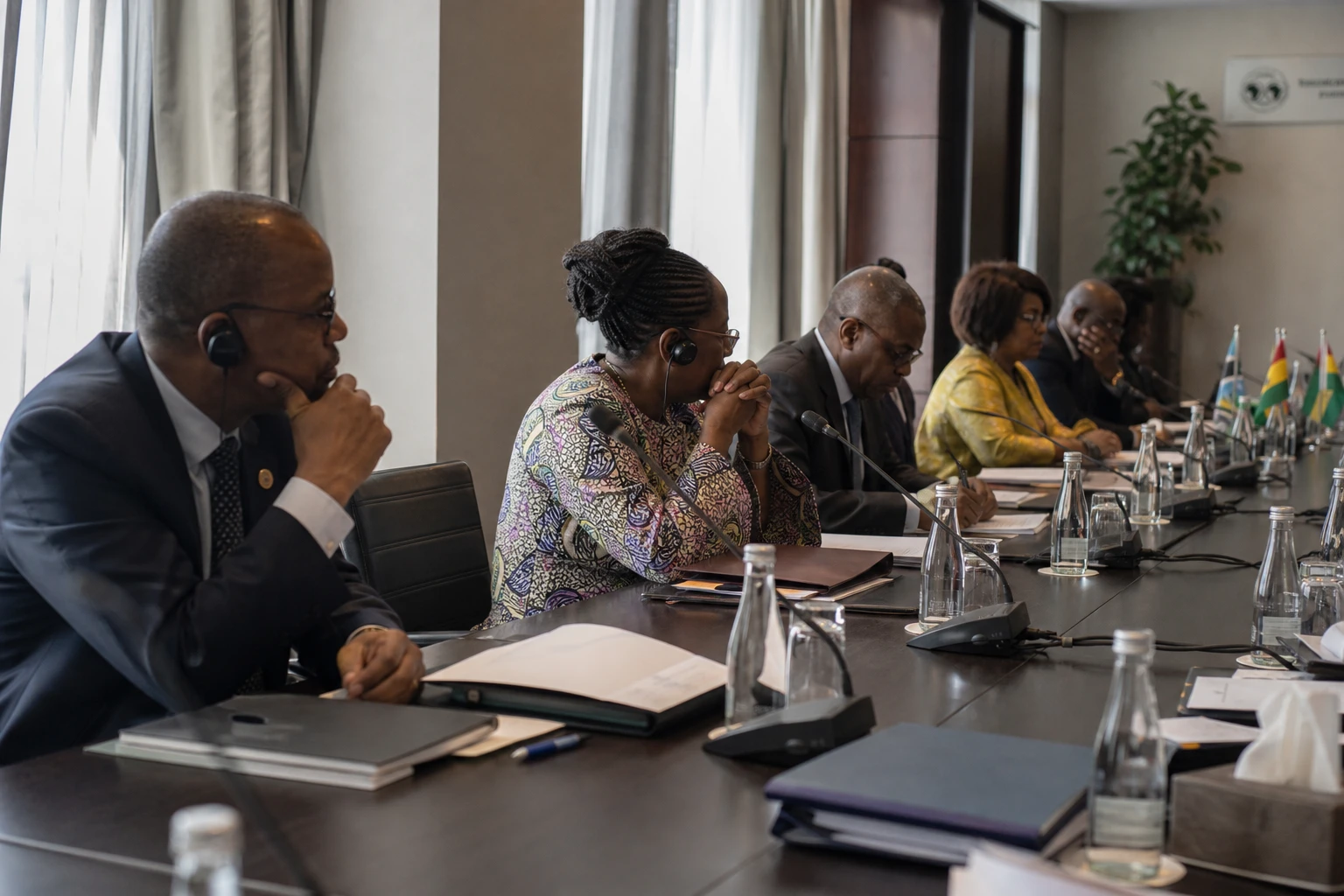
In Lomé, the official line is to keep dialogue open with Paris, despite a series of issues that have strained relations since 2025. Togo’s Foreign Minister, Robert Dussey, says disagreements are more a matter of “misunderstandings” than a diplomatic break.
An old relationship under closer scrutiny
Ties between Togo and France remain extensive. They cover cooperation, health, digital technology, culture, training and diplomatic exchanges. Yet the context has changed. In Lomé, as in several West African capitals, partnerships with Paris are now viewed through the lens of political and security sovereignty.
This shift is taking place in a West Africa where relations with France are being rapidly redefined. Mali, Burkina Faso and Niger, which make up the Alliance of Sahel States, have withdrawn from several regional mechanisms and sharply reduced military cooperation with Paris. ECOWAS, the organisation coordinating West Africa’s economic and political integration, is seeking to preserve dialogue with these countries.
Togo has not joined the Alliance of Sahel States. But its diplomacy maintains regular exchanges with its members. Robert Dussey advocates mediation and rejects the idea of systematically isolating the Sahel’s military-led governments.
French media at the heart of tensions
The suspension of RFI and France 24 is one of the main sources of friction between Lomé and Paris. In June 2025, Togo’s High Authority for Audiovisual and Communication suspended their programmes for three months. It accused them of biased coverage and broadcasting remarks deemed inaccurate during protests critical of the government.
The two outlets disputed the accusations and reaffirmed their commitment to editorial independence. Press freedom organisations, for their part, condemned a restriction on the right to information. Several months after the three-month suspension was announced, however, both channels remained unavailable in Togo, according to Togolese media.
The situation goes beyond a dispute between a regulator and two international media outlets. It directly affects Togolese people’s access to radio and television news widely followed across the sub-region. It also raises questions about the working conditions of local and foreign journalists.
The detention of two French nationals reignited these tensions. Filmmakers Gaël Mocaër and Sebastian Perez Pezzani were arrested on 27 July 2026 in northern Togo while shooting a documentary. They were eventually released on 2 September. The Togolese authorities and advocates for journalists gave different accounts of the authorisations required for filming.
For Paris, the case added a sensitive consular issue to an already strained relationship. For Lomé, it is a matter of applying national procedures. Above all, the case shows that bilateral trust remains limited, even as both governments continue to say that dialogue is open.
Russia: Lomé seeks to distinguish military cooperation from mercenary activity
Robert Dussey denies that Russian mercenaries are present in Togo. He does, however, acknowledge the presence of trainers tasked with helping Togolese forces use equipment purchased by the state.
The distinction is important. It allows the government to present cooperation with Moscow as a technical partnership, rather than a foreign military foothold. This comes as Russia has expanded its influence in several Sahelian countries through Africa Corps, an organisation linked to Russia’s security apparatus.
International sources have reported the signing of a military co-operation agreement between Russia and Togo in 2025. They cite training, joint exercises and intelligence-sharing. Available public information does not independently establish the exact number of Russian personnel present on Togolese territory.
For the authorities in Lomé, protecting the country remains the priority. Northern Togo borders areas where armed groups linked to the jihadist insurgency operate. The authorities say the situation there is now calmer than it was four years ago. This claimed improvement should nevertheless be viewed with caution, as security dynamics remain unstable in the northern Gulf of Guinea.
Togo’s bid to engage with the Alliance of Sahel States
Togo’s foreign minister urges others not to isolate Mali, Burkina Faso and Niger. In his view, these countries can form a “bulwark against violent extremism”. His argument is based on geography: coastal states cannot address the security threat without taking their Sahelian neighbours into account.
Togo is thus seeking to position itself as an intermediary. Lomé maintains relations with ECOWAS while keeping channels open to the AES transitional authorities. This multi-level diplomacy gives the country particular room for manoeuvre in a region marked by ruptured alliances.
It also carries risks. A more visible rapprochement with military-led governments could complicate relations with Western partners. Conversely, distancing itself from the AES would reduce Togo’s ability to influence security issues that directly affect its northern border.
The battle of narratives extends beyond diplomacy
In New York, Robert Dussey also defended the resolution backed by Togo at the United Nations on the cartographic representation of the world. Lomé is calling for greater use of the Equal Earth projection, designed to represent the actual area of continents more accurately.
The issue may seem technical. Yet it has a political and symbolic dimension. Traditional map projections have often given northern territories a visually disproportionate place. For Togo’s diplomats, correcting this representation means correcting a view long imposed on the African continent.
The vote also showed that debates about Africa’s representation are no longer confined to continental forums. They are moving to the UN, where African states are seeking recognition of their own priorities, whether on security, reform of international institutions or information sovereignty.
Togo’s relationship with France is therefore neither broken nor settled. It is entering a phase of constant negotiation. The next signs to watch will be on three fronts: a possible return of RFI and France 24, the course of security cooperation with Russia, and Lomé’s ability to maintain its role as a bridge between ECOWAS and the Alliance of Sahel States.