Algeria
 Egypt
 Libya
 Morocco
 Sudan
 Tunisia
 Benin
 Burkina Faso
 Cabo Verde
 Côte d'Ivoire
 Ghana
 Guinea
 Guinea-Bissau
 Liberia
 Mali
 Mauritania
 Niger
 Nigeria
 Senegal
 Sierra Leone
 The Gambia
 Togo
 Cameroon
 Central African Republic
 Chad
 DR Congo
 Equatorial Guinea
 Gabon
 Republic of the Congo
 São Tomé and Príncipe
 Burundi
 Comoros
 Djibouti
 Eritrea
 Kenya
 Madagascar
 Malawi
 Mauritius
 Mozambique
 Rwanda
 Seychelles
 Somalia
 South Sudan
 Tanzania
 Uganda
 Angola
 Botswana
 Eswatini
 Lesotho
 Namibia
 South Africa
 Zambia
 Zimbabwe
The return of federal forces to Mekelle has not brought an end to the fighting. In Ethiopia, renewed clashes in the north are a reminder that a ceasefire agreement can silence the guns without resolving the disputes that caused them to speak.
A peace deal signed but unfinished
The conflict is centred on Tigray, a region in northern Ethiopia. It pits federal forces and their allies against fighters linked to the Tigray People’s Liberation Front (TPLF), a movement that dominated national politics for many years before Abiy Ahmed came to power.
The 2020–2022 war was fought between the federal government and the TPLF. The Pretoria Agreement, signed on 2 November 2022 under the auspices of the African Union (AU), established a permanent cessation of hostilities. It reduced large-scale fighting, but several political, territorial and security issues remained unresolved. The AU continues to present the agreement as the central framework for lasting peace.
This fragility is part of a tense national trajectory. Ethiopian federalism distributes a significant share of power among the regions, which are often organised around linguistic and historical communities. Disagreements over borders, representation and control of security forces can therefore quickly take on a national dimension.
Mekelle changes hands as fighting continues
Clashes resumed in late September 2026. On 23 September, the African Union called for restraint and immediate de-escalation. It also warned that the seizure of civilian airports in Tigray risked undermining the Pretoria commitments.
The balance of power then shifted rapidly. On 4 October, forces allied with the federal government entered Mekelle, the regional capital, after TPLF fighters announced their withdrawal. The TPLF said it wanted to prevent the city’s destruction and insisted that the withdrawal did not mean the end of the struggle. Federal police then patrolled the city and called on residents to take part in the return of a regional administration.
The recapture of the capital does not mean the conflict is over. Fighting and strikes have been reported elsewhere in the region. On 6 October, a government-allied commander referred to drone strikes as markets reopened in Mekelle. Reports of military operations come in part from parties to the conflict and should be treated with caution.
On 8 October, the Associated Press reported that Eritrean soldiers had allegedly crossed the border and entered two towns in Tigray, according to a commander allied with the Ethiopian government and accounts from residents. The ACLED group also reported a crossing by Eritrean troops. Eritrea disputes Ethiopian allegations that it is supporting TPLF forces. At this stage, these accounts do not allow every military movement to be presented as independently confirmed.
The toll on residents
For Tigray’s residents, uncertainty first affects security and travel. Renewed fighting can disrupt flights, complicate access to services and undermine trade between towns and rural areas. The reopening of markets in Mekelle points to a partial return to daily life, but does not guarantee safe roads or a lasting return to normality.
The consequences extend beyond the front line. Traders depend on supply routes already exposed to tensions. Displaced families and those trying to return need concrete guarantees: security, public services and a resolution of land disputes. The fighting also risks diverting resources from administration and economic activity towards the military effort.
The federal government, based in Addis Ababa, has to contend with several armed opposition movements across the country. The TPLF, for its part, challenges federal decisions and says it is defending Tigray’s interests. These competing positions explain the balance of power, but do not resolve the political questions that require negotiation. Military control of a city cannot, on its own, replace an agreement accepted by all sides.
A risk that extends beyond Ethiopia’s borders
The regional dimension is particularly sensitive. Ethiopia and Eritrea share a border and a history of war, alliance and then tension. The Associated Press has reported the alleged presence of Eritrean soldiers in Tigray, while other analyses have noted that tensions between the two countries could widen the conflict. Claims of outside involvement remain disputed: they should not be confused with independent confirmation that a neighbouring state has entered the war.
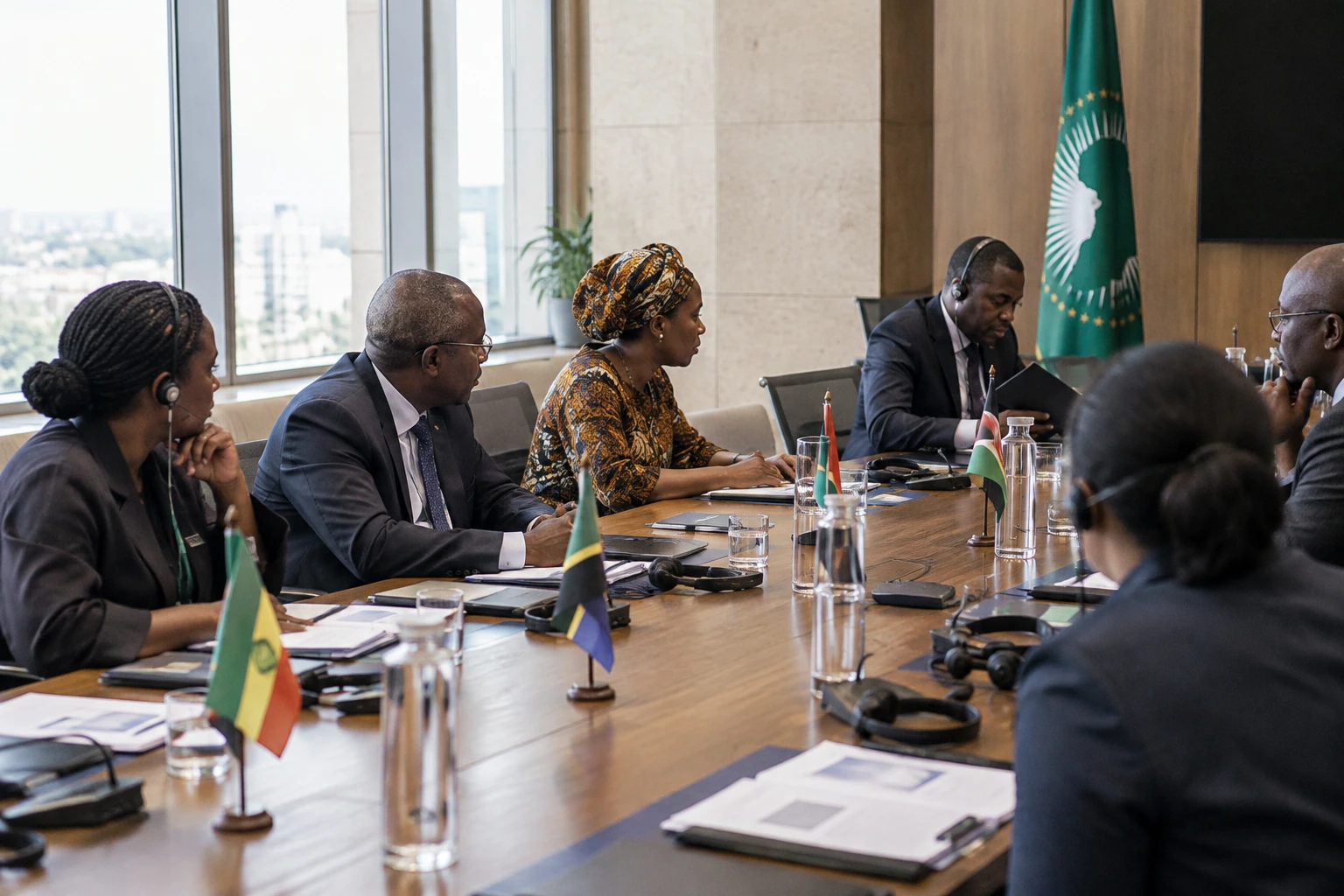
The issue also concerns the Intergovernmental Authority on Development (IGAD), the regional organisation for the Horn of Africa, as well as the African Union, whose headquarters are in Addis Ababa. The credibility of African mediation is at stake: the Pretoria agreement exists, but its implementation has not prevented the return of armed conflict.
Three developments will be decisive in the coming days: the course of fighting beyond Mekelle, verification of reports of cross-border movements, and the possibility of dialogue between Addis Ababa and Tigray’s leaders. The recapture of Mekelle gives the government an advantage on the ground. It does not yet answer the essential question: can Ethiopian actors turn the broken truce into a lasting political settlement before the conflict further destabilises the Horn of Africa?