Algeria
 Egypt
 Libya
 Morocco
 Sudan
 Tunisia
 Benin
 Burkina Faso
 Cabo Verde
 Côte d'Ivoire
 Ghana
 Guinea
 Guinea-Bissau
 Liberia
 Mali
 Mauritania
 Niger
 Nigeria
 Senegal
 Sierra Leone
 The Gambia
 Togo
 Cameroon
 Central African Republic
 Chad
 DR Congo
 Equatorial Guinea
 Gabon
 Republic of the Congo
 São Tomé and Príncipe
 Burundi
 Comoros
 Djibouti
 Eritrea
 Ethiopia
 Kenya
 Madagascar
 Malawi
 Mauritius
 Mozambique
 Rwanda
 Seychelles
 Somalia
 South Sudan
 Uganda
 Angola
 Botswana
 Eswatini
 Lesotho
 Namibia
 South Africa
 Zambia
 Zimbabwe
An old railway, a very current issue
In Dar es Salaam, the revival of TAZARA goes far beyond laying a foundation stone. It says something bigger: Tanzania wants to become a credible logistics hub again between the Indian Ocean and the continent’s interior, at a time when critical minerals, regional freight and the contest over corridors are increasingly shaping infrastructure choices. The project launched on 17 July 2026 in Dar es Salaam begins with two very concrete facilities: a training centre and a railway operations control centre.
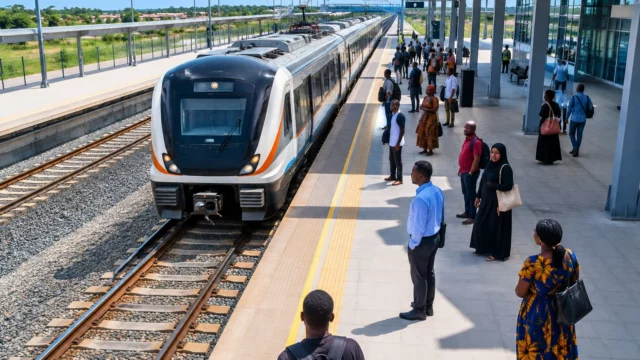
TAZARA, which is 1,860 km long, links Dar es Salaam to New Kapiri Mposhi in Zambia. It was built between 1970 and 1975 with Chinese support. Today, it connects East Africa to wider markets, particularly those of COMESA and SADC, and remains a strategic route for Zambian copper and the flow of goods to the Tanzanian port.
Dar es Salaam focuses on skills and traffic control
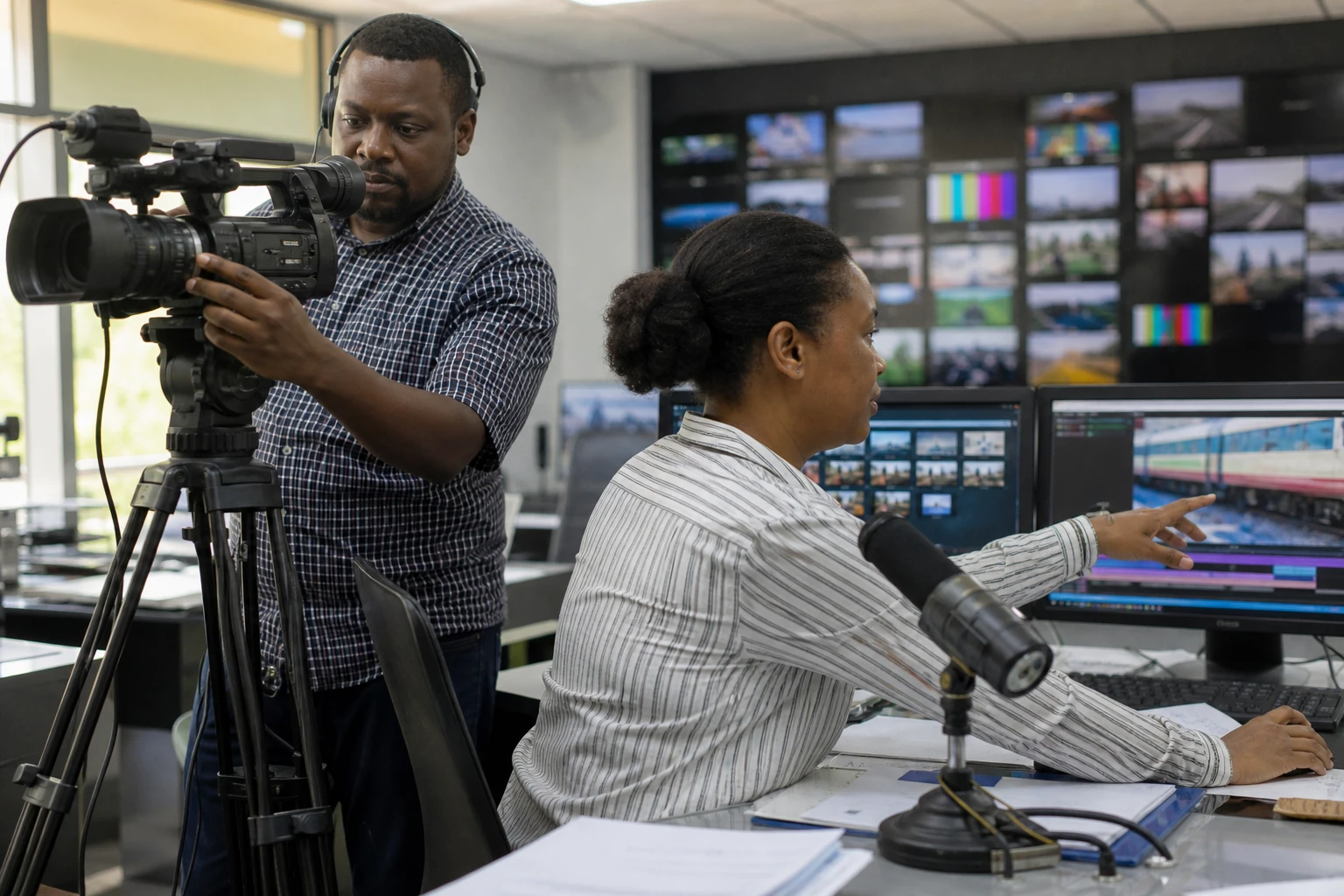
The works under way in Dar es Salaam are being presented as one of the first physical projects in the revitalisation programme. The training centre is to occupy 21,800 m² of land, including 9,641 m² of built area. It will train staff in operations, maintenance, signalling, driving, management and railway safety. The control centre, meanwhile, is to become the hub for monitoring traffic across the entire network.
The decision to begin with these two facilities is no accident. One addresses the shortage of specialist skills. The other responds to a common weakness of older networks: the lack of centralised control capable of tracking train movements, anticipating incidents and coordinating operations in real time. Tanzanian authorities say they want this to support the rapid expansion of the national network, comprising TAZARA, the metre-gauge railway and the Standard Gauge Railway.
The modernisation is also part of a drive to transfer expertise. The Chinese government is supporting the training centre, while China Civil Engineering Construction Corporation, CCECC, is central to the operational arrangement. On 29 September 2025, TAZARA signed a public-private partnership concession with the company covering the rehabilitation, modernisation and operation of freight services, with investment of more than $1.4 billion.
A regional corridor, not just a national railway
For Tanzania, the issue concerns both the national economy and regional balance. The port of Dar es Salaam is one of the most important gateways for landlocked countries in the interior, particularly Zambia, as well as wider markets in southern Africa and the Great Lakes region. Regional sources point out that TAZARA remains a link between the Indian Ocean and the commercial networks of the continent’s south.
This explains the interest of the Zambian authorities. In Lusaka, the transport ministry and rail stakeholders present the corridor’s upgrade as a way to reduce logistics costs, ease pressure on roads and capture more copper exports. Zambia’s parliament also described TAZARA in 2025 as an instrument of South-South cooperation and a lever for the country’s mining competitiveness.
The issue goes beyond the two countries. In its work on regional corridors, the African Development Bank emphasises the impact of rail infrastructure on integration, trade and access to major inland markets. Similarly, the EAC notes that the Central Corridor, which starts in Dar es Salaam, serves Tanzania, Zambia, Rwanda, Burundi, Uganda and the eastern DRC. TAZARA does not cover the whole route, but it is part of the same shift: moving from a transit-based approach to one centred on productive connectivity.
What this project could change, and what it does not yet resolve
On paper, upgrading TAZARA could deliver gains on three fronts. First, reliability, through better control of train movements. Second, capacity, if the modernised line attracts more freight. Finally, logistics sovereignty, as Tanzania strengthens its role as an export route for goods from the hinterland. This is an important prospect for the formal economy, as well as for related activity at stations, maintenance zones, warehouses and port services.
But the challenges remain formidable. TAZARA is emerging from decades of underinvestment, with ageing locomotives, tracks in need of rehabilitation and fiercer regional competition. The Lobito Corridor to the west is also attracting capital and attention, while Nacala in Mozambique and other logistics routes are seeking to capture the same mineral flows. TAZARA cannot therefore be modernised as an isolated piece of infrastructure; it must be seen as one part of a regional corridor market undergoing rapid change.
The decision to start with training is revealing in this respect. A modern railway depends on more than steel, sleepers and locomotives. It also relies on operators, technicians, controllers and managers able to run more complex systems. For Tanzania, the project is therefore institutional too: it is about developing a railway workforce suited to an economy seeking to link industry, port and hinterland without relying exclusively on roads.
Significance beyond East Africa
The revival of TAZARA also sends a continental signal. It shows that Africa’s most symbolic infrastructure is not merely a legacy of the past. It is becoming a tool for economic competition, securing mineral exports and cooperation between African states and external partners. In the current context, as copper and critical-mineral value chains come under close scrutiny, Tanzania and Zambia are reaffirming that a rail corridor can still underpin a regional ambition.
What happens next will depend on the pace of implementation, the quality of the work and the ability to move more freight without repeating the weaknesses of the past. That is where the project’s true measure will lie: not in the announcement, but in regular train services, shorter transit times and restored confidence among operators.