Algeria
 Egypt
 Libya
 Morocco
 Sudan
 Tunisia
 Benin
 Burkina Faso
 Cabo Verde
 Côte d'Ivoire
 Ghana
 Guinea
 Guinea-Bissau
 Liberia
 Mali
 Mauritania
 Niger
 Nigeria
 Senegal
 Sierra Leone
 The Gambia
 Togo
 Cameroon
 Central African Republic
 Chad
 DR Congo
 Equatorial Guinea
 Gabon
 Republic of the Congo
 São Tomé and Príncipe
 Burundi
 Comoros
 Djibouti
 Eritrea
 Ethiopia
 Kenya
 Madagascar
 Malawi
 Mauritius
 Mozambique
 Rwanda
 Seychelles
 Somalia
 South Sudan
 Uganda
 Angola
 Botswana
 Eswatini
 Lesotho
 Namibia
 South Africa
 Zambia
 Zimbabwe
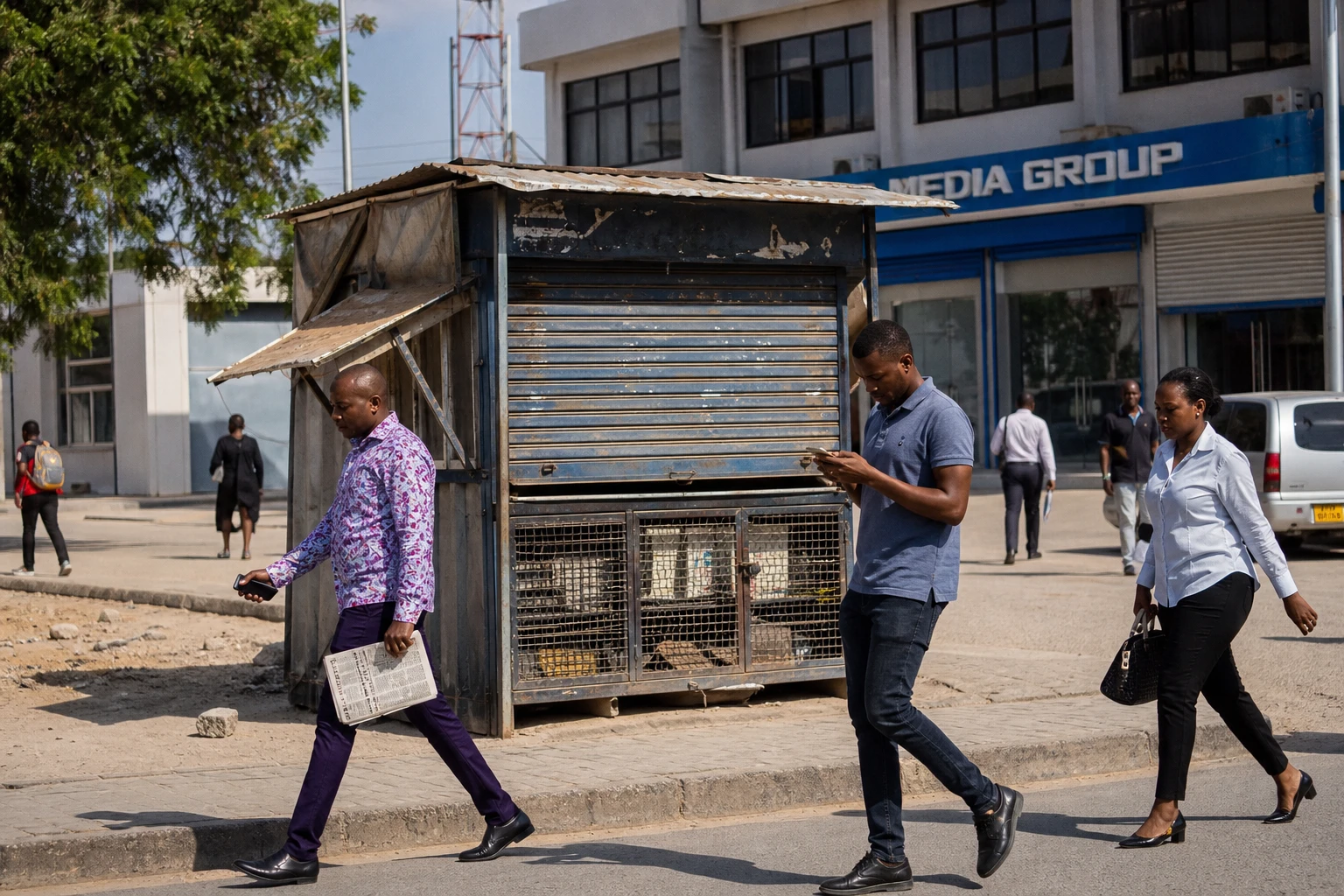
In Dodoma, the press and the government are walking an increasingly narrow line
In Tanzania, the political battle is fought not only at the ballot box or in Parliament. It is also reflected in the space left for the media to investigate, challenge and expose uncomfortable truths. When a weekly is suspended, the signal extends far beyond the newsroom: it affects the flow of information across the country, from Dar es Salaam to Dodoma, and raises questions about the space afforded to public debate in an East African democracy.
The regional context sheds light on the decision. Tanzania is a member of the East African Community, which deployed an observation mission for the 2025 general elections. The African Union, for its part, found that the vote had not complied with the principles, standards and obligations applicable to democratic elections. Tanzania’s institutional framework also gives the media administration substantial regulatory powers, backed by the Media Services Act of 2016 and rules governing online content.
A suspension under an already highly restrictive legal framework
The measure against the weekly applies to both its print and digital editions, takes effect immediately and will last for six months. It was decided by the competent authority within the ministry responsible for information, on the grounds of alleged breaches of media legislation. In Tanzania, online content is also subject to a regulatory environment in which the Communications Authority can intervene on the basis of licences and compliance rules. The regulator’s official website lists authorised online media outlets, evidence of tight administrative oversight of the sector.
The case is sensitive because it concerns more than a publication. It touches on a recurring debate in Tanzania: how far can a media outlet go when reporting on internal power struggles or tensions around political succession? In this case, the sanction came after the publication of an article referring to disagreements at the top of the state and alleged pressure on the vice-president. In a climate where the authorities closely monitor the press and digital platforms, such a subject immediately becomes political.
The 2025 elections have hardened the climate
The tightening of controls on the media did not happen in a vacuum. After the general elections of 29 October 2025, Tanzania experienced post-election violence, internet shutdowns and a wave of protests. The African Union observation mission described an environment “not conducive” to the peaceful conduct of the vote and reported a total internet outage during and after polling. The West African Association is not relevant here; in Tanzania, it was the East African Community that monitored the electoral process, with a mission deployed from Arusha, its regional headquarters.
Since then, several human rights organisations have described a more restricted civic space. Human Rights Watch reported increased repression of the opposition, the press and critical voices ahead of the vote. Amnesty International also reported a climate of fear, fuelled by arbitrary arrests, alleged enforced disappearances and restrictions on gatherings. The African human rights body, for its part, expressed concern over violations of freedom of expression and access to information.
What this case means for Tanzanians
For the authorities, suspending a media outlet sends a swift message: the red line lies where the public narrative contradicts the official version. For journalists, the consequences are more tangible. A suspended weekly loses its readers, its income and its ability to correct or supplement information in real time. For citizens, the cost is even greater. In a country where local newspapers and regional radio stations remain essential, every closure limits the ability to check a rumour, understand an institutional debate or follow a sensitive court case.
The situation also affects the balance between the capital and the provinces. Political power is concentrated in Dodoma. In Dar es Salaam, media, economic and digital life remain more vibrant. But in inland regions, access to a range of information depends heavily on media outlets that can investigate without being swiftly sanctioned. When regulation becomes punitive, it is often the least connected citizens, those furthest from decision-making centres, who lose the most.
A signal to watch across East Africa
The case goes beyond Tanzania, touching on a continental question: how can press freedom be protected when states have very broad legal tools over the media, online content and information-related offences? The African Union and the East African Community have already put electoral transparency and freedom of expression at the centre of their observations on Tanzania’s vote. What happens next will show whether this suspension remains an isolated incident or heralds a lasting tightening of civic space ahead of the next political and judicial developments.