Algeria
 Egypt
 Libya
 Morocco
 Sudan
 Tunisia
 Benin
 Burkina Faso
 Cabo Verde
 Côte d'Ivoire
 Ghana
 Guinea
 Guinea-Bissau
 Liberia
 Mali
 Mauritania
 Niger
 Nigeria
 Senegal
 Sierra Leone
 The Gambia
 Togo
 Cameroon
 Central African Republic
 Chad
 DR Congo
 Equatorial Guinea
 Gabon
 Republic of the Congo
 São Tomé and Príncipe
 Burundi
 Comoros
 Djibouti
 Eritrea
 Ethiopia
 Kenya
 Madagascar
 Malawi
 Mauritius
 Mozambique
 Rwanda
 Seychelles
 Somalia
 South Sudan
 Uganda
 Angola
 Botswana
 Eswatini
 Lesotho
 Namibia
 South Africa
 Zambia
 Zimbabwe
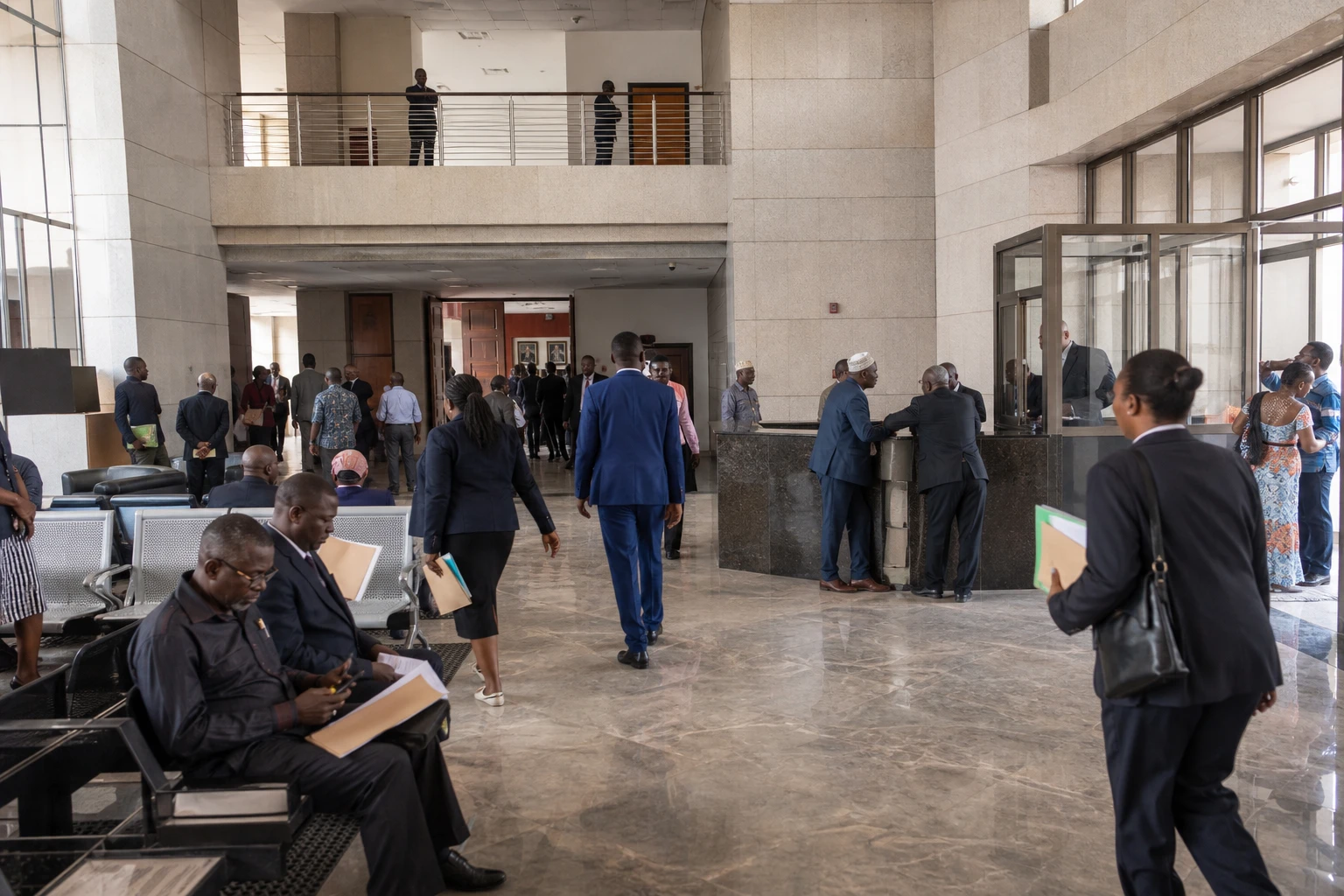
In Dar es Salaam, a criminal case that goes beyond Lissu
In Tanzania, a political trial is not played out only in a courtroom. It also weighs on campaigning, public discourse and trust in the rules of the game. That is what gives the Tundu Lissu case significance beyond the fate of an opposition leader.
On 21 August 2026, the High Court, sitting in Dar es Salaam, ruled that prosecutors had presented sufficient evidence for the Tanzanian opposition figure to answer the charges against him. The three-judge panel therefore allowed the trial to proceed, after several months of procedural twists and a prolonged phase of hearings. The case has already involved 17 prosecution witnesses and is being closely followed by Tanzanian and international media, including The Citizen and Associated Press.
Tundu Lissu, a leading figure in CHADEMA, the main opposition party, is facing charges of treason. In Tanzania, the offence theoretically carries the death penalty. The symbolism is weighty. The debate is therefore not merely legal. It touches on the space for dissent permitted in a country where the opposition has for years accused the authorities of restricting rallies, candidacies and media coverage of sensitive cases.
A sequence set in motion by the 2025 election crisis
To understand this case, it is necessary to return to the general election of 29 October 2025. Samia Suluhu Hassan, president of the United Republic of Tanzania, was declared the winner with nearly 98% of the vote. The victory, disputed by the opposition, was followed by demonstrations and a crackdown whose scale remains at the heart of national and international debate. The government initially put the death toll at just over 500. A commission of inquiry appointed by the presidency subsequently confirmed at least 518 deaths in April 2026, while indicating that the toll could be an underestimate because of difficulties identifying victims. Reuters reported this estimate, while the AP recalled that the opposition and human rights organisations cite much higher figures.
It was in this atmosphere that Tundu Lissu was arrested in April 2025, after launching a campaign calling for electoral reforms ahead of the vote. The slogan was simple: no reforms, no elections. It resonated with part of the opposition, as well as with an urban youth increasingly demanding transparency in the vote. The case then saw postponements, disputes over witnesses, arguments about closed hearings and legal challenges concerning detention conditions. This accumulation of legal challenges points to something broader: the battle is being fought as much over procedure as over the substance of the case.
In the commercial capital, Dar es Salaam, the hearings are being watched as a test. In Dodoma, the seat of government, the authorities want to show that they are upholding the law. The opposition, for its part, argues that the judicial machinery is being used to neutralise a voice that is too outspoken. Between the two, the public sees above all a crisis of confidence dragging on, after it had already been sorely tested by the election period.
What the decision means for the government, opposition and region
The High Court’s decision brings nothing to a close. On the contrary, it opens a new phase. If the court later finds that prosecutors have established a sufficient basis for the case, Lissu will have to present his defence. If he is convicted, the case will become even more sensitive, because treason remains one of the most serious charges under Tanzanian law. Conversely, if the defence can demonstrate substantial flaws, the decision could undermine the narrative that the case was built to prevent the opposition figure from regaining the political initiative.
For the ruling party, CCM, the stakes are twofold. It must preserve the authority of the state and avoid a highly publicised trial fuelling the perception of an authoritarian drift. But it must also maintain internal discipline after elections marked by violence and increased scrutiny of opposition circles. For CHADEMA, the Lissu case serves as a rallying point, but it also concentrates the risks: organisational weakening, judicial pressure on party officials and difficulty preparing for the next political contests.
The case also matters at regional level. Tanzania is an important member of the East African Community, the EAC, and its political balance is of interest to its neighbours. In a region already sensitive to election disputes, distrust of institutions and the rapid spread of mobilisation through social media, every judicial decision of this kind sends a signal. It shows how a state handles opposition when political competition intensifies.
The case has real continental significance. The African Union, regional partners and human rights organisations are now following such cases more closely, because they concern a central issue: the credibility of elections and the place of opposition in African political systems. In Tanzania, the next moment to watch will be the continuation of the trial itself, as well as how the authorities respond to calls for electoral reform, which have remained part of public debate since the 2025 vote.