Algeria
 Egypt
 Libya
 Morocco
 Sudan
 Tunisia
 Benin
 Burkina Faso
 Cabo Verde
 Côte d'Ivoire
 Ghana
 Guinea
 Guinea-Bissau
 Liberia
 Mali
 Mauritania
 Niger
 Nigeria
 Senegal
 Sierra Leone
 The Gambia
 Togo
 Cameroon
 Central African Republic
 Chad
 DR Congo
 Equatorial Guinea
 Gabon
 Republic of the Congo
 São Tomé and Príncipe
 Burundi
 Comoros
 Djibouti
 Eritrea
 Ethiopia
 Kenya
 Madagascar
 Malawi
 Mauritius
 Mozambique
 Rwanda
 Seychelles
 Somalia
 South Sudan
 Uganda
 Angola
 Botswana
 Eswatini
 Lesotho
 Namibia
 South Africa
 Zambia
 Zimbabwe
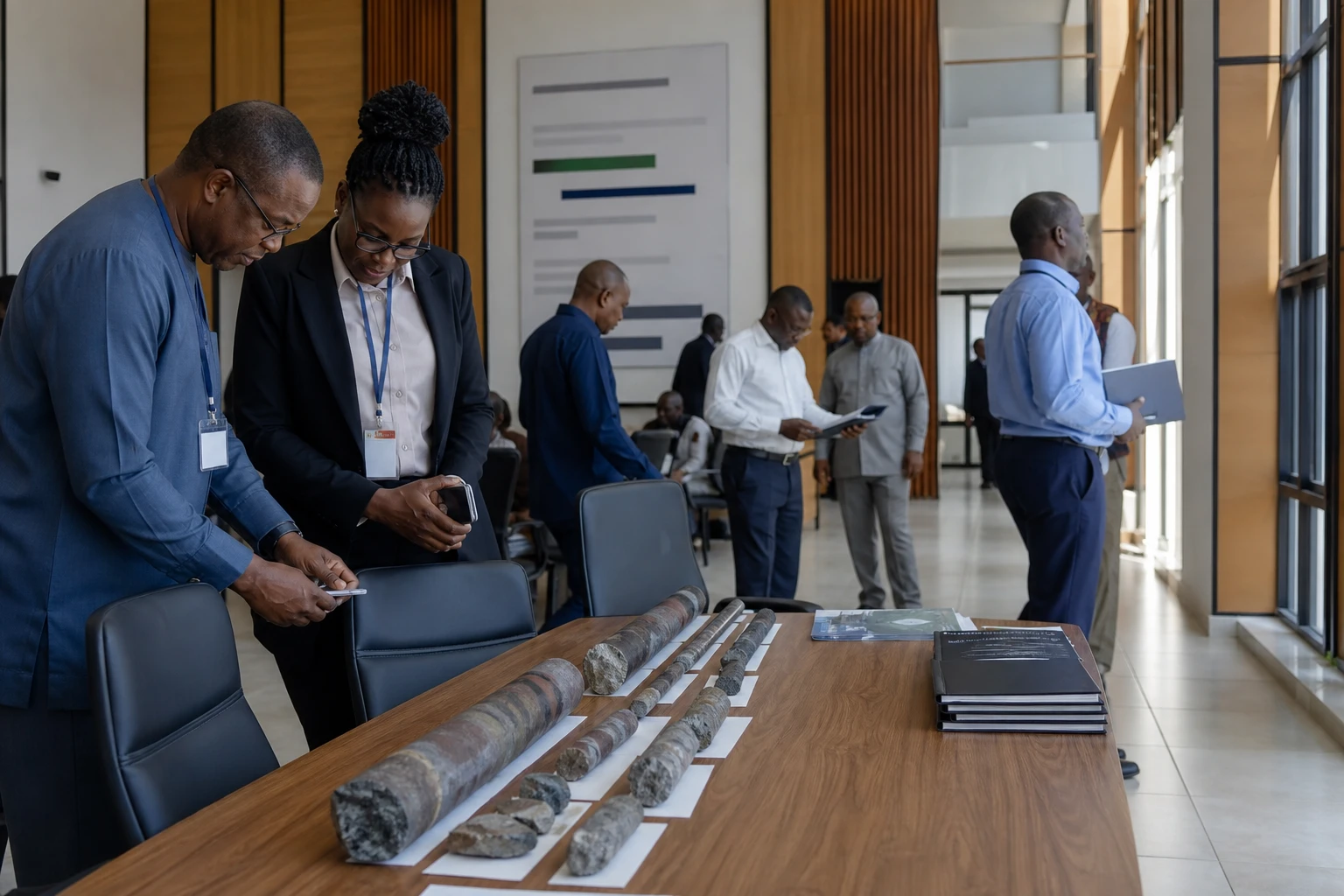
For Tanzania, the question is no longer simply whether its mineral resources attract investors. It is now about securing capital capable of funding local mineral processing, infrastructure and access to markets. It was on this front that Dodoma presented its priorities to European partners on 28 and 29 September 2026 in Helsinki.
Dodoma wants to move beyond extraction
The EU-Tanzania forum held in the Finnish capital brought together public-sector representatives, companies and financial institutions. Its aim was to bring Tanzanian and European operators together around investment, trade and industrial processing projects.
Tanzania highlighted several minerals considered strategic for batteries, electronics, renewable energy and certain defence equipment. The list includes graphite, nickel, copper, uranium and rare earths.
Msafiri Mbibo, deputy permanent secretary at Tanzania’s Ministry of Minerals, called for investors able to contribute more than funding. According to information shared at the forum, Dodoma is also seeking technology, industrial expertise and access to international markets.
This approach marks a shift in Tanzania’s mining policy. The country wants to attract projects that incorporate processing and the manufacture of higher-value products. The aim is therefore to retain a greater share of revenues in the national economy.
The forum is part of a European tour taking place from 28 September to 6 October 2026. After Helsinki, meetings are planned in Italy and the Netherlands. A second high-level meeting is also due to take place in Dar es Salaam in 2027. The European Union has announced a €156 million funding package to support several sectors, including critical minerals.
Kabanga and Mahenge are the focus of expectations
Two projects illustrate Tanzania’s ambitions. The first concerns nickel at Kabanga, in the Kagera region in the country’s north-west. The deposit also contains copper and cobalt, three metals sought after in battery-related value chains.
The project is led by Lifezone Metals, with the Tanzanian state holding a direct stake. Preparatory work is progressing, but a final investment decision is not yet fully secured. Financing, agreements with partners and finalisation of the contractual framework remain crucial.
The company estimated pre-production expenditure at about $942 million in its feasibility study. It also said it was targeting a final investment decision during 2026, while acknowledging that the timetable depended on financial and regulatory discussions.
Kabanga has attracted interest from several economic powers. The project has been the subject of approaches to US and European institutions. Lifezone Metals has also entered discussions with strategic investors and development finance institutions. This competition gives Dodoma room to negotiate, but also increases pressure to clarify the project’s terms quickly.
The second project concerns graphite at Mahenge, in the Morogoro region. Developed by Black Rock Mining, it is among the largest graphite projects still under development. Preparatory work includes access routes, electricity infrastructure, and resettlement and compensation operations for affected communities.
However, Mahenge’s start of production depends on securing all the necessary financing and a final investment decision. As with Kabanga, turning the geological resource into an industrial operation requires roads, electricity, processing facilities and reliable logistics solutions.
A sector already central to Tanzania’s economy
The mining sector is playing an increasingly important role in the national economy. Tanzanian public data indicate that it accounted for about 10.1% of gross domestic product in 2024. The figure of 10.3% cited for 2025 still needs to be checked against consolidated official economic statistics.
This growth is due in particular to gold production, which remains dominant, but also to efforts to broaden the mining base. The government is seeking to develop graphite, nickel, copper and other substances considered priorities for the energy transition.
For the population, the impact will not be measured solely by the value of exports. The decisive questions concern skilled jobs, contracts awarded to Tanzanian companies, public revenues and benefits for mining regions. Urban centres could benefit from services and infrastructure. Communities near the sites, meanwhile, are primarily looking for transparent compensation, access to electricity and sustainable economic activity.
The government will therefore need to strike a balance between attracting investment and protecting national interests. Weak rules can limit local benefits. Unstable requirements, on the other hand, can delay decisions and increase the cost of project financing.
Tanzania is also playing a regional card
Tanzania’s strategy extends beyond its borders. The country is a member of the East African Community, or EAC, a regional market that includes Kenya, Uganda, Rwanda, Burundi, the Democratic Republic of the Congo, South Sudan and Somalia.
This membership can facilitate exchanges of services, expertise and equipment. It also increases the importance of Tanzanian ports and corridors for the region’s landlocked countries. Future mining projects will nevertheless have to contend with high logistics costs and infrastructure that remains uneven across different areas.
Tanzania is also diversifying its partnerships. Trade with China remains significant. In September 2026, discussions between Tanzanian and Congolese officials also focused on strengthening mining cooperation and sharing experience. This openness allows Dodoma to avoid relying on a single financial or technological bloc.
Competition between European, American and Chinese partners could thus strengthen Tanzania’s negotiating power. But this opportunity will become a lasting advantage only if the country secures firm commitments on local processing, skills transfer and contract transparency.
The next test will be concrete decisions
The Helsinki forum has primarily provided a showcase. Results will now have to be measured by the agreements signed, the financing secured and the final decisions taken on Kabanga and Mahenge.
For the European Union, Tanzania can help diversify supplies of critical minerals. For Dodoma, the stakes are broader: using this global demand to build an industrial base, strengthen national expertise and increase the value created within the country.
The next phase will therefore be watched at several levels: progress on financing for Kabanga, the investment decision for Mahenge, the 2027 discussions in Dar es Salaam and Tanzania’s ability to integrate these projects into East African value chains.