Algeria
 Egypt
 Libya
 Morocco
 Sudan
 Tunisia
 Benin
 Burkina Faso
 Cabo Verde
 Côte d'Ivoire
 Ghana
 Guinea
 Guinea-Bissau
 Liberia
 Mali
 Mauritania
 Niger
 Nigeria
 Senegal
 Sierra Leone
 The Gambia
 Togo
 Cameroon
 Central African Republic
 Chad
 DR Congo
 Equatorial Guinea
 Gabon
 Republic of the Congo
 São Tomé and Príncipe
 Burundi
 Comoros
 Djibouti
 Eritrea
 Ethiopia
 Kenya
 Madagascar
 Malawi
 Mauritius
 Mozambique
 Rwanda
 Seychelles
 Somalia
 South Sudan
 Uganda
 Angola
 Botswana
 Eswatini
 Lesotho
 Namibia
 South Africa
 Zambia
 Zimbabwe
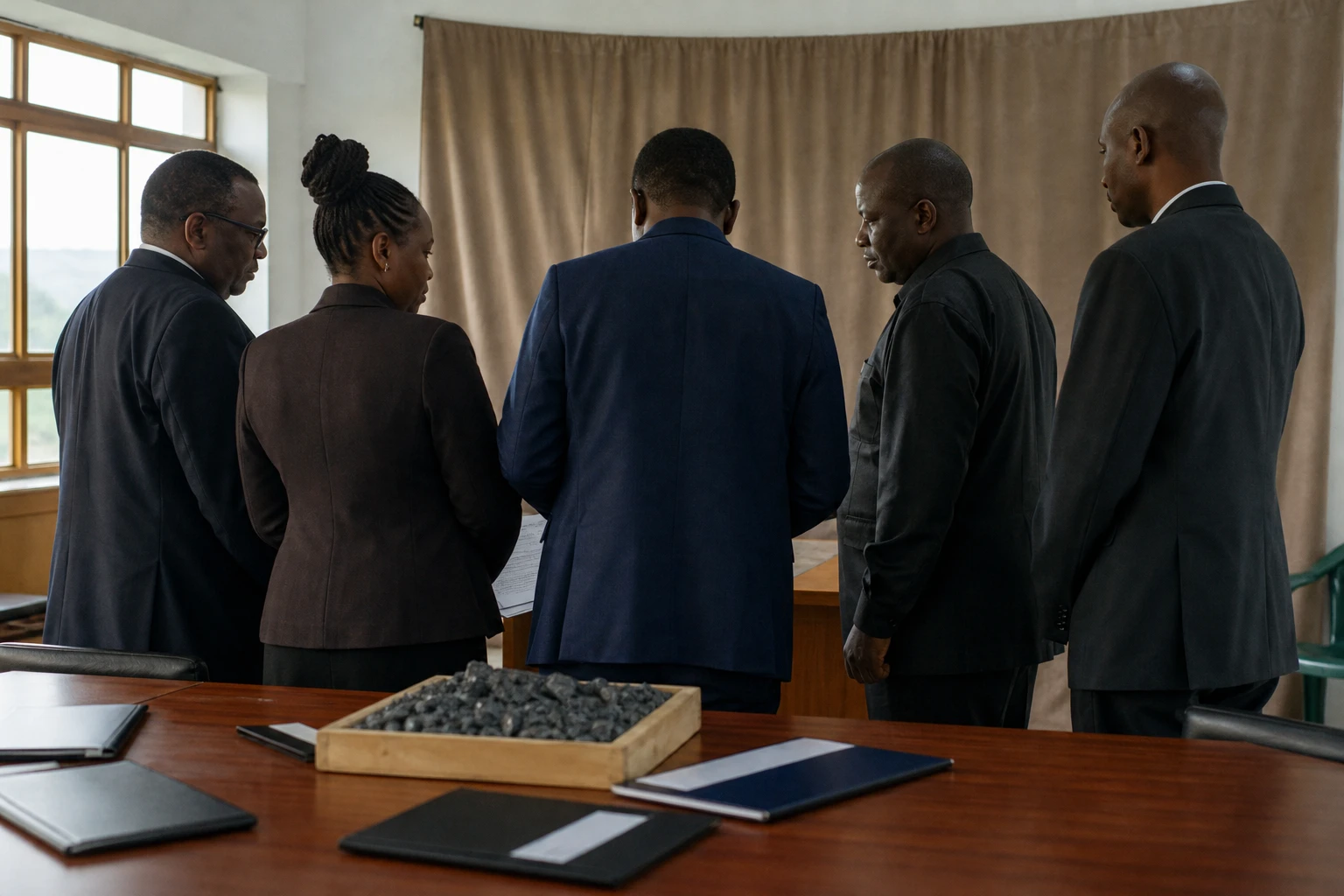
At Mahenge, in the Morogoro region, the Epanko project is advancing with a more ambitious industrial promise than its original plan. But Tanzania still faces its most decisive step: securing financing and turning announced capacity into actual production.
A project at the heart of Tanzania’s mining strategy
Epanko is a graphite project led by Australia’s EcoGraf. The site is in south-eastern Tanzania, near the village of Epanko, in Mahenge district. The country’s political capital, Dodoma, is in the same central area as Morogoro, while the port and industrial infrastructure of Dar es Salaam remain essential for exports and processing.
Graphite is used in lithium-ion battery anodes, as well as in a range of industrial applications. Its importance is growing with electric vehicles and electricity storage systems. However, extraction alone is no longer enough. Producer countries are also seeking to develop local processing to retain more value within their borders.
This approach aligns with Tanzania’s mining policy. The Ministry of Minerals said a special mining licence had been granted to EcoGraf for Epanko on 3 March 2025. The authorities present the project as a potential lever to increase local graphite processing and strengthen Tanzania’s position in battery-related value chains.
Tanzania is thus part of a regional trend. It belongs to the East African Community (EAC), which seeks to facilitate trade and investment among its member states. For mining operators, this integration can broaden markets, but it also depends on roads, electricity, logistics services and more predictable trade rules.
Initial capacity could rise by 20%
On 24 September 2026, EcoGraf announced that optimisation work had identified capacity above the scenario adopted in the updated feasibility study. Epanko’s first phase could reach 87,600 tonnes of graphite a year, compared with 73,000 tonnes in the base case.
This would represent an increase in production of about 20%. However, it does not yet amount to a final decision. The scenario requires further engineering studies. EcoGraf says it would only consider adopting it after the final investment decision, known as the FID, which officially authorises construction to begin.
The proposed adjustments concern, in particular, the processing circuit and tailings storage facilities. According to the company, this configuration would require about $12 million in additional investment. In return, it could reduce production costs per tonne.
The choice nevertheless involves a trade-off. Higher production would accelerate the extraction of reserves. The project’s estimated lifespan would therefore fall from 22 to 20 years under this scenario. For Tanzania, the debate is not only about the volume extracted. It also concerns the pace at which the resource is used, public revenues and the duration of local economic benefits.
Financing remains the real hurdle
For now, EcoGraf is retaining the 73,000-tonnes-a-year scenario as the basis for its financing package. The bankable feasibility study published in February 2026 estimates that $181.2 million will be needed to build the first-phase facilities.
The company is working with KfW IPEX-Bank, a German subsidiary specialising in project finance, on a loan of up to $105 million. This facility forms part of Germany’s support programme for exports and investment. It remains subject to approvals, financial documentation and a decision by the lenders.
In July 2026, EcoGraf said discussions on debt and the overall financing structure were continuing. The group was also seeking to secure commercial agreements with graphite buyers. A preliminary agreement announced in August with a German trader provides for deliveries of 20,000 tonnes a year at the outset, rising to as much as 40,000 tonnes after five years, subject to completion of the stipulated contractual steps.
Securing sales outlets is important. Lenders generally want to know who will buy the production, at what price and for how long. Buyers, in turn, are looking for a reliable source, consistent quality and visibility on volumes.
Expected benefits, but also local obligations
Tanzania’s Ministry of Minerals estimates that Epanko could generate significant tax revenues, royalties, dividends and local procurement over the life of the operation. These projections must nevertheless be distinguished from revenues actually received. Those will depend on the mine’s start-up, graphite prices, logistics costs and production stability.
The project will also have a direct impact on residents in the Epanko area. Technical documents refer to discussions with landowners and community groups. EcoGraf has also begun the compensation process for people affected by mining infrastructure, with the support of Tanzanian bank NMB for payments planned under the resettlement plan.
These steps will be closely watched locally. For the authorities, the mine could create jobs, markets for Tanzanian businesses and new infrastructure. For the families concerned, the key issues are transparency in compensation, access to land, livelihoods and the quality of services offered after any resettlement.
Management of water, mining waste and heavy seasonal rainfall will also be an important test. An updated environmental assessment certificate was issued on 6 January 2026, according to information published in the project’s updated study. Administrative compliance, however, will not replace monitoring on the ground.
A regional ambition to watch
In the longer term, EcoGraf has outlined a potential ramp-up to about 390,000 tonnes of graphite a year over several stages. This prospect would put Epanko among the projects capable of changing Tanzania’s position in the African graphite market.
Caution remains necessary. The increase to 87,600 tonnes is not yet the financed plan. The project must first finalise its financing structure, conclude commercial agreements, confirm the final investment decision and continue procedures relating to communities and the environment.
The project therefore goes beyond the Australian company alone. It tests Tanzania’s ability to attract capital while strengthening local processing. It also highlights the competition taking shape in East Africa over strategic minerals. In the coming months, the financing timetable, resettlement conditions and decision on initial capacity will show whether Epanko finally moves from geological promise to industrial production.