Algeria
 Egypt
 Libya
 Morocco
 Sudan
 Tunisia
 Benin
 Burkina Faso
 Cabo Verde
 Côte d'Ivoire
 Ghana
 Guinea
 Guinea-Bissau
 Liberia
 Mali
 Mauritania
 Niger
 Nigeria
 Senegal
 Sierra Leone
 The Gambia
 Togo
 Cameroon
 Central African Republic
 Chad
 DR Congo
 Equatorial Guinea
 Gabon
 Republic of the Congo
 São Tomé and Príncipe
 Burundi
 Comoros
 Djibouti
 Eritrea
 Ethiopia
 Kenya
 Madagascar
 Malawi
 Mauritius
 Mozambique
 Rwanda
 Seychelles
 Somalia
 South Sudan
 Uganda
 Angola
 Botswana
 Eswatini
 Lesotho
 Namibia
 South Africa
 Zambia
 Zimbabwe
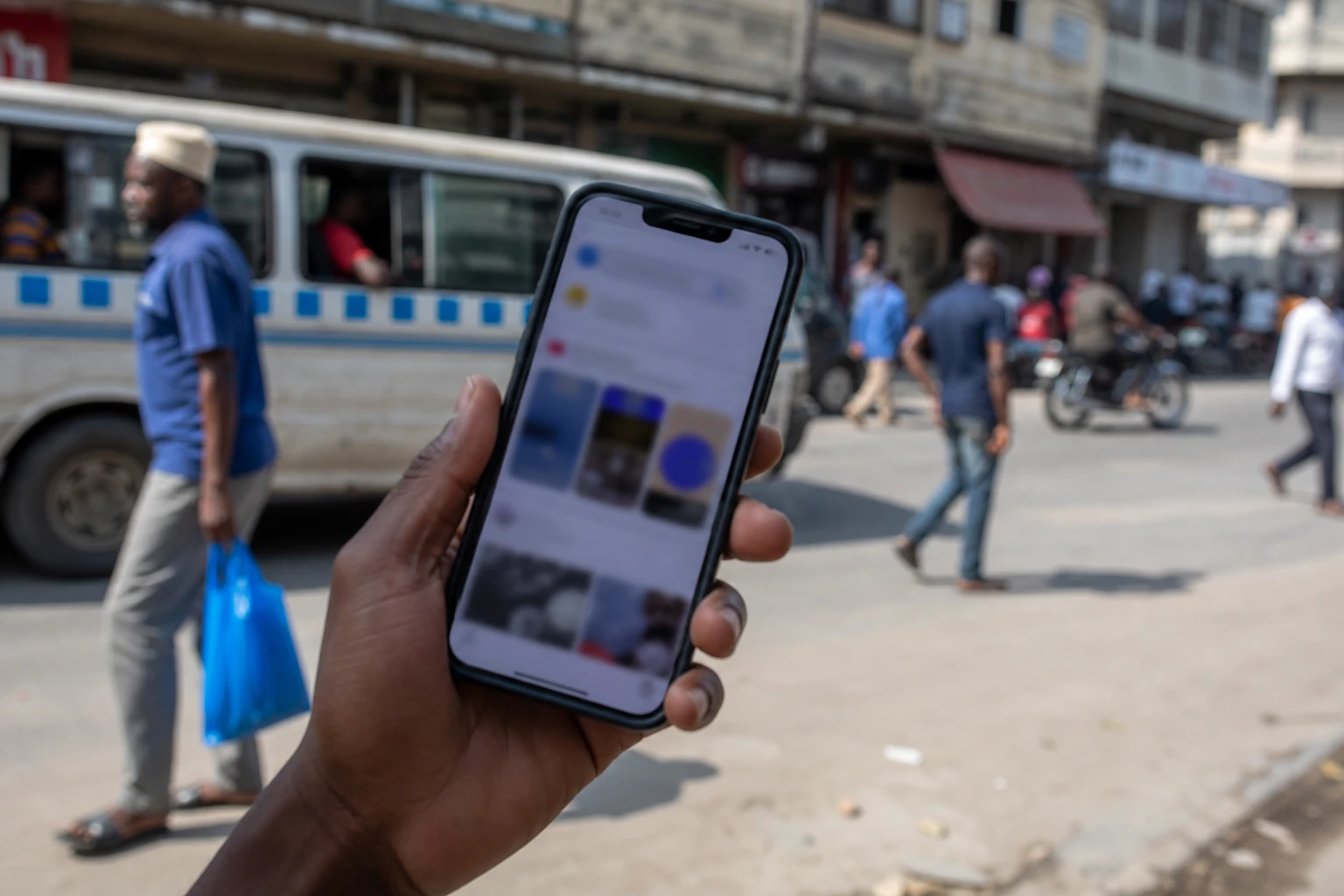
In Dar es Salaam, protest was stifled before it even reached the streets
In Tanzania, days of mobilisation no longer begin only in public squares. They are also shaped by security rhetoric, roadblocks, official messages and rumours circulating on social media. In Dar es Salaam, the economic capital, this tension surrounded 7 July 2026, the date announced for protests against political repression and in favour of democratic reforms. The following day, the city remained calm, despite a visible presence of security forces.
This stand-off says much about Tanzania’s political climate. The country, whose government is based in Dodoma and which belongs to the East African Community, is going through a period in which public security, memories of post-election violence and the place of the opposition are constantly intertwined. The EAC, headquartered in Arusha, makes regional stability a central goal, but Tanzania’s crisis is a reminder that this stability also depends on political freedoms within member states.
7 July under heavy surveillance after weeks of warnings
From late June, the Tanzanian authorities sent increasingly tough signals. The government banned political gatherings, citing security risks, while the Ministry of Home Affairs called on residents to continue their normal activities. Police also announced arrests linked to an alleged plot to commit violence, and several officials described calls to protest as a threat to public order. Tanzanian media reported visible deployments of police and military personnel in Dar es Salaam, while the authorities said they were routine exercises.
On 7 July itself, the feared scenario did not lead to a sea of people in the streets. Local media described the day as generally calm, although some commercial activity slowed in the morning. Security forces remained highly visible in several areas, and police urged the public not to share unverified information. In other words, the aim was not only to prevent gatherings; it was also to deter people in advance.
This strategy did not begin in June 2026. It is part of a period that began after the violence surrounding the general election of 29 October 2025. The presidential commission of inquiry subsequently put the death toll at 518, drawing on data from the Ministry of Health, hospital records and burial notifications. It also confirmed significant human and material losses. Human rights organisations, for their part, disputed the scale of the official figures and said the toll was much higher, without being able at this stage to document a single, indisputable total.
The Lissu case, the government’s hard line and the question of freedoms
The political crackdown has a familiar face: Tundu Lissu. The leader of Chadema, the main opposition party, has been detained since 9 April 2025 and faces a charge of treason, an offence punishable by severe penalties in Tanzania. Tanzanian media reports say he remains in pre-trial detention in Ukonga, Dar es Salaam, and that his situation remains central to the mobilisation of his supporters.
In this context, his supporters saw the 7 July protest as a demonstration against the closure of civic space. The authorities, by contrast, viewed it as an attempt to destabilise the country. This divide is not merely rhetorical. It determines access to the streets, the right to assemble and the boundary between maintaining public order and preventive repression. The government of Samia Suluhu Hassan, in power since 2021, has been accused by the opposition and several observers of tightening its grip on parties, gatherings and some media outlets.
The episode also has a direct impact on everyday economic life. In Dar es Salaam, where formal-sector workers, street vendors, motorbike riders and small businesses are active, fear of a flare-up quickly curbs travel and sales. The Ministry of Home Affairs took care to address informal-economy operators, a sign that the stakes are not abstract. In Tanzania, political security is also measured in a day’s income.
A test for Tanzania, and for East Africa
Tanzania’s current situation extends beyond the national context. It is unfolding in a region where the spread of dissenting ideas, digital mobilisation and security responses crosses borders. The EAC, which comprises eight East African states, emphasises integration, stability and cooperation. But when the region’s second-largest commercial hub shuts down dissent, the message to the entire sub-region is clear: political competition remains tightly controlled.
Tanzania is facing more than an episode of law enforcement. It is testing its ability to emerge from a post-election crisis without normalising a state of security exception. It is also testing the credibility of an official narrative that promises a return to calm while banning political gatherings. The next points to watch are how the authorities follow up on the inquiry report into the 2025 violence, developments in the Lissu case and how they handle any new requests for public meetings ahead of the next political milestones.