
 Algeria
 Egypt
 Libya
 Morocco
 Sudan
 Tunisia
 Benin
 Burkina Faso
 Cabo Verde
 Côte d'Ivoire
 Ghana
 Guinea
 Guinea-Bissau
 Liberia
 Mali
 Mauritania
 Niger
 Nigeria
 Sierra Leone
 The Gambia
 Togo
 Cameroon
 Central African Republic
 Chad
 DR Congo
 Equatorial Guinea
 Gabon
 Republic of the Congo
 São Tomé and Príncipe
 Burundi
 Comoros
 Djibouti
 Eritrea
 Ethiopia
 Kenya
 Madagascar
 Malawi
 Mauritius
 Mozambique
 Rwanda
 Seychelles
 Somalia
 South Sudan
 Tanzania
 Uganda
 Angola
 Botswana
 Eswatini
 Lesotho
 Namibia
 South Africa
 Zambia
 Zimbabwe
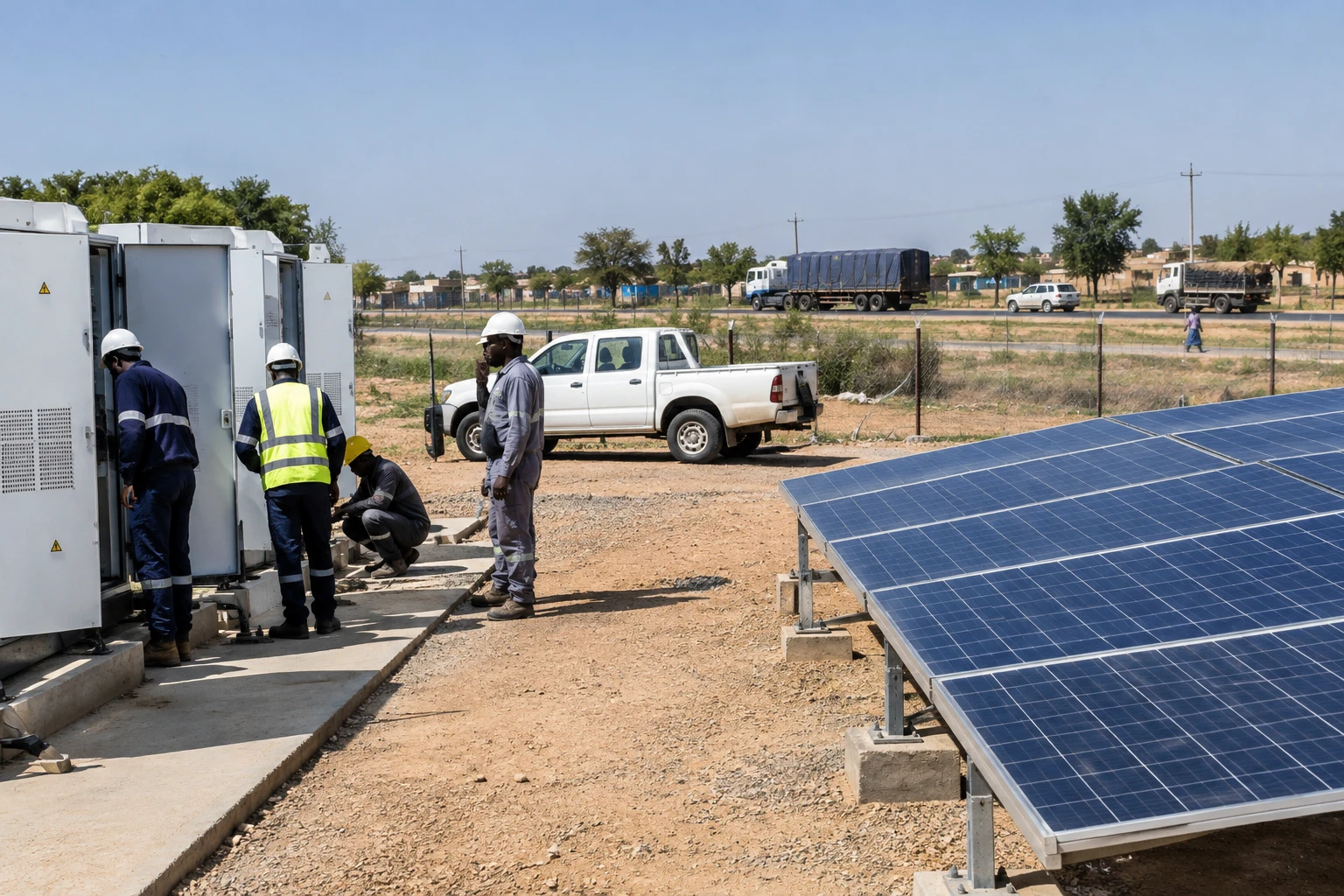
At Sinthiou Malème, in the Tambacounda region, the Tamba Solar project promises to add solar power and batteries to Senegal’s grid. However, its financing is not the only issue to watch: the authorisation process has already encountered a major regulatory obstacle.
A project useful to the grid, in a targeted region
Senegal is seeking to develop renewable energy while extending access to electricity. The challenge is not limited to producing more. It also requires transmitting power, making it available at times of high demand and serving localities that remain poorly connected.
Territorial disparities remain significant. The World Bank estimated the national electricity access rate at 84%, while more than 30% of rural communities remained off the grid. Its access programme provides for nearly 4,000 kilometres of new or rehabilitated lines. A large power plant can therefore strengthen national supply, but on its own it does not guarantee new connections in villages.
The project also fits into a regional energy landscape where networks and exchanges between countries matter. Senegal takes part in West African interconnection projects, notably through the Organisation for the Development of the Gambia River. To integrate more solar generation, production, storage and transmission must be coordinated, both within Senegal and beyond its borders.
Financing envisaged, not yet granted
On 4 November 2026, the Dutch development finance institution FMO published a factsheet presenting Tamba Solar as a proposed investment. It is considering senior financing of up to €146.5 million, or about $164 million. Up to €89 million could come directly from FMO; the remainder would be sought from other financiers.
The arrangement concerns a 100 megawatt-peak (MWp) photovoltaic plant combined with batteries of 60 megawatts and 180 megawatt-hours. MWp indicates the maximum power of the panels under standard conditions; MWh measures the energy the batteries can store. In practice, storage allows part of the electricity to be released after sunlight declines and can help balance the grid.
The project is carried by Tamba Solar SAS. FMO states that Taranis Holdco Senegal holds 90% of the project company and the Senegalese partner Amar Energies owns 10%. The electricity is to be sold to Senelec, the national utility, under a 25-year power purchase agreement signed in December 2024 and backed by a sovereign guarantee from the state.
These elements may reassure lenders: an identified buyer and a long-term contract provide visibility over expected revenues. However, a public guarantee is not a free resource. If the buyer cannot meet its payments, it could place a risk on state finances. The sale tariff, the total cost of the project and the full breakdown of financing have not been made public in the information reviewed.
The point of vigilance: the regulator’s decision
The file, however, is not limited to fundraising. On 25 February 2026, the Energy Sector Regulatory Commission (CRSE) issued an unfavourable opinion on granting licences by direct agreement. It considered that the reasons put forward did not justify this exceptional procedure and noted that Senelec and Tamba Solar had signed a purchase and storage contract on 4 November 2024 without prior notice to the Commission.
This decision does not mean that the plant is being built, nor that it has been definitively abandoned. It does, however, highlight a decisive question: under which procedure can the project obtain its authorisations and move forward within the Senegalese legal framework? The financing envisaged by FMO constitutes neither regulatory validation nor a firm loan commitment.
The regulator also stressed that the least-cost integrated plan, which is meant to guide investment choices in the electricity sector, had not yet been developed at the time of its review. The consistency between the project, the needs of the grid and the cost paid by Senelec therefore remains central. In addition, FMO identifies environmental and social issues relating in particular to working conditions, livelihoods and the use of land and ecosystems. The institution plans management and restoration plans to be updated before construction.
Production and access: two objectives to link
Senegal’s energy transition investment plan lists Tamba Solar among several solar projects with storage planned in the Tambacounda region. This concentration could support local and national supply. It also makes necessary appropriate grid connections, long-term battery management and coordination with other scheduled installations.
For residents and economic activities, the concrete effect will depend on several stages: authorisations, financial close, construction, connection and then commissioning. The potential benefits will not be identical for everyone. Connected consumers could benefit from a more diversified supply, while unconnected rural areas will still need lines, mini-grids or standalone solar systems.
At regional level, the project illustrates a difficulty shared across West Africa: financing renewable infrastructure while ensuring its integration into the grid and its compliance with national rules. The next deadline announced by FMO for public comments is 3 January 2027. Until then, the decisive questions will remain the regulatory next steps, the financial conditions, and how the planned output will fit with Senegalese priorities for access to electricity.



