Algeria
 Egypt
 Libya
 Morocco
 Sudan
 Tunisia
 Benin
 Burkina Faso
 Cabo Verde
 Côte d'Ivoire
 Ghana
 Guinea
 Guinea-Bissau
 Liberia
 Mauritania
 Niger
 Nigeria
 Senegal
 Sierra Leone
 The Gambia
 Togo
 Cameroon
 Central African Republic
 Chad
 DR Congo
 Equatorial Guinea
 Gabon
 Republic of the Congo
 São Tomé and Príncipe
 Burundi
 Comoros
 Djibouti
 Eritrea
 Ethiopia
 Kenya
 Madagascar
 Malawi
 Mauritius
 Mozambique
 Rwanda
 Seychelles
 Somalia
 South Sudan
 Tanzania
 Uganda
 Angola
 Botswana
 Eswatini
 Lesotho
 Namibia
 South Africa
 Zambia
 Zimbabwe
When captured fighters are killed after surrendering, the laws of war require an investigation and accountability. In Mali, reports about the attack at Tabrichat and military operations that have affected civilians also raise a practical question: who protects people and families when the fighting moves on?
In the north, prisoners at the centre of allegations
On 18 July 2026, a Malian military convoy was attacked near Tabrichat, in the Gao region. It was travelling from Anéfis. The Malian army confirmed the ambush, while the Al-Qaeda-affiliated Group for the Support of Islam and Muslims (GSIM, or JNIM) and the Azawad Liberation Front (FLA) claimed responsibility for the operation. The Associated Press reported that the armed groups spoke of heavy losses and soldiers killed or captured.
Human Rights Watch (HRW) says at least 19 captured Malian soldiers were tortured and then executed. The organisation says JNIM acknowledged that its fighters were responsible, while stating that the executions had not been ordered by its leadership. According to information reported by HRW, however, the group did not consider it necessary to punish the alleged perpetrators. This reported admission is no substitute for an independent investigation or the judicial determination of responsibility.
In July, Amnesty International had also called for an investigation into the deaths of at least 19 soldiers hors de combat at Tabrichat, after analysing footage of the incident. The organisation located the ambush near the village, on the road between Anéfis and Bourem, and described a joint JNIM-FLA operation. This corroboration confirms the seriousness of the execution allegations, although details of the circumstances and chain of command remain to be established.
The families of soldiers killed or missing also need verifiable information. HRW says that by mid-September, the army had not yet contacted the families of the soldiers concerned to inform them or offer support. This claim, attributed to the organisation, highlights a dimension of the conflict that is often little seen: prolonged uncertainty for relatives, on top of the loss of life.
Military operations under scrutiny
HRW’s report also implicates the Malian armed forces and their Russian Africa Corps partners in operations that allegedly killed or injured civilians. The cases cited include a drone strike on a livestock market at Tombonkoré, in the Bandiagara region, on 19 August, and a ground operation near Niono, in the Ségou region, on 12 July. The organisation reports six deaths and around 20 injuries in the first case, and the killing of five girls aged 10 to 13 in the second.
These figures and circumstances are presented here as allegations documented by HRW, not as judicial findings. The organisation says it gathered testimony from relatives and people who were present. Other public HRW investigations have documented abuses attributed to Africa Corps and Malian soldiers in the centre of the country, including the deaths of nine civilians, four of them children, at Bombori in July 2026. These separate cases do not automatically confirm every detail of the Tombonkoré and Niono incidents, but show that allegations against government forces and their allies are subject to ongoing scrutiny.
In a conflict where armed groups also attack security forces and civilians, the protection of the population cannot depend solely on statements by the belligerents. Operations must distinguish between combatants and civilians. Captured or wounded people must be protected. When civilians are killed, a credible investigation must establish the circumstances and identify those responsible.
A national crisis with regional repercussions
Mali has seen a fresh intensification of fighting since the coordinated attacks of April 2026. JNIM and the FLA then carried out operations in several localities, while the Malian army and Africa Corps continue their campaigns. HRW has described abuses committed by various actors since the fighting resumed. The operational proximity of JNIM and the FLA, two movements with distinct objectives, is changing the balance of power in the north and complicating efforts to secure the roads linking towns.
In Bamako, the stated priority remains security and state sovereignty. But the consequences are felt far beyond the institutions: markets, journeys between regions, agricultural activities and soldiers’ families face different risks. In rural areas, an airstrike or ground operation can directly affect livelihoods. In the north, convoys and roads have become military as well as economic concerns.
The regional framework has also changed. Mali, Burkina Faso and Niger left the Economic Community of West African States (ECOWAS) in 2025 and formed the Alliance of Sahel States. This break reduces the shared political mechanisms they have with their West African neighbours. It makes cooperation between states and regional organisations on civilian protection, population displacement and the fight against impunity all the more important. HRW’s annual report notes in particular that withdrawal from ECOWAS has limited some regional avenues of recourse for citizens.
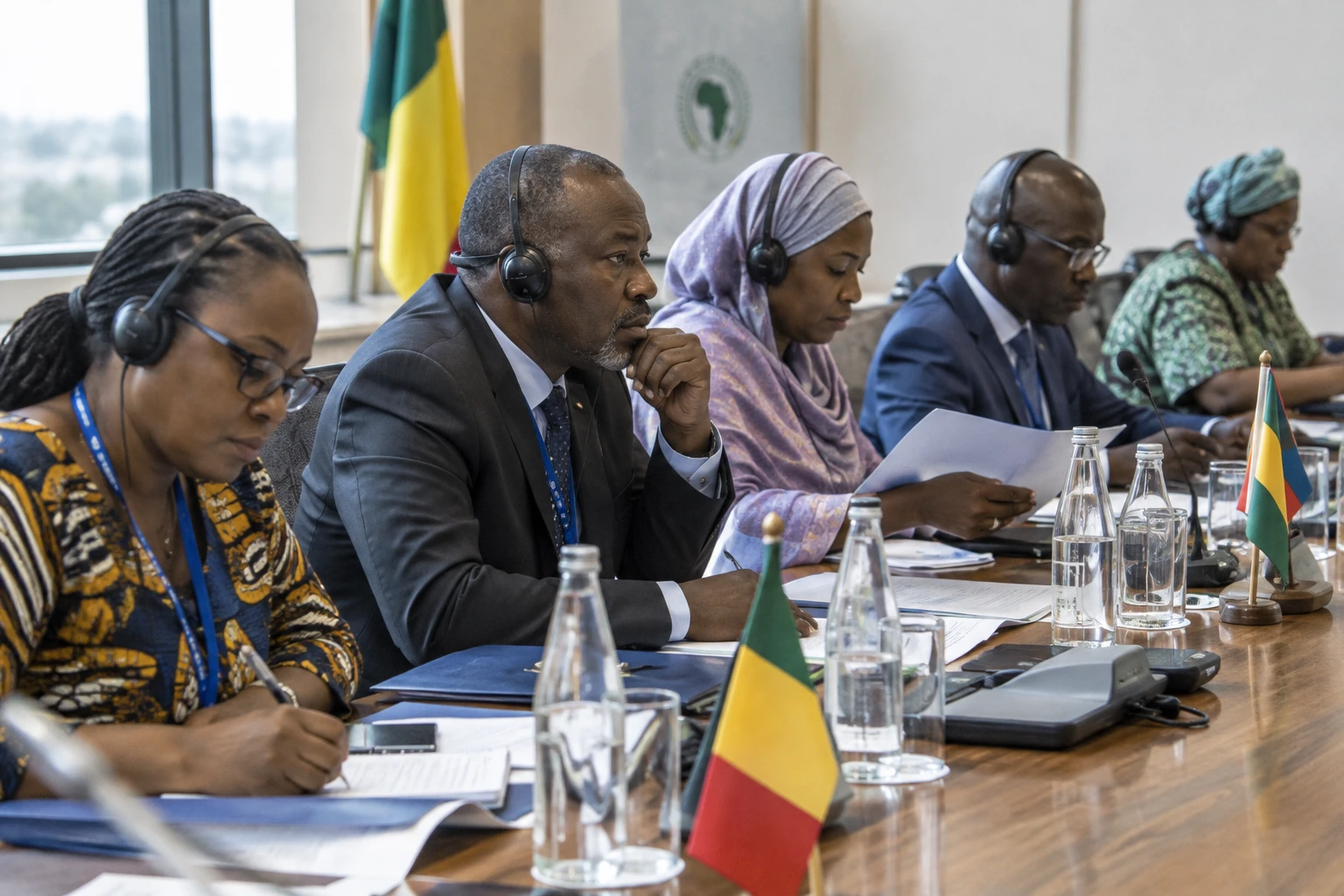
HRW is calling on the African Union to monitor violations attributed to all parties and convene a special session on civilian protection and accountability. The issue goes beyond public condemnation: it is a question of whether investigations will be independent, whether families will receive answers and whether the relevant commanders will take action. At Tabrichat, as in central Mali, the credibility of the authorities and armed groups will also be measured by their ability to account for the actions of their fighters.