Algeria
 Egypt
 Libya
 Morocco
 Sudan
 Tunisia
 Benin
 Burkina Faso
 Cabo Verde
 Côte d'Ivoire
 Ghana
 Guinea
 Guinea-Bissau
 Liberia
 Mali
 Mauritania
 Niger
 Nigeria
 Senegal
 Sierra Leone
 The Gambia
 Togo
 Cameroon
 Central African Republic
 Chad
 DR Congo
 Equatorial Guinea
 Gabon
 Republic of the Congo
 São Tomé and Príncipe
 Burundi
 Comoros
 Djibouti
 Eritrea
 Ethiopia
 Kenya
 Madagascar
 Malawi
 Mauritius
 Mozambique
 Rwanda
 Seychelles
 Somalia
 South Sudan
 Tanzania
 Uganda
 Angola
 Botswana
 Eswatini
 Lesotho
 Namibia
 Zambia
 Zimbabwe
When the future runs through the township
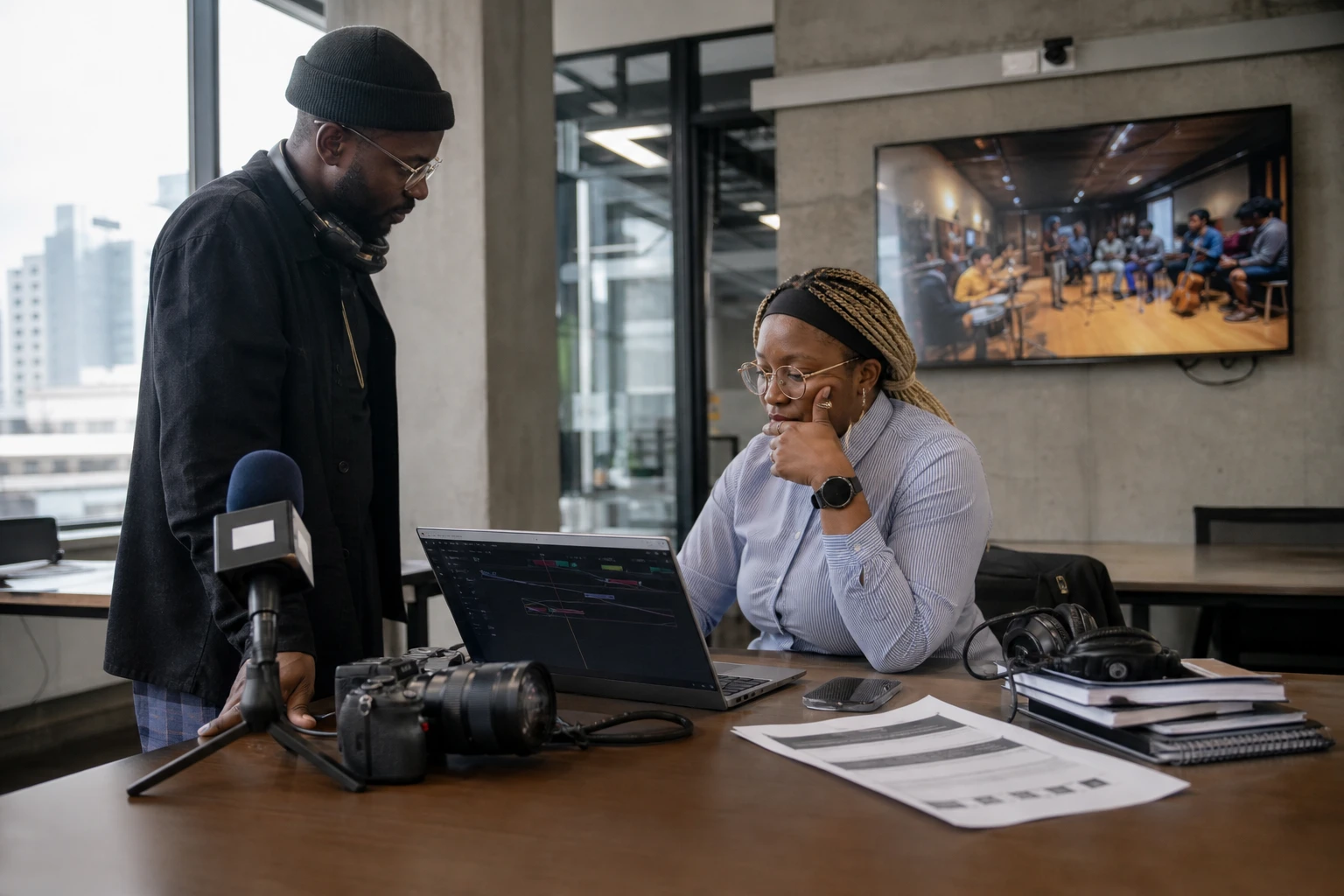
In Soweto, on the outskirts of Johannesburg, an experimental jazz group has chosen to bring ancestors, synthesizers and cosmic imagination into dialogue. This is no stylistic flourish. It is a way of saying that Black South African creativity does not simply archive the past: it transforms it to think about the future. Sun Xa Experiment belongs to this tradition, at the crossroads of Afrofuturism, free jazz and local traditions.
South Africa has a rich musical history, shaped by forced displacement, exile and movement between Johannesburg, Durban, Pietermaritzburg, the United States and the rest of the continent. In this landscape, Soweto remains a symbolic place. The township has long been a space of struggle, but also a cultural laboratory where music has served as a political, spiritual and social language. The Sun Xa Experiment collective extends this tradition, without nostalgia, rewriting it with contemporary tools.
A cosmic legacy rooted in South African history
The group’s starting point is simple: Sun Ra. The American musician, a major figure in Afrofuturism, made the cosmos a musical and political material. The Smithsonian describes him as one of the most recognisable sonic architects of this aesthetic, alongside other artists who have shaped imagined Black futures since the 1960s. His influence extends beyond jazz. It also runs through performance, fashion, literature and contemporary pop.
For Sun Xa Experiment, this lineage also runs through Ndikho Xaba, a South African musician whose remarkable career between Pietermaritzburg, Johannesburg, exile and international stages has long been under-documented. Music In Africa notes that he shared stages with Sun Ra and embodied a South African avant-garde open to African traditions as well as free forms from elsewhere. The group’s name itself sums up this meeting: a bridge between two imaginaries, one American, the other South African.
The collective was formed in 2014, according to several interviews with the South African and pan-African music press. It brings together musicians who speak of healing music, the presence of ancestors and spiritual codes. Their approach does not seek to imitate a master. Rather, it tries to take up his momentum: to make music a space for freedom, memory and projection.
Beyond the spectacle, a question of identity
On stage, the musicians’ body markings, percussion, keyboards and choreographed gestures come together to create a total work. Theatre, dance and improvisation are not embellishments. They form part of a single narrative. This visual and sonic approach is a reminder that Afrofuturism is not just a matter of science fiction. It is also a cultural response to centuries of dispossession, imposed hierarchies and outside narratives about Africa.
In South Africa, this act of reclaiming has particular resonance. The country left apartheid more than thirty years ago, but social, territorial and symbolic divisions remain visible. To say, as the group does, that it is necessary to “regain the place that is rightfully ours as a people” is to ask a concrete question: who creates the image of South Africa, who tells its story, and from which social positions? In working-class neighbourhoods and creative urban centres alike, artists often respond before institutions do. They invent forms in which Black memory is neither frozen nor reduced to folklore.
This also matters for the cultural economy. South Africa’s alternative scenes rarely operate outside precarious circuits: rehearsals at home, small venues, festivals, collaborations and digital circulation. Sun Xa Experiment shows that a group can exist on the margins of the mainstream media while speaking to the country’s present. This is where the township becomes more than a backdrop. It becomes a workshop for aesthetics, connections and living archives.
What this music says about southern Africa
The group’s reach extends beyond Johannesburg. Across the SADC, the Southern African Development Community, artistic movements have long traced a regional network in which exile, return and collaboration have mattered as much as borders. Ndikho Xaba’s story is a reminder of these journeys. Sun Ra’s, too, shows that Black imagination is not confined to one country or generation. It is passed on, moves and reinvents itself.
For South Africa, this scene says something essential: cultural modernity does not come only from major capitals or well-established industries. It also emerges in modest places, in rehearsal rooms, in networks of artists who reconcile heritage and invention. Sun Xa Experiment does not announce an abstract future. It reminds us that a liberating future is built from what communities already carry: sounds, memories and ways of representing themselves.