Algeria
 Egypt
 Libya
 Morocco
 Tunisia
 Benin
 Burkina Faso
 Cabo Verde
 Côte d'Ivoire
 Ghana
 Guinea
 Guinea-Bissau
 Liberia
 Mali
 Mauritania
 Niger
 Nigeria
 Senegal
 Sierra Leone
 The Gambia
 Togo
 Cameroon
 Central African Republic
 Chad
 DR Congo
 Equatorial Guinea
 Gabon
 Republic of the Congo
 São Tomé and Príncipe
 Burundi
 Comoros
 Djibouti
 Eritrea
 Ethiopia
 Kenya
 Madagascar
 Malawi
 Mauritius
 Mozambique
 Rwanda
 Seychelles
 Somalia
 South Sudan
 Tanzania
 Uganda
 Angola
 Botswana
 Eswatini
 Lesotho
 Namibia
 South Africa
 Zambia
 Zimbabwe
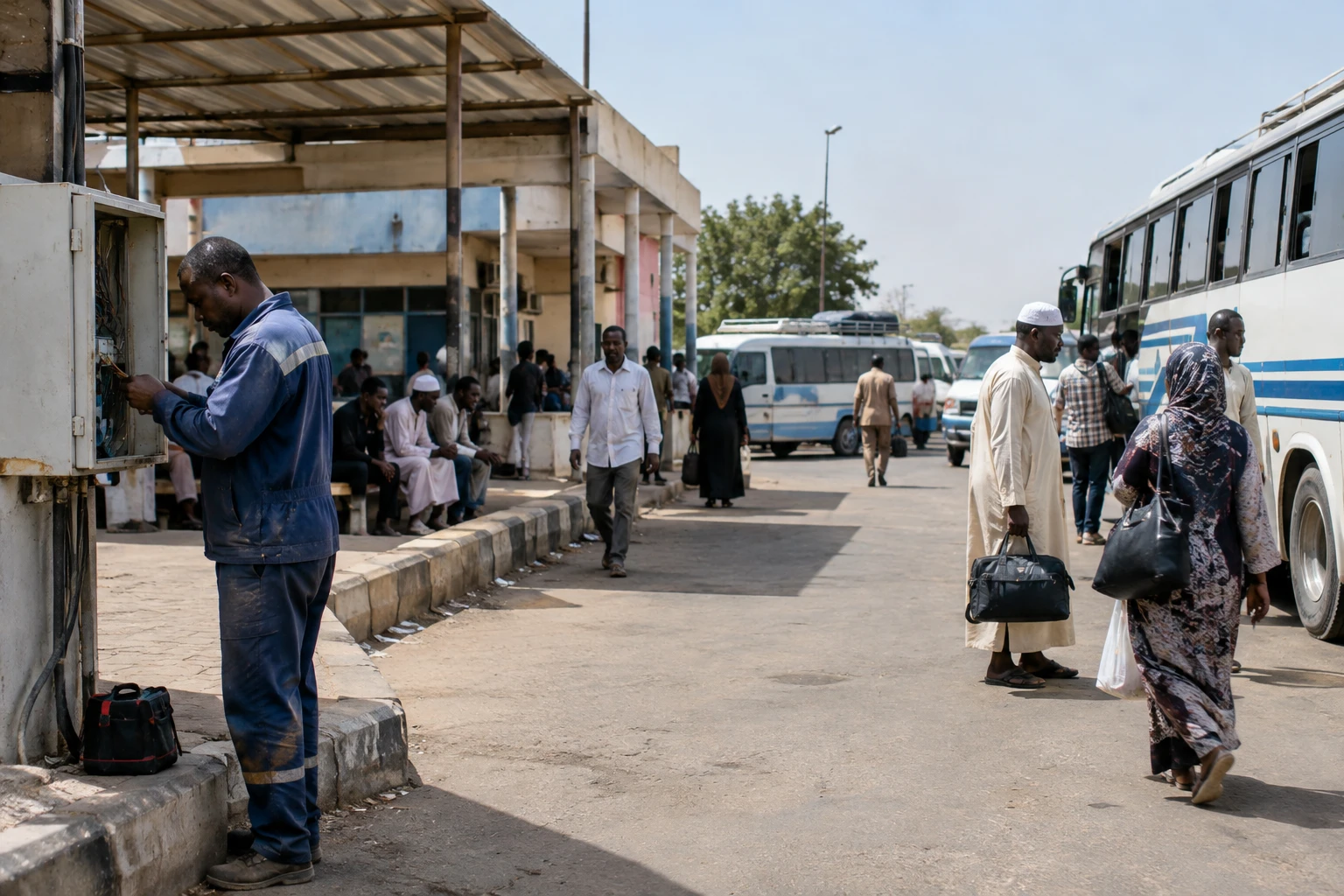
A power cut does not stop at the switch. In Sudan, it can also bring irrigation pumps to a halt, disrupt healthcare and complicate the supply of markets. Strikes targeting electricity facilities in several eastern states are a reminder of how the war is affecting services on which daily life depends.
A network caught up in the war
Since April 2023, the Sudanese Armed Forces and the Rapid Support Forces (RSF), a paramilitary force, have been fighting. The conflict arose from a dispute between the two forces, particularly over their planned integration into a unified army and the transition to civilian rule. It has spread far beyond Khartoum, the capital, and displaced millions of people.
The war has also reached infrastructure. In January 2025, drone attacks attributed to the RSF hit the Al-Shawak station in Gedaref state and other electricity facilities. The International Committee of the Red Cross warned at the time about the effects of strikes on power plants, water stations and dams: they weaken access to essential services and put repair teams at risk.
In the east, Gedaref and Kassala are among the areas where people displaced by the fighting have taken refuge. The region is also an important route for trade and the transport of goods. A local outage can therefore have consequences beyond the city directly affected, although the extent of those effects depends on how long the cuts last and the condition of alternative facilities.
Five facilities targeted, authorities say
On 26 October 2026, drone strikes targeted five electricity facilities in Al-Jazira, Gedaref and White Nile states. Two are in each of the first two states, and one in the third. The Sudanese authorities attributed the attacks to the RSF. The affected areas are controlled by the army.
The power cuts affected large areas of the three states. The paramilitary group had not publicly responded to the accusations in the reports consulted. The circumstances and damage could not be independently verified. It is therefore necessary to distinguish the reported fact — that facilities were hit and the electricity supply disrupted — from the attribution of the strikes, which comes from the authorities.
Separate reports on the same attacks mention outages in four states, including Sennar. This discrepancy with the three-state account reported by other media has not been explained. The available information also does not make it possible to confirm the precise extent of the damage or the repair schedule.
The episode comes as drone attacks have become a way to strike far beyond front lines. Electricity facilities are not the only targets: the conflict has also affected infrastructure related to water, fuel and transport. In May 2025, the regional organisation IGAD expressed concern after drone strikes on civilian infrastructure in Port Sudan.
Consequences beyond lighting
The most immediate consequences depend on where the cuts occur and how long they last. Households may lose access to some services, while healthcare facilities and water distribution networks need a reliable electricity supply. Farms, too, can be affected when irrigation pumps stop working.
This last consequence is particularly significant in agricultural areas such as Al-Jazira and Gedaref. An outage can disrupt producers’ work and the activities of small businesses. If it lasts, it may also complicate the storage and sale of produce. However, the available information does not make it possible to measure the agricultural losses caused by these specific strikes.
The effects are uneven. Households and businesses able to use a generator can sometimes keep some activities going, but fuel is expensive and its supply remains uncertain. Low-income households, informal businesses and public services have fewer alternatives. In rural areas, the interruption of a pump can have a greater impact on access to water or irrigation than in a neighbourhood served by several facilities.
The repetition of such attacks also makes technicians’ work more difficult. Each restoration of service requires teams and equipment, while travel and repairs take place in a war zone. The precedent of Al-Shawak shows that damage to one point in the network can disrupt the supply beyond the facility itself.
A regional issue of civilian protection
The Sudanese conflict directly affects neighbouring countries and regional organisations. Sudan is a member of IGAD, the Intergovernmental Authority on Development, which has called for civilian infrastructure to be protected. The African Union, for its part, continues to face the challenge of supporting a political solution and limiting the regional repercussions of the war.
The United Nations recently reported more than 300 deaths in drone attacks during the first three weeks of October. This toll concerns drone strikes in the conflict, not the attacks on power plants on 26 October. It highlights the growing risks to civilians, without making it possible to attribute those deaths to a single side or link them to the power cuts reported here.
What happens next will depend in particular on how quickly repairs are made and whether teams can access the sites. It will also be necessary to monitor whether the outages spread, how long they last and whether other essential infrastructure is targeted. For Sudanese people, the issue goes beyond the return of electricity: it is about preserving vital services in a country where the war is already disrupting institutions and the networks of daily life.