Algeria
 Egypt
 Libya
 Morocco
 Sudan
 Tunisia
 Benin
 Burkina Faso
 Cabo Verde
 Côte d'Ivoire
 Ghana
 Guinea
 Guinea-Bissau
 Liberia
 Mali
 Mauritania
 Niger
 Nigeria
 Senegal
 Sierra Leone
 The Gambia
 Togo
 Central African Republic
 Chad
 DR Congo
 Equatorial Guinea
 Gabon
 Republic of the Congo
 São Tomé and Príncipe
 Burundi
 Comoros
 Djibouti
 Eritrea
 Ethiopia
 Kenya
 Madagascar
 Malawi
 Mauritius
 Mozambique
 Rwanda
 Seychelles
 Somalia
 South Sudan
 Tanzania
 Uganda
 Angola
 Botswana
 Eswatini
 Lesotho
 Namibia
 South Africa
 Zambia
 Zimbabwe
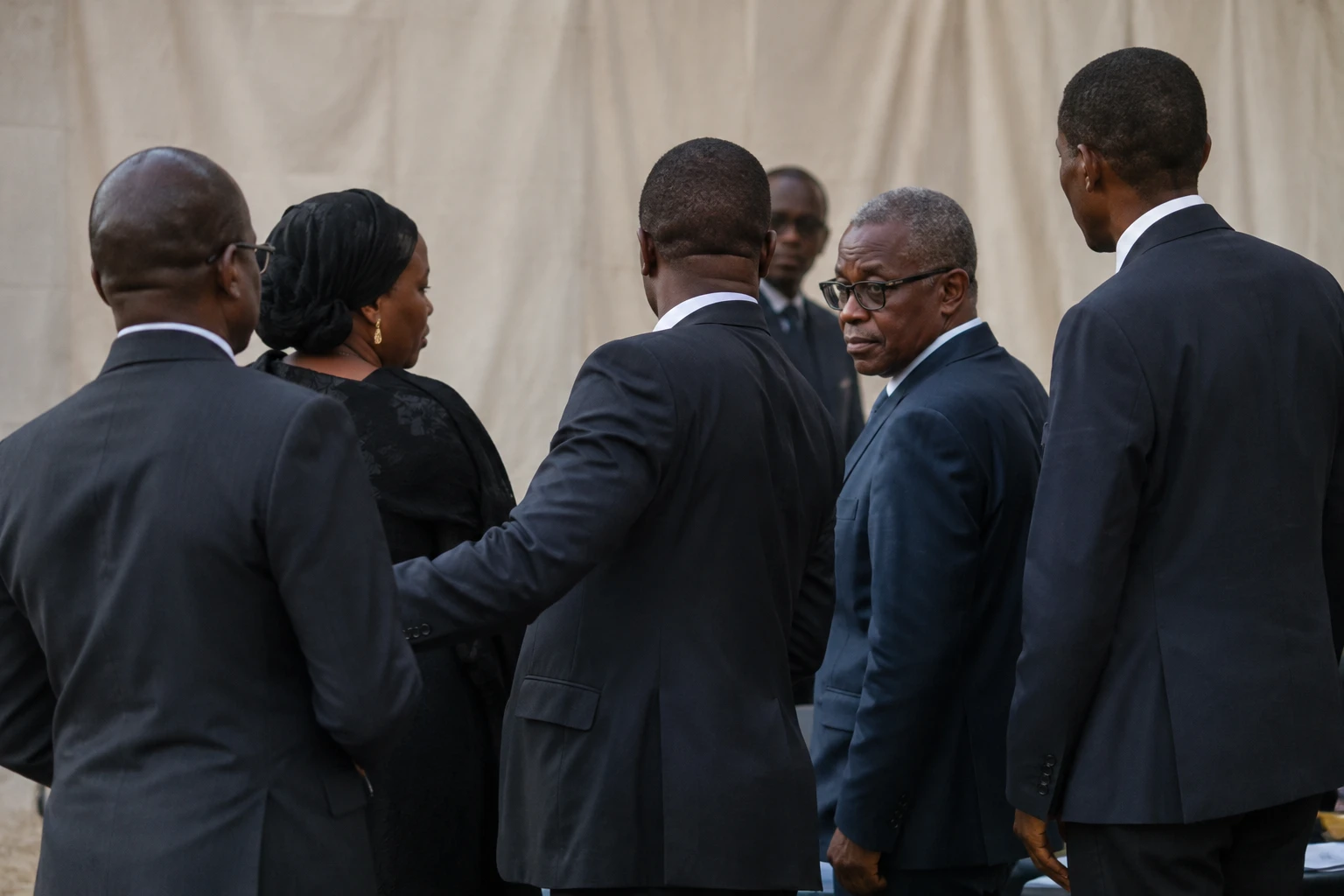
For Succès Masra, leaving Chad after his release may meet a medical need. But the trip also carries political weight: in a country where his legal status remains a subject of debate, every public absence raises questions about the space left to the opposition.
Departure announced by his associates, against the backdrop of a commemoration
According to information provided by his entourage, the former prime minister left Chad on the evening of Monday 19 October 2026. He is said to have first travelled to Yaoundé, Cameroon, then to Côte d’Ivoire, where his family lives, before continuing to France for medical treatment. The route and medical reason could not be confirmed by a second independent source. They must therefore remain attributed to his associates.
The departure is said to have taken place after a ceremony honouring the victims of the 20 October 2022 demonstrations. Four years earlier, rallies were held in N’Djamena and other cities to protest the extension of the transition period and call for a return to civilian rule. The African Commission on Human and Peoples’ Rights had called for a credible and independent investigation into the events. Figures published subsequently have differed: they should not be presented as an undisputed total.
An associate of Masra is said to have explained that the trip was for medical treatment, after more than a year in detention, and not a new exile. This distinction matters in the opposition figure’s political journey. In 2022, he left the country after the crackdown on the demonstrations, before returning to Chad in 2023 under an agreement with the authorities.
A pardon that does not resolve all legal questions
President Mahamat Idriss Déby granted Masra a pardon on 14 August 2026. The former prime minister was released the following day, after being sentenced in 2025 to 20 years in prison. Chadian and international reports confirm the date of the pardon and his release. Human Rights Watch has nevertheless called on the authorities to quash or overturn his conviction. A pardon ends the enforcement of a sentence, but does not necessarily mean that the judgment itself is annulled.
This distinction fuels uncertainty over the conditions for his return to political life. The legal details determine, among other things, which rights he retains and what activities he may pursue. It would therefore be premature to conclude that the pardon resolves his entire case or guarantees without reservation that he can resume his role at the head of Les Transformateurs.
According to information provided by his entourage, Masra also waited for his passport to be renewed before travelling. His associates link the timing of his departure to these formalities and to Mahamat Idriss Déby’s visit to Paris. In the absence of independent confirmation, these explanations cannot be established as the certain reasons for the delay.
An opposition balancing caution and visibility
The limited communication about the trip contrasts with Masra’s profile as a former head of government and candidate in the 2024 presidential election. He faced Mahamat Idriss Déby, who was elected following the vote. Since his release, he has said he wants to work with the head of state. This statement signals a willingness to engage in dialogue, but is not enough to establish that a political agreement exists.
For Les Transformateurs, the party led by Masra, this is a delicate period. A high-profile statement could reignite tensions surrounding his conviction. Conversely, a prolonged absence risks reducing his visibility among his supporters and leaving more room for the authorities and other political actors. This analysis describes possible issues; it does not make it possible to infer the party’s intentions from the trip alone.
The effects also vary among different audiences. In N’Djamena, where institutions and much of political life are concentrated, leaders’ statements are quickly discussed. In other regions, attention also depends on local networks and everyday priorities. For supporters and other voters alike, the practical question remains whether opposition groups will be able to organise and participate in public life within a predictable framework.
A Chadian issue with implications for Central Africa
Chad is a member of the Economic and Monetary Community of Central Africa (CEMAC), which brings together six countries in economic and monetary cooperation. Masra’s alleged departure is not, in itself, a regional event. But the way the country handles pardons, convictions and opposition participation fuels broader questions about political stability in Central Africa.
The events of 20 October 2022 remain a national point of reference. The African Commission on Human and Peoples’ Rights called for responsibility to be established. Chadian human rights organisations have also published figures that differ from those announced by the authorities. This disagreement highlights why figures must be attributed to those who put them forward and why judicial transparency remains important for public trust.
In the short term, the points to watch are whether Succès Masra returns, what he says about the trip, and the concrete implications of his pardon for his legal case. Pending further confirmation, his entourage presents the trip as a medical visit, not a new exile. That account must remain attributed, while its political consequences remain uncertain.